REVIEW – Radiohammer (3DS)

RADIOHAMMER.png

Radiohammer
Developer: Vinyl Lab/Arc System Works
Publisher: Aksys Games
Platform(s): 3DS
Release Date: December 10th 2015
Links: Official Website

Reviewed by Adam Mrozinski (@thekhaos – anklerocker.com)


HEY DJ!! READY? GO!!!


World peace must be restored! Protect the Earth from aliens and zombies and… perverts!

Smash those who would threaten this planet with rhythm and music and… REALLY HUGE HAMMERS!!

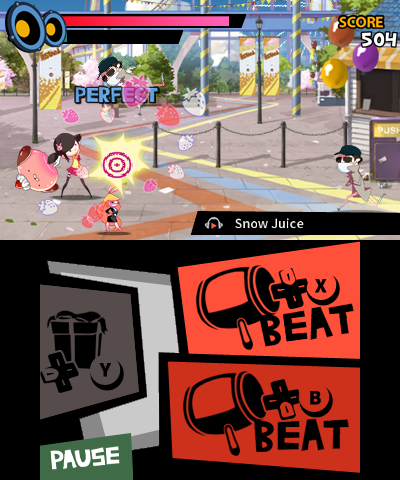
Radiohammer is the perfect kind of game for the 3DS on the eShop. It’s vivid and full of energy. The gameplay is set up to be enjoyable for long sessions or when you only have a few extra minutes to spare. Originally released for iOS and Android in 2014 this great title is now available for 3DS users worldwide. The sequel, Radiohammer Station is also available on mobile devices.

07.png

Vinyl Lab of Korea have created the “Vinyl Universe” as a setting for all of their games and in Radiohammer you assume the role of a DJ from that world. Each DJ has their own story that’s played over three episodes with five stages in each episode. The enemies run at you relentlessly and your goal is to smash them as they draw near in time with the beat of the song playing. The game has over 50 songs according to the publisher’s website.

Continue reading

Posted in Posts, Reviews | Tagged , , , , , , , , | 1 Comment

REVIEW – FAST Racing NEO (Wii U)

FAST RACING NEO.jpg

FAST Racing NEO
Developer: Shin’en Multimedia
Publisher: Shin’en Multimedia
Platform(s): Wii U
Release Date: December 10th 2015
Links: Official Website


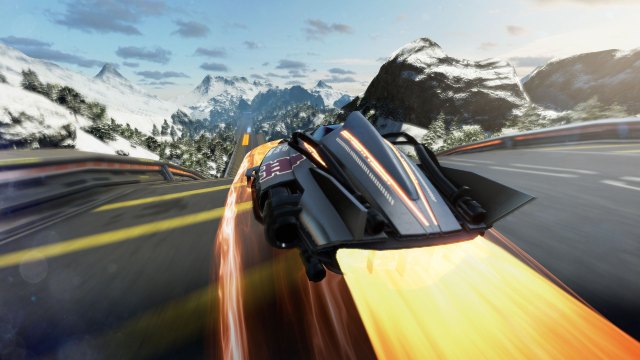
Shin’en’s FAST Racing NEO has garnered a lot of attention for itself for a number of reasons; notably, it received something of a push from Nintendo during their Treehouse Live @ E3 streams earlier this year, as well as in the most recent Nintendo Direct presentation. However, one of the major points of interest for this title is a rather lofty goal that has been thrust upon it; to fill the F-Zero shaped hole in our hearts. It promises similarly speedy futuristic racing action, but the question on everyone’s minds is, is it the new F-Zero that we’ve all been longing for? No, it isn’t; FAST Racing NEO is a compelling racing experience entirely in its own right.

I don’t feel it’s fair to judge this game based on what its similar to. Sure, there are many similarities between this game and Nintendo’s own racing series, both thematically and even in some of the finer details – for instance, FAST Racing NEO and F-Zero GX share an announcer – but I believe that the value of this game should be evaluated entirely on what it offers on its own, as a brand new racing title for the Wii U.

fast1.jpg

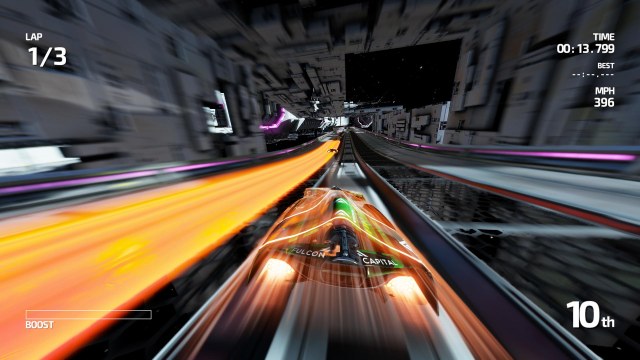
First things first; this a game that certainly lives up to the ‘FAST‘ in its name. Three different speeds are available, Subsonic, Supersonic and Hypersonic, each as increasingly speedy as the next. Now here’s the thing; Subsonic, the ‘slowest’ speed, is incredibly fast as it is, so there’s no open grid for rookies in Hypersonic mode. Whilst it sounds comedic, it’s almost TOO fast, reliant on the slightest movements and completing a near-perfect run each lap if you have any hope of placing first. Generally though, the level of speed is quite satisfying, especially when you perfectly chain together a series of boosts using the game’s ‘phase’ mechanic; much like cult favourite shoot ’em up Ikaruga, with the press of a button your craft can switch between a blue or orange phase; you’ll need to be the matching colour to each boost if you want to actually gain any speed from it (and in some tracks, to pass through jumps that will send you hurtling to your doom if your colour matches them). This is a nice gimmick that adds some variation to what would otherwise be a quite basic racer, fitting nicely into the track design as something to be memorised by anyone seeking to master this game.

fast3.jpg

Memorisation is a key element required if you’re aiming for success in FAST Racing NEO. As you’d expect from any racing game, each track’s layout differs considerably, with some of the game’s futuristic speedways consisting of very unpredictable twists and turns. Death-defying midair sections and tricky jumps that you’re unlikely to expect can easily catch you off-guard when you’re hurtling down the track at a breakneck pace and whilst this creates an awesome visual spectacle if you’re successful in passing these hurdles (even to the extent that the announcer may congratulate you for a particularly sharp landing), some elements of the track design come across as a little illogical; it’s not that they’re badly designed, it’s just that you don’t come to expect them unless you’re able to really focus on the layout of each course. After crashing or falling off-course, it’s easy to get thrown by the fact that the game re-spawns you before the point at which you were destroyed as opposed to relatively in the same place; again this isn’t necessarily a flaw, but it goes against the conventions of the genre and at times can be a little unexpected, especially when it more often than not means that taking the much coveted first place is now an impossibility.

fast4.jpg

Thematically, the tracks are absolutely brilliant and oozing with detail; even minor touches such as snow and frost gathering against the screen on the wintery Alpine Trust or the way your vehicle disturbs the surface of the swap-like waters of Kenshu Jungle are a real treat to watch even when travelling at an incredible speed, not to mention the various background details such as eruptions of industrial magna or gigantic alien sand-creatures that all work together to give a fantastic sense of scale and grandeur to each race. The natural obstacles that inhabit some of the courses are very satisfying to overcome, really enhancing the sense of speed as you power through them with your boost; however, collide with any obstacle, or even so much as clip the walls of the track as you come in for a landing and you’ll find yourself crashing out in a rather undignified fashion, losing both your acceleration and position in the race. The game’s ten available vehicles are nicely designed and appropriately futuristic, the fictional companies they represent creating a nice sense of lore to the game that’s unfortunately not developed on too much; if one comparison was to be made to F-Zero, it would have to be that there’s decidedly less personality in FAST Racing NEO, but that’s understandable considering the absence of a cast of characters as diverse and interesting as F-Zero’s.

fast2.jpg

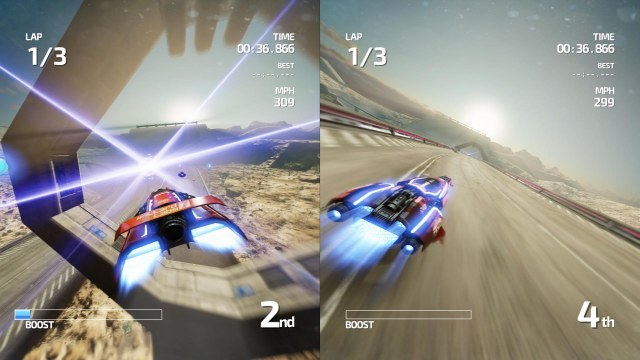
Beyond the main Championship mode, a pleasant selection of additional game styles are available. ‘Time Attack’ is exactly what you’d imagine, a time trial mode that lets you test your mettle on any of the game’s 16 tracks. In a similar fashion to Mario Kart‘s ‘staff ghosts’, various record times set by Shin’en’s own developers are available to compete against. It’s a shame there’s no online leaderboard support, as I can imagine this would’ve been highly competitive much like in Shin’en’s earlier Wii U release, Nano Assault Neo. Both online and local split-screen multiplayer are present and are a lot of fun, the game suffers on a technical level during these mode but considering the speed and detail of the environments, this is understandable. Online mode contributes strongly to the potential replayability of the game and whilst it’s yet to be seen if this is a title that will maintain an online community far into the future, for the time being it’s easy to hop into a full race with little difficulty. ‘Hero Mode’ is the go-to option for people who are looking for challenging, F-Zero style gameplay; in this mode, the game is locked on Hypersonic speed, using boosts drains an energy bar as opposed to the usual boost bar present in the regular modes, and only a first place finish counts as a win. As if playing at Hypersonic speed wasn’t taxing enough on its own, the bar is set even higher here; those who can attain victory this truly brutal mode, in a game which already harshly punishes mistakes, can truly call themselves masters.

fast5

So, to stress what I said in the introduction, this game isn’t a new F-Zero; if you come to FAST Racing NEO looking for the same experience you had playing F-Zero GX on the GameCube, you’re going to go away disappointed. If you approach this game with an open mind, you’ll soon find that below the thematic resemblance to past racing titles lies an addictive, well designed and extremely aesthetically pleasing racing game that makes great use of the Wii U hardware for a brilliant sci-fi racing experience. It’s a game that lives up to its name in more ways than one; this game’s worth a play if only to experience it’s incredible feeling of speed. This one shouldn’t be missed by racing game fans.


A downloadable copy of this game was purchased for the purpose of this review.

Posted in Posts, Reviews | Tagged , , , , , , | 2 Comments

REVIEW – Mighty Switch Force! Academy (PC)

MIGHTYSWITCHFORCE.png

Mighty Switch Force! Academy
Developer: WayForward
Publisher: WayForward
Platform(s): PC (via Steam)
Release Date: November 23rd 2015
Links: Official Website, Steam Page


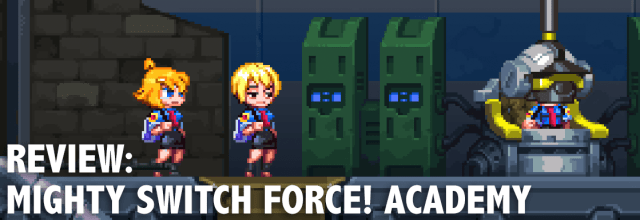
Several months have passed since the early access release of Mighty Switch Force! Academy earlier this year. The latest instalment of WayForward’s puzzle platformer, tells a prequel story, sending series protagonist Patricia Wagon back to school to compete against fiendish simulation courses in preparation for her life of futuristic law enforcement. After previewing the game back in September, it’s now time to take a look at how the title has evolved throughout its development and whether or not Steam’s early access model has worked in WayForward’s favour when expanding the Mighty series like never before.

ss_58ab00a8d0d30746976888b2791a9c1cdedf8173.1920x1080.jpg

One thing can safely be said about Academy‘s gameplay; if you’ve enjoyed the past two Mighty Switch Force! titles, you’re certain to have a good time here. The base gameplay remains relatively unchanged from previous instalments, albeit with the addition of a few new mechanics that help to keep things fresh. The new, arcade-style mechanic of transitioning from one side of the screen to another as opposed to dying when falling in gaps seems like only a basic change in structure, but in combination with the game’s new full-screen stages, it works tremendously well in leading to many a creative and well-constructed puzzle. The large stages themselves create a satisfying sense of progression as you progress to each puzzle within a level, giving you a good feeling of progression as you round up the Hooligan Sisters and allowing you to plan out the optimum movements ahead to best make use of each level’s layout, perfect for shaving a few seconds off your time on each attempt.

ss_a1bf524bebf4f9ff62150ac3cf909e16a523fb2a.1920x1080.jpg

Admittedly, if you’re turning to Academy having played the previous Mighty Switch Force! games looking for something completely new gameplay-wise, you may be unsatisfied. However, only five of the game’s twenty five stages return from previous instalments; its through the brand new levels that the game brings its variety. The twenty stages created just for this game mix elements now standard to the series, revolving around a combination of fighting off enemies and manipulating the terrain with the trademark ‘switch’ ability, relying on a mixture of perfect timing and platforming skill to achieve the best time possible, as well as a variety of never before seen concepts in a Mighty game; smaller, more isolated stages with heavy puzzle elements that require the likes of using exploding enemies to allow you to progress and making careful use of one particular route to progress. Cut-away areas of stages akin to those seen in New Super Mario Bros. Wii can conceal puzzles of their own, requiring fast thinking to make sure you stay under par. Just like previous titles, this game is ideal for speed runners and trying to best your own scores is likely a key point of replayability; with this in mind, the lack of online leaderboards is quite a disappointment and likely would’ve added a greater incentive for more competitive players to study and learn the best approach to each stage.

Continue reading

Posted in Posts, Reviews | Tagged , , , , , | Leave a comment

You’ve Probably Never Played… Inazuma Eleven GO Strikers 2013

INAZUMASTRIKERS2013.jpg

Inazuma Eleven GO Strikers 2013
Developer:  Level-5
Publisher: Level-5

Platform(s): Wii
Release Date: December 20th 2012 (Japan exclusive)


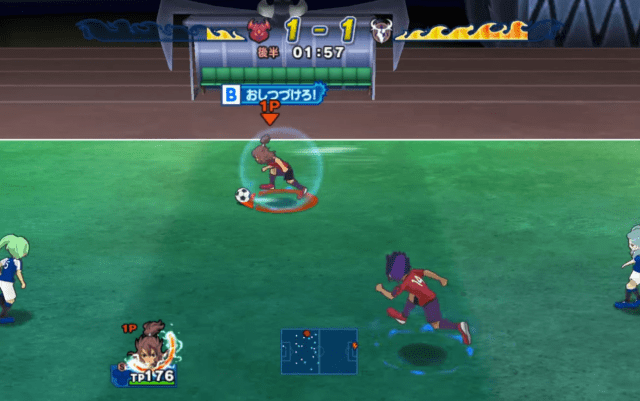
If you’re not a football (the non-American, soccer kind) fan then you probably look at the wide range of available football games and think ‘how are these games any different from one another?’. The likes of FIFA and Pro Evolution Soccer aim for the upmost realism, accurately recreating everything from the on-pitch collisions to the stewards on the sidelines, not to mention the sport itself – it’s just like a miniature World Cup inside your TV! However, there’s one console football title in particular that is considerably more liberal about many an element of the beautiful game – the players, the techniques, and even the laws of physics. This game is Inazuma Eleven GO Strikers 2013. Yep, it’s quite a mouthful.

inazuma1.png

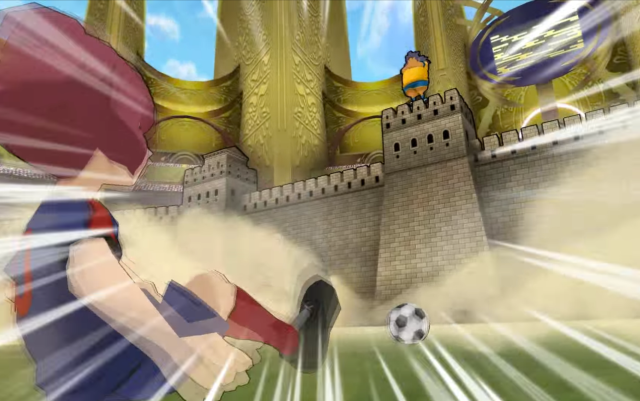
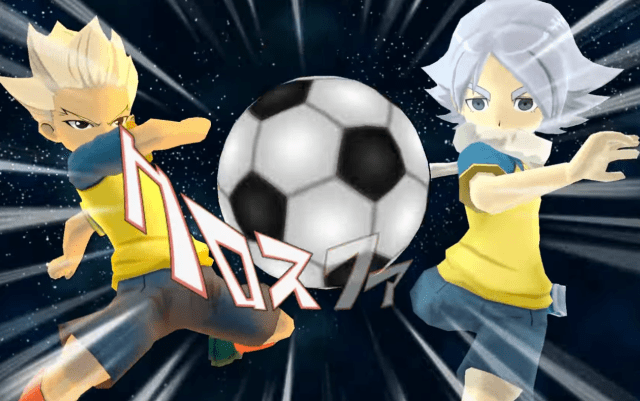
Now is the time to throw out all of your prior conceptions about football. Those nasty challenges you see on the TV that almost always lead to a red card? Sure, there are fouls in this game, but you won’t find any of Inazuma Eleven‘s colourful cast of players sitting on the bench after booting their opponent into the air, attacking them with energy projectiles or even sending them to hell. Don’t expect the referee to so much as bat an eyelid at the sight of the Great Wall of China bursting from the ground to block a shot on goal, or even when penguins catapult through the air towards the back of the net at full speed. Funnily enough, break the offside rule and THEN you’re in trouble. To think that this is all about a school football league.

inazuma2.png

Strikers, being a spin-off title of the mainline Inazuma Eleven games, differs in many ways from its DS counterparts. The RPG elements of building a team and levelling up your players so that they can perform new special moves (labelled ‘Hissatsu-waza’ in the original Japanese version, which roughly translates as ‘killing moves’; should kids really be doing this stuff in the playground?!) and perform better on the pitch has been retained to some degree, but the base football gameplay is now akin to a more conventional, albeit arcade-style football game, as opposed to the tactical line-drawing navigation that the DS’s touch screen enabled. Strikers expands upon the RPG game by introducing a new ‘relationship’ mechanic which allows you foster a friendship between two or more players, thus enabling them to perform combination techniques with up to three players at once. Techniques are divided into four different categories, shoot, dribble, blocking and catch, which allow you to score, retain possession, steal the ball and save goals respectively. It’s possible to use normal tackles and take regular shots on goal, but when you’ve got an arsenal of super-powered football attacks at your disposal, their presence seems almost trivial.

inazuma3.png

Various elements return from the Inazuma Eleven GO sequel series, such as the ‘keshin’ (‘fighting spirit’ in the western versions) ability, which allows you to summon what I can only describe as a ‘giant guy’ – something vaguely reminiscent of JoJo’s Bizzare Adventure‘s stand powers – to give you access to unique special moves of all types. Certain characters can even transform said ‘guy’ into a suit of neon-toned armour to enhance their base moveset, something that can be customised as you level up. Finally, Inazuma Eleven GO 2‘s ‘Mixi Max’ power, which sees your players combine with the spirits of various historical figures such as Joan of Arc and Oda Nobunaga to perform even more special moves. The best thing about all of this is that I didn’t make any of it up.

inazuma6

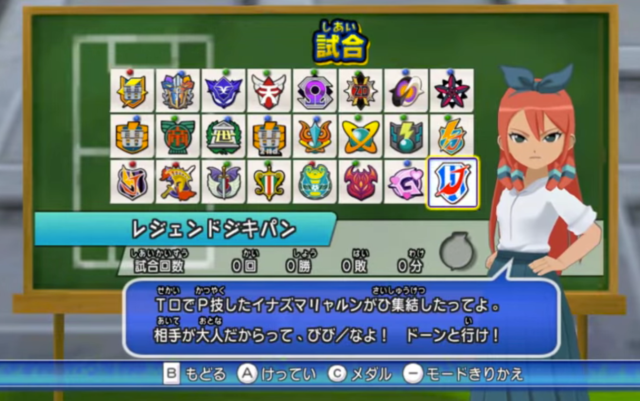
The game’s story mode, a new addition to the 2013 version (the third and final Strikers game), sees you progress around a map playing against teams in an order roughly reminiscent of the plot of both the original and GO games. Whilst many staple teams from the series appear, a variety of ‘compilation’ teams, featuring the more notable players from various parts of the story, ensure that all of the fan favourite characters make their appearance, complete with looks and voices authentic to the TV anime and its related movies, which is more what this spin-off series seeks to replicate. Some of the later teams pose an incredible challenge and will require a carefully selected array of players from previous teams you have beaten for any chance of success. Luckily, your team’s club room offers a variety of training mini-games to develop both player stats and relationships, alongside a fairly robust selection of customisation options for your dream team’s kits, logos and formations that let you make it your own. One of said mini-games takes the form of a curry eating contest. How this makes you better at performing athletic feats I couldn’t possibly say, but this is a game in which an alien high school attempts world domination through football, so I hope you can join me in letting it slide.

inazuma7.png

The actual football gameplay itself is easy to pick up and has an arcade-like feel. Special shots are activated by holding down the kick button and charging up through three ‘levels’ of varying power, each with a different stamina cost. Beyond these three levels, certain characters can fill an additional move slot with either a combination shot or one of the aforementioned ‘keshin’ move, which require either being near certain players on the pitch or further charging respectively. When using defensive or offensive moves, activated either with a button press or by shaking the Wii remote, if your control scheme allows for it (this game has a satisfyingly wide range of control options, ideal for four-player action), a ring will form around your player, activating the move on contact with another player; if two rings collide, players will clash, with stats deciding who comes out on top. It’s a quick, easy-to-use method of integrating Inazuma Eleven‘s wacky antics into a simple but fun arcade football game.

inazuma4.png

If you’re looking for your Rooney and Messi fix, Inazuma Eleven GO Strikers 2013 isn’t the game for you; the realism here is limited mostly to the fact that this game is based around a real sport (and that it uses regulation pitches, even in the stadium set in hell). However, if you’re in the market for an over-the-top, unpredictable and ridiculously fun arcade-style football game, or perhaps you simply find the simple concept of school kids with unfathomable anime haircuts performing supernatural – and in some cases, weirdly violent – footballing feats even vaguely amusing, then this is a game worth paying attention to. The story mode provides a rewarding challenge and team customisation offers plenty of depth, but this one’s worth the import for the two on two multiplayer alone.

inazuma8

Posted in Features, Posts, You've Probably Never Played... | Tagged , , , , | 2 Comments

The Minus World 2015 Christmas Gift Guide

GIFTGUIDE2015.jpg

It’s that time of year again; you know the one! Call it what you will, the festive season in which people require presents is upon us, so look no further than this comprehensive guide to a plethora of items that might just be right for your family and friends, or perhaps even a complete stranger! Heck, you might even come out of here wanting something for yourself.

Just a heads up, this guide will fully reflect the nature of the content I aim for on the site; niche, a bit weird, but cool none-the-less! What I’m getting at is that if you’ve got a cousin who likes Minecraft and Call of Duty, please don’t come after me if they’re unenthusiastic about that import copy of Dariusburst Chronicle Saviours you’ve decided to gift them! Now enough babble, on with the guide!

Continue reading

Posted in Features, Gift Guide, Posts | Tagged , , , , , | 2 Comments

Junk Piles, Christmas Trees and PlayStation Experiences – Culture Collection #5

CC-5-01.jpg

I like to consider myself something of an enthusiast when it comes to quirky Japanese game stores and whilst I can’t claim to have visited many of them, I can’t help but admire the way they do things over there, especially when it comes to presentation. This great haul shot from hassito, featuring a variety of great items purchased at BEEP, a gaming store that stocks a fantastic selection of games old and new, as well as memorabilia and other collectors items, is noteworthy in itself, but there’s something incredibly eye-catching about that BEEP-branded paper shopping bag design displaying a stylish array of minimalist consoles!

CU9KaZaUYAALHyO.jpg

Of course, I couldn’t bring up cool Japanese shops without mentioning METEOR, who have recently filled their shelves with a highly sought-after restock of EDITMODE‘s Splatoon clothing line, which we covered a few months back. I feel like if you left Splatoon amiibo lying around in public in any other part of the world, they wouldn’t stick around for very long, but it’s undeniable that they make a brilliant choice of display piece! That said, if new NCL president Tatsumi Kimishima‘s recent words in an interview with Time magazine are anything to go by, making shop displays, much like collecting, are not the intended purpose of amiibo!

CC-5-02.jpg

MOUNTAIN GRAPHICS, a Japanese graphic design studio who have created a notably large collection of brilliant pop culture character mash-up images, as well as selling apparel over on their web-store, have recently designed a range of clothing such as t-shirts and hoodies that are for sale in the METEOR store! Fittingly, they’ve designed this fun piece of artwork featuring both one of the shirts in question and METEOR’s logo, which seems to appear in some kind of hilarious humanesque form!

CC-5-03.jpg

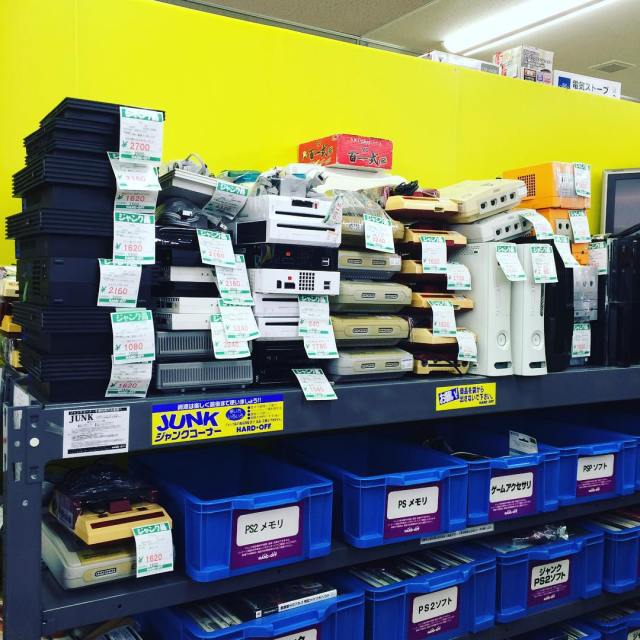
This next Japanese store isn’t so much a gaming or design shop, but is in fact Hard-Off, the questionably-named used hardware store notable for being a supposed treasure trove of cheap Japanese retro consoles. Now whilst it’s likely that many of the systems in Bruce Collins‘ picture might not be in working order, it has to be said that this is quite the sight to behold for anyone who takes pleasure in the physical aspects of game systems. Consoles from almost every generation are available, meaning that once again the Xbox 360 has managed to sneak its way into one of these articles, even if it is in the junk pile (again!).

CC-5-04.jpg

It’s not just consoles though; whilst you might not be able to get away with a wall of Famicom games in your home, it’s not hard to appreciate the sight of this cabinet housing some of the more valuable titles available. Such classics as Super Mario Bros. 3 and cult favourite Mother are proudly on display, as well as a copy of Paper Mario: The Thousand-Year Door which has somehow snuck its way in there! What’s even more enticing than the games behind the glass is the site of all those other bagged up Famicom and Game Boy carts over to the right; certainly envy-inducing!

CC-5-05.jpg

Many of the Famicom games in that cabinet are undoubtedly rare, but it’s unlikely any are as rare as this gold Famicom Disk System disk shared by kazzycom that went up for auction this week. Whilst the game in question, a Mahjong title, isn’t likely to be the greatest entry in the FDS’ library, there’s something undisputedly grandiose about that gold finish, not to mention that neat little Diskun-shaped housing to keep it protected from the elements.

CC-5-06.jpg

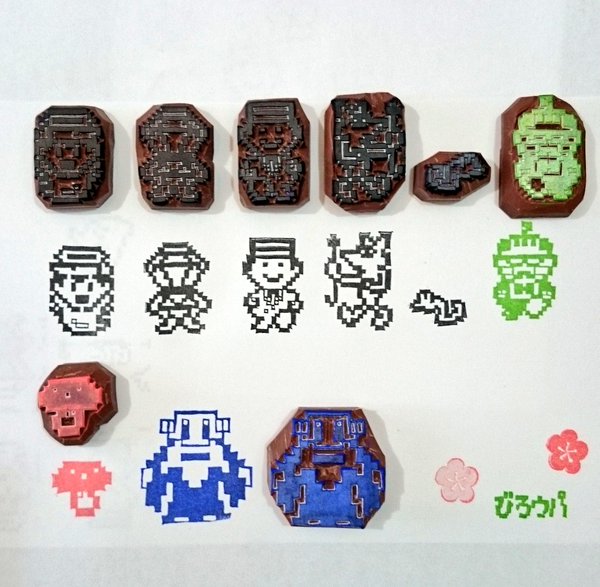
It wouldn’t be a proper Culture Collection if I didn’t bring you something handmade (I’m already setting up the precedents after only 5 instalments!) and I’m happy to be able to show you yet another fantastic piece of Mother-themed craftwork from birosama1217. These hand-carved stamps featuring a variety of Mother characters are a cute way of giving your letters (or other stampable material; I won’t pretend to be an expert on this one!) a bit of Itoi-approved flair, or if you’re feeling in an adventuring mood, the old man from The Legend of Zelda has snuck his way in there too; likely the ideal stamp to use if you plan on mailing your friends a wooden sword to start their very own adventures with!

But it doesn’t stop there! In case you haven’t realised, birosama1217 is quite the Mother fan, to the extent that they’ve even got Mother-themed christmas tree! The idea of using cute little Santa hat-toting Mr. Saturns and present sprites taken straight out of the game is ingenious and topping the tree with the living pile of vomit Master Belch is likely a much greater talking point than a mere angel or star!

From the very old to something brand new; this week Sony dazzled us with a plethora of announcements at the PlayStation Experience, held in San Francisco. Whilst not a brand new unveiling, one of the more notable showings for fighting game fans was The King of Fighters XIV, the first title in the series in almost 6 years. Whilst some are dubious about the switch from 2D sprites to 3D models in this latest instalment, the promise of 50 characters and 6-player action is certainly one worth watching. KingsofCO have captured some footage direct from the show floor, showing off Chang Koehan‘s ‘Climax Move’; it’s certainly a comedic display, although it doesn’t do much to hide the game’s undeniably dated graphical style.

Also on display for fighting game fans was Street Fighter V, with the announcement of brand new character and Bison’s new right hand man F.A.N.G sending the community into a frenzy due to his striking resemblance to a plethora of characters, with comparisons ranging from Waluigi to Judge Doom! Outside of the game itself, a range of merchandise was on display, including this fierce-looking statue of newcomer Necalli, videoed by BornFree, flaunting his ridiculously large head of hair for all to see! It’s no Venus de Milo, but it would probably beat it in a fight!

Posted in Culture Collection, Features, Games Culture, Posts | Tagged , , | Leave a comment

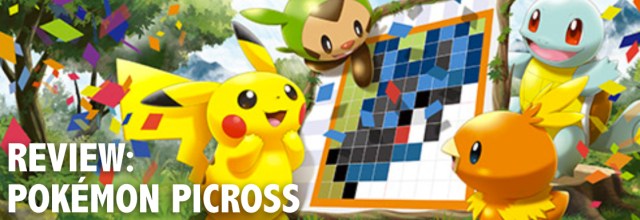
REVIEW – Pokémon Picross (3DS)

POKEMONPICROSS.jpg

Pokémon Picross
Developer: Jupiter Corporation
Publisher: Nintendo
Platform(s): Nintendo 3DS (Download)
Release Date: December 3rd 2015


Nintendo’s Picross games are one of those titles that don’t have a strong history of success outside of Japan. The first game in the series to release in the west in 1995, Mario’s Picross on the Game Boy, was a commercial failure even with the help of the famous plumber and it wouldn’t be until 2007’s Picross DS that another title would grace western shores. Since then, the franchise has been reduced to several painfully overlooked but deviously addictive downloadable entries, including a number of non-Nintendo published iterations on the 3DS eShop. However, the big N have once again teamed up with Jupiter Corporation, this time using a much-loved IP to give the classic puzzler a monster-catching facelift; will the addition of Pokémon be enough to give Picross its chance in the limelight?
pokepicross1

It’s interesting to note that this is yet another ‘free-to-start’ venture on 3DS to make use of the Pokémon IP; I’ll go into more details about the specific bearings of the free-to-play business model on this particular title within the review, but I feel it’s important to comment that the trend of free-to-play Pokémon titles makes it quite clear that this is an IP Nintendo are willing to experiment with; the universal appeal and widespread brand presence of Pokémon make it ideal for this type of title, one which would otherwise fade into relative obscurity; there’s low risk and high potential reward and in some ways, this really could be a potential lifeline for Picross, which has always been overshadowed as a Nintendo-published puzzle game.

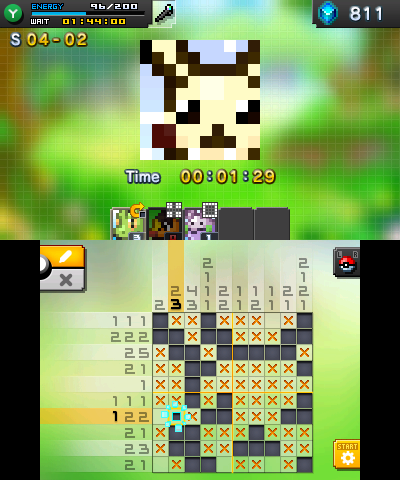
First things first; the game’s tutorial is brilliant. It’s simple, but incredibly effective at explaining the otherwise somewhat confusing concept behind Picross. Unlike a conventional puzzle game (or even your average logic puzzle such as sudoku), Picross essentially presents you with a blank grid to work in, which understandably can be a bit daunting for first time players, but luckily the game’s opening section runs you through all the skills and lingo you need to make it through the game’s puzzles. That’s not to say it’s easy, of course, but it does a much better job at easing you in to a game that genuinely does require some explanation and perhaps even some trial and error at times to ‘click’ in your mind.

pokepicross2.png

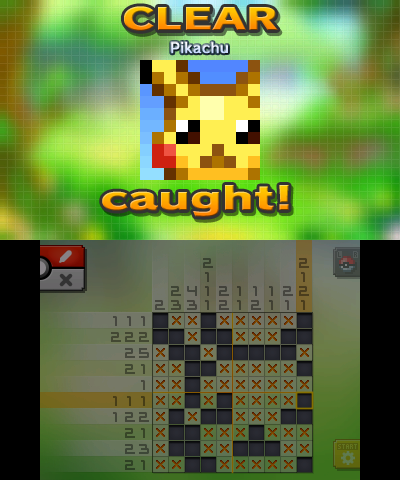
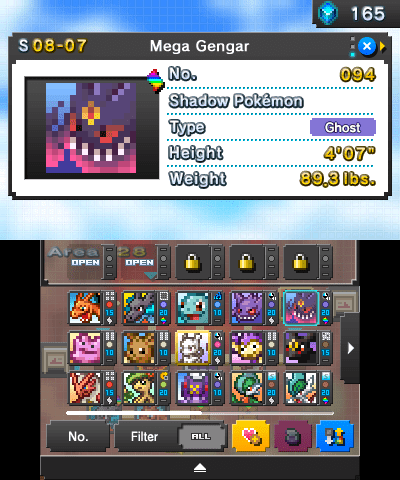
However, this is where the game’s unique Pokémon-themed gimmick comes into play; past the tutorial, each puzzle represents a catchable Pokémon that have unique special abilities. In some ways, these abilities are almost like ‘cheats’, giving you hints about block placement, automatically fixing your mistakes or even completing part of the puzzle for you. However, this adds something fresh to the Picross formula that serves as both a creative way to integrate Pokémon without being overbearing, as well as keeping each puzzle fresh and opening up your options for approaching it. It’s entirely possible to clear each puzzle using simple logic, as intended; after all, every puzzle does have a solution that could be achieved the same way you would solve a pen and paper one. However, the Pokémon abilities are a nice thing to have for when you’re well and truly stumped, something not necessarily needed, but not an unpleasant addition either.

However, it’s with the Pokémon that the game’s free-to-play mechanics come into the light; the entire game is operated around a currency called ‘Picrites’, which of course, can be purchased in bulk for real dosh. Picrites are necessary for increasing the number of Pokémon available in your party, re-filling an energy meter that is expended with every mark on the puzzle grid, reviving party members who have enterered some kind of tiredness state (often with base revival times of around an hour, similar to the ‘stamina’ function you would find in gacha games such as Puzzle & Dragons) and even unlocking new puzzles. I can understand why they’ve tried this model, but honestly, it’s just a nuisance.
pokepicross3.png

Picross is a game with hundreds bite-sized puzzles that you can sink into, individually or en masse. It’s the sort of game that’s equally as good for a long plane journey or a short bus journey, it can be engrossing but it can also be a quick time filler. Now there’s no shortage of puzzles in Pokémon Picross and the difficulty is as fiendish as you’d expect, but this whole ‘energy’ and ‘Picrites’ system just gets in the way. Knowing that you can only do so many puzzles in one burst is a real hit to any motivation you might have to play, limiting your options and forcing you to micromanage your party of Pokémon as opposed to focusing on the puzzles. Of course, the option of purchasing this currency and upgrading your energy meter still stands, but for the amount of money it would cost to buy the highest amount of ‘Picrites’ which essentially allows you to bypass the energy system, you would end up spending a lot more than you would on a standalone PICROSS e game for a similar number of puzzles. As a matter of fact, going by UK prices, you could buy yourself a used copy of Picross DS and Picross 3D and have access to almost 600 puzzles with no catch for less than the cost of 4000 of Pokémon Picross‘s virtual currency.

pokepicross4.png

There are many ways to earn ‘Picrites’ without spending a single penny, completing puzzles being the most obvious method. On top of this, each stage has a series of ‘challenges’, bonus requirements such as the use of certain Pokémon types or special abilities, which give you a small bonus on top; a nice addition for completionists, that’s for sure. As well as this, daily training puzzles are available courtesy of the pixellated Professor Tetra; these are quick-fire, consecutive puzzles that test your quick thinking and stylus-using skills, forgoing the Pokémon or even any pictures in the puzzles and focusing on numerical ability. I honestly went into this hoping for some more traditional Picross gameplay, but unfortunately it literally was more of a training exercise, again awarding a measly sum of ‘Picrites’ as a reward. If this style of puzzle had been fleshed out into a full additional mode, I could see it being a great addition, although considering the puzzles are daily perhaps it will take some more time to see if the difficulty and rewards are ramped up in any way.
pokepicross5.png

Ultimately, Pokémon Picross is a disappointing title; it’s disappointing because it’s a great Picross game, a great Pokémon spin-off and a fiendishly addictive puzzler ideal for the 3DS, yet all of this is held back by the introduction of the free-to-play business model. I feel that whilst this is an interesting and understandable experiment with the model, a more effective way of selling this title as a free-to-start game would have been to follow the example of Fullblox/Stretchmo, offering small level packs to keep players coming back for more. Picross fans will likely be left discontent, a great entry to the series hindered by mechanics that simply aren’t suited to this style of puzzle game. If you’re willing to put up with time limits and waiting times, then you’ll find a slow but good Picross title. looking for a more solid Picross experience, I’d recommend investing in one of the many PICROSS e titles available on the eShop, or even Mario’s Picross on the Virtual Console.

Sadly, I have to wonder that if it wasn’t for the free-to-play model, is this a game that would generate much interest on its own beyond that of the most dedicated puzzle fans, or would this idea have even been greenlit in the first place? Regardless, this is a game that comes so very close to being brilliant, but unfortunately falls short.

Posted in Posts, Reviews | Tagged , , , , , , | Leave a comment

You’ve Probably Never Played… Judgement Silversword: Rebirth Edition

JUDGEMENT SILVERSWORD

Judgement Silversword: Rebirth Edition
Developer:  M-KAI
Publisher: Qute

Platform(s): WonderSwan Color
Release Date: February 2nd 2003 (Japan exclusive)


The tale of the WonderSwan is a curious one. Released exclusively in Japan by Bandai and worked on by the legendary Gunpei Yokoi, the man credited for designing many much-loved Nintendo systems such as the Game Boy, the system was well-designed from a technical standpoint, offering a lower price point and longer battery life than its competition. However, despite gaining a height of 8% of the Japanese handheld market, the system’s three iterations were ultimately unable to topple Nintendo from their perch, fading into obscurity thanks to the release of the Game Boy Advance.

__002.jpg

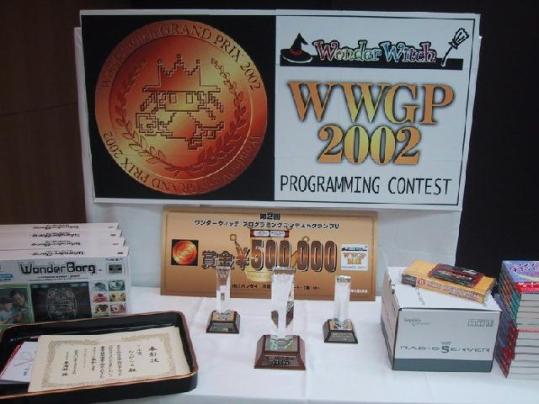
Judgement Silversword: Rebirth Edition is a game that came into being courtesy of one of the many unique aspects that make the WonderSwan such an interesting system. A mail order service run by Bandai allowed for regular fans of the system to buy the ‘WonderWitch‘, a hobbyist development kit and re-writeable cartridge for programming homebrew WonderSwan games. Regular design competitions were held, occasionally with the winning software seeing a full published retail release; Judgement Silversword is just one of a handful of games created and released through this method (many of the other entries to the competitions can be freely downloaded from Qute’s website).

The game plays like your average vertical shoot ’em up, but the control scheme, which makes use of the WonderSwan’s unique but ingenious dual d-pad interface, assigns movement and various shot types to each of the pairs of d-pads, makes it a seamless and very comfortable experience for a portable shooter. The control is tight and accurate, making this an ideal title for anyone wanting their STG fix on the go.

Continue reading

Posted in Features, Posts, You've Probably Never Played... | Tagged , , , , , , | Leave a comment

Flash Kicks, PCBs and Squid Romance – Culture Collection #4

For the second week running we’re opening Culture Collection with talk of anniversaries. This time the short-lived but still wonderful Sega Dreamcast is turning 17; if it lived in the UK, it’d be old enough to give blood and get a warning from the police, but somehow I can’t see either of these things happening. The Dreamcast above has been lovingly customised by just_awful (who runs the brilliant little blog Ribbon Black, which I highly recommend you check out; his designs for fake games are definitely worth your attention!) and given a bright pink overhaul. It genuinely looks like it could be an official variant!

cc-4-02

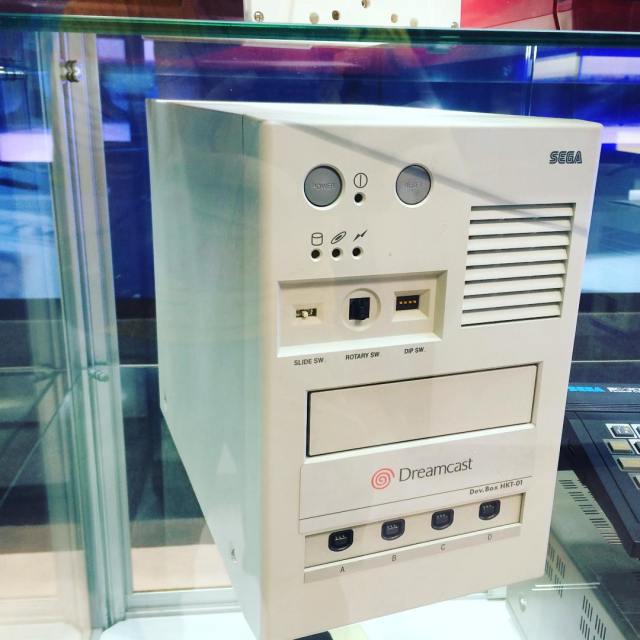
With this anniversary in mind, I felt it was appropriate to share this picture from the RETRO.HK show in Hong Kong, taken by dave_van_damm, of this rare Dreamcast ‘Katana’ development unit. It’s a hefty piece of kit, certainly not something that was ever meant to make its way into the hands of the public! However, the real star of the show was the ‘Nintendo PlayStation’ prototype, the only relic left from a canned joint project between Nintendo and Sony to create a CD add-on for the SNES, which would later go on to shape the original PlayStation. There are likely very few of these units in existence, making it a real holy grail for console collectors; if you ask me, it belongs in a museum!
CC-4-03.jpg

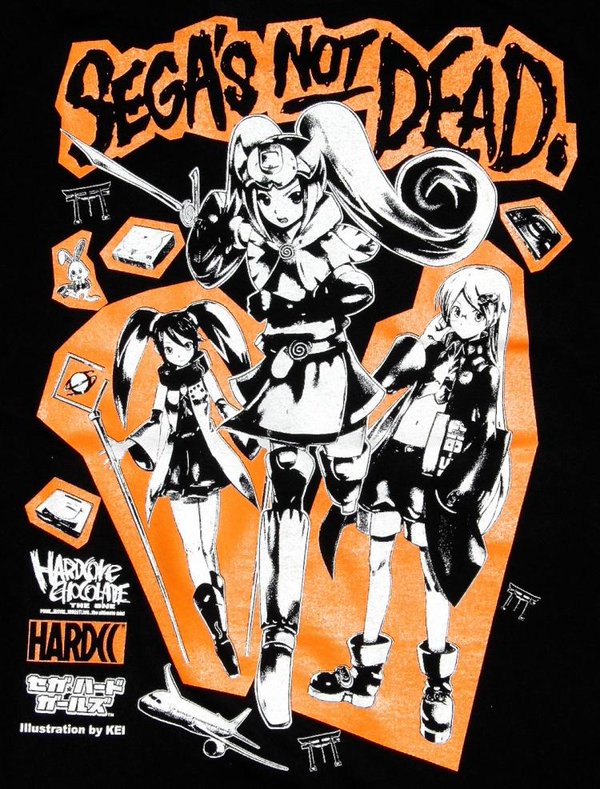
The Dreamcast was something of a last hurrah for Sega, abandoned before it was given a chance to grow. If you’re still cut up by this particular story of gaming demise, not to worry; Japanese punk clothing label Hardcore Chocolate have the piece of apparel for you! Featuring Sega’s very own ‘Hard Girls‘, humanised versions of all your favourite classic Sega systems, this shirt proudly makes sure that everyone around you knows that you think ‘Sega’s not dead’! It isn’t in our hearts, at least…

2217_1.jpg

Actually, Japanese clothing labels have been on fire this month when it comes to creating great gaming-themed apparel. This pair of Street Fighter trousers designed by Punk Drunkers are modelled after those worn by the all-American soldier with the physics-defying haircut, Guile. Whilst they aren’t guaranteed to improve your Flash Kicking and Sonic Boom-throwing abilities, but they’re exactly what you need if you’re looking to add some fighting game flair to your outfits! You can buy them for yourself here; be sure to check out some of their other Street Fighter apparel whilst you’re over there.

12276939_203514716647727_950372236_n.jpg

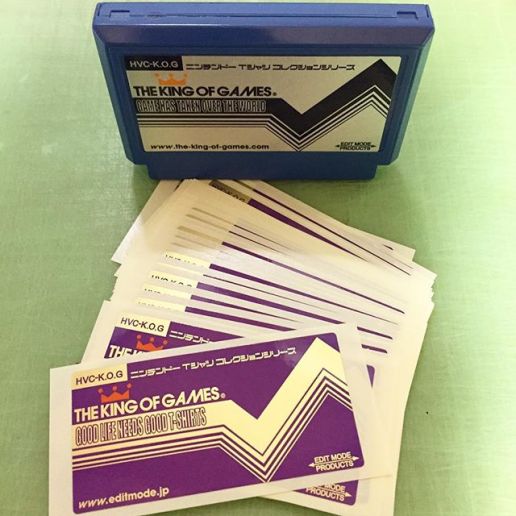
I’m envious of anyone who gets ahold of one of these custom Famicom cartridge labels from EDITMODE, sporting their slogan ‘Good life needs good t-shirts’. As far as I can gather they’ll be packaged with orders from their online store, so maybe now’s a good time to treat yourself to something from their Splatoon range.

Now on the topic of the Famicom, it’s become no strange thing to hear of people making music using the classic system; only last week we covered RIKI’s “8BIT MUSIC POWER” album that requires an original Famicom system to be listened to. However, something a tad more uncommon is hearing someone playing ALONGSIDE a piece of classic hardware! Now I’m not saying that YS_progressive‘s guitar skills, backed up by the 8-bit sounds of Mega Man 2 are a sign that the missing fourth member of your band is a Famicom, but it’s still quite an impressive spectacle to see it used in such an obscure musical manner.

airride

From this week forward I’ll be featuring a piece of reading material every week for your perusal amongst the various cultural items in this feature. This week I highly recommend checking out this opinion piece providing some insight into the thoughts and reasoning behind game localisation, courtesy of our friends at SourceGaming. With numerous recent controversies arising due to changes and cuts to high-profile titles in the localisation process, it’s interesting to read some thoughts from people who have undertaken their own translation work on the processes involved and why changes are sometimes necessary for different markets. A second part is on the way soon, so keep your eyes peeled for that one too!

Let’s end on a more tender note. Who would’ve thought that squids could be so romantic? Well, not all squids…

Posted in Culture Collection, Features, Games Culture, Posts | Tagged , , | 1 Comment

“8BIT MUSIC POWER” now available to pre-order!

71F2TSx6E-L._SL1000_

You may remember around a month ago we featured an article about “8BIT MUSIC POWER”, a brand new chiptune album from Japan released in Famicom cartridge format! I was quite excited to discover that Japanese artist and programmer RIKI was working on this project, which has now been confirmed for a release on January 31st 2016.

61KhZ1OfwRL._SL1000_.jpg

The cartridge, complete with gorgeous artwork and a Famicom-styled box, is being produced by Columbus Circle, Japanese manufacturer of retro gaming-themed goods and merchandise (I actually wrote about some of their products in the first ever post on Minus World!), so you can expect it to be high quality. Unfortunately, the album is being sold through Amazon Japan and is unavailable for international shipping; if you want to get your hands on this unique chiptune item, I’m afraid you’ll be forced to rely on a proxy shipping service such as Tenso. Admittedly, this is quite a big disappointment for western fans of chiptune and the Famicom homebrew scene; I can imagine this would be a highly desirable item otherwise.

You can check it out for yourself on Amazon Japan here, or check RIKI’s website for more info on the track list, as well as a sample video.

Posted in Merchandise, Music, Posts | Tagged , , , , , , , , , , | 2 Comments