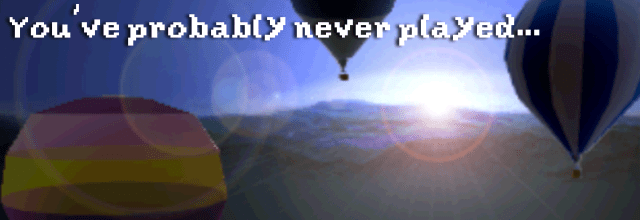
Kaze no Notam (Notam of Wind)
Developer(s): Artdink
Publisher: Artdink
Platform(s): PlayStation
Release Date: September 11th 1997 (Japan exclusive)
When it comes to capturing the feeling of flight, video games have a tendency to focus on speed above all else – modern air vehicles offer the sensation of insane velocity that many long for when soaring the digital skies, the closest thing to mankind’s dream of flight encompassed in virtual form. It’s regrettable that in this pursuit of momentum, one of the more graceful methods of flight has been sorely overlooked on many an occasion. Hot air ballooning may lack the awesome speed offered by military air vehicles, but it’s in this lack of haste that a unique experience can be found, one surprisingly untouched in video games for the most part.
Tokyo-based developer Artdink, known best for their A-Train series of railway business simulation games, approached hot air ballooning as a subject matter during a particularly experimental period in their history, one which saw the likes of Aquanaut’s Holiday and Tail of the Sun see release worldwide. Many of these games failed to garner commercial success due to their unconventional concepts, with cases of the titles even being labelled ‘non-games‘ as a result of their lack of clear conditions for victory or defeat, instead focusing sheerly on player experience. Kaze no Notam (Notam of Wind) would serve as a particularly notable product of this era in Artdink’s legacy, attempting to present a theme unseen in any game before it with a highly unique aesthetic built around it.
In fact, at a glance Kaze no Notam‘s aesthetic is potentially the game’s biggest draw. The game’s packaging, which displays a gorgeous pop-art style painting created by artist Hiroshi Nagai featuring a trio of vividly coloured hot air balloons gently drifting against a summery blue sky, high above the crystal clear waters of a swimming pool lined with vibrant foliage and all set against an exotic ocean view. Displaying such an eye-catching piece of artwork on the game’s front cover is a bold move, as well as one that sets the tone for the entire experience. Artdink were so confident in the use of this artwork, it seems, that each game was even packaged with a postcard that could be mailed away to enter a raffle to win full-sized lithographic prints of Nagai’s painting. This is a game that isn’t afraid to be forward with its plan to offer a more laid-back take on flight than you might be used to and the rest of its packaging works to only further certify this – the printed inlay inside the case even inquisitively poses the question “Did you luxuriate in the wind?”.
Clearly this is some fantastic packaging design on show that successfully creates a strong aesthetic for the title before you’ve even turned it on. However, in a surprising turn, this can almost be considered a factor contributing to the game’s undoing…
Continue reading →



 Tsubasa Sakaguchi











 Minus World