Unorthodox Haunts and Ideas with Nier: Automata’s Yoko Taro

Following the recent release of the critically acclaimed Nier: Automata, toco toco joined its director and scenario writer Yoko Taro, introducing us to his bizarre direction style and some of his favourite Osaka locales for both work and play.

Taro discusses everything from his views on today’s AAA games to his love of Galactic Pinball on the Virtual Boy, whilst his co-workers have an opportunity to share their viewpoints on his unorthodox approach to game design. After working on what is undoubtedly his most ambitious game to date, Taro’s thoughts on his place amongst young creators come in the form of a humorous yet thought-provoking proclamation on the role of veteran figures in the games industry.

You can follow toco toco on Twitter, Facebook and Instagram. Visit their YouTube Channel for more videos.

Posted in People, Posts, Video | Tagged , , , , , , , | Leave a comment

A Super Mario World Re-Telling, Released on VHS and Controlled with a Fake Telephone

https://www.youtube.com/watch?v=L6RlHBMCApc

Obscure game preservationist and Satellaview aficionado Kiddo Cabbusses has shared footage of a unique Mario adventure that you’ve likely never experienced.

Mario to Yoshi no Bouken Land (Mario & Yoshi’s Adventure Land) is an animated re-telling of the events of SNES classic Super Mario World, released exclusively on a Japan-only device called the Terebikko. Launched by Bandai in 1992, the Terebikko is a phone-shaped toy that runs in conjunction with special VHS tapes featuring popular cartoons and anime of the era – at various intervals in each story, children are encouraged the pick up the fake phone and answer questions related to the story by pressing one of four colour-coded buttons. Continue reading

Posted in Games Culture, Posts, Video | Tagged , , , , , , | 3 Comments

Slick Setups, Lazy Stores and Even More Diskun Love – Culture Collection #19

cc19-01.jpg

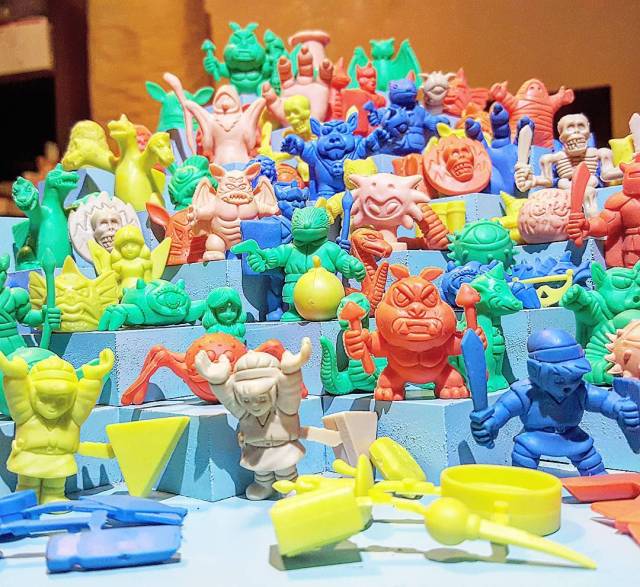
With The Legend of Zelda: Breath of the Wild making waves this month, it seems only fitting to start off by showing some love to Nintendo’s fantasy powerhouse – namely with this brilliant vintage Zelda keshi, shared by sculptor and small toy afficionado Eric Nilla.

cc19-02.jpg

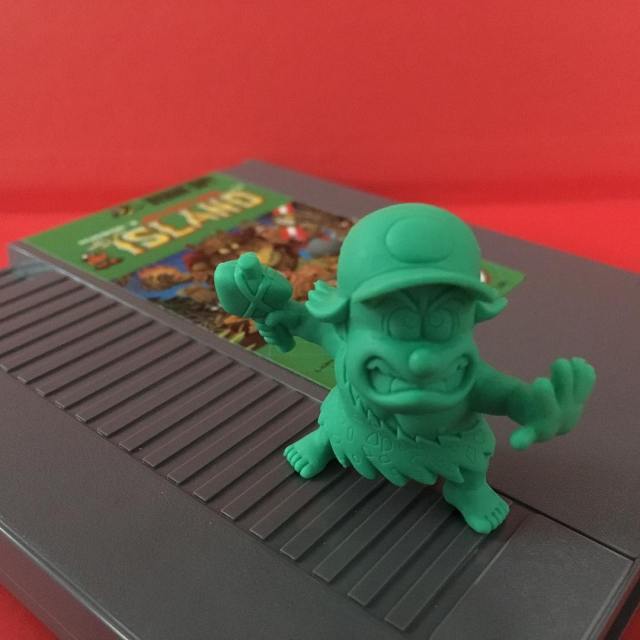
A lot of video game-themed keshi (small figures made of eraser-like material, normally inspired in design by Japanese manga and anime) did the rounds in the Famicom’s heyday. More recently, companies like ZOOMOTH have produced original figures for collectors, such as this Master Higgins/Takahashi Meijin from Hudson’s Adventure Island. This particular, cart-surfing figure is a part of lord_gajiaotzu‘s collection.

cc19-03

You may remember that in a past instalment of Culture Collection, we took a look at a 3D-printed cookie cutter shaped like Famicom Disk System mascot Diskun, shared by Kazzycom. Well you’ll be pleased to know that the end product, some rather delicious-looking cookies, have finally surfaced. The cookies were sold at an event in Saitama and apparently have a crisp texture. Seems they turned out very well! Continue reading

Posted in Culture Collection, Features, Games Culture, Posts | Tagged , | Leave a comment

Appreciate the Substance Behind the Style with Rose Colored Gaming’s Transparent SNES System

Transparent electronic hardware has a certain allure that’s difficult to explain. Be it Nintendo’s unreleased demonstration hardware or even CRT TVs made for use in prison, some kind of thrill can be had from gazing in at the parts of a device that you’re not supposed to touch. This gorgeous transparent SNES console, complete with matching controller, masterfully applies this concept with a design that re-invents the US SNES’s trademark plastic housing whilst capturing its unique and rarely appreciated interior form. Continue reading

Posted in Design, Posts | Tagged , , , , | Leave a comment

Programmable Series – Self Inflicted

VOL8.png

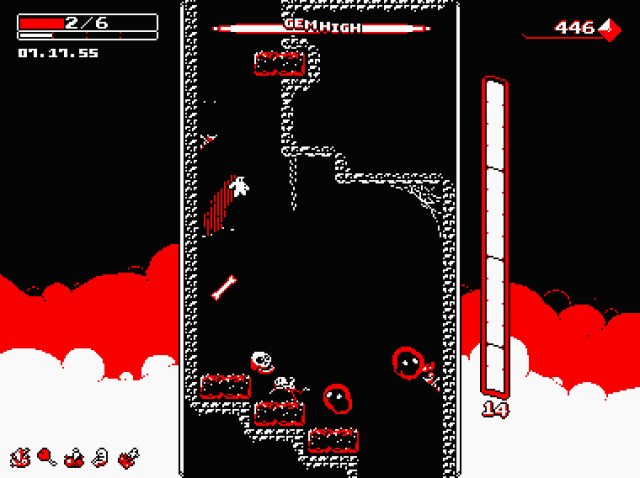
You may have heard some variation of the phrase “from limitation comes creativity.” Usually, this phrase is used in reference to a physical limitation. One such example would be an artist who has lost the use of their hand, who then paints with their feet. The interesting thing about limitations is that they narrow our available options and force us to problem solve. When limitations are applied to designing a video game it can help you focus and deliver a more refined end result. Although we’ve reviewed working with limitations in regards to specific hardware, you can get a completely different perspective when those limitations are self inflicted.
ps08_downwell.jpg

With the technology we have available today, it’s possible to create almost any game you could dream up. For some designers this can create the problem of simply having too many options, which can make it difficult to know where to start on your project; the end result can often be that your project doesn’t get started. As a child you may have sat down with a small box of crayons and scribbled away on some paper or in a book, just for fun. Now imagine, as a child, you were tasked with colouring everything on a page as accurately as possible. If you were given a standard box of 8 crayons, you’d likely end up making the sky blue, the grass green, the trees brown and so-on. Now imagine instead of that box of 8, you were given a box of 96 crayons with the same task. You’d have to choose whether the grass is yellow-green, forest green, olive, fern or shamrock. Would the trees be beaver, chestnut, raw umber or sepia?

Just making those decisions adds additional time on getting your finished product. You also have the additional possibility of second guessing your choices later on. Maybe there was a better option for the grass or the trees and you feel less confident about it by the time the picture is done. If you only had the original 8 options, instead of 96, it is much easier to make a choice and stick with it. When approaching game design with all of the development software and design tools available, we are working with a very big box of crayons. Continue reading

Posted in Features, Posts, Programmable Series | Tagged , , , , , | Leave a comment

Zelda Love & Doshin Warriors with Nintendo Podcast System Episode 40

I was kindly invited to join Matthew Gibson, Jack Gawn and Sam Spade for the latest episode of Nintendo Podcast System, which as the name suggests is a podcast dedicated to all things Nintendo.

Some great discussion was had about recent Nintendo-related happenings, as well as in-depth gushing about our time spent with The Legend of Zelda: Breath of the Wild (a note that if you’re going into the latest Zelda blind, you may want to steer clear of this section to avoid some talk that could be considered spoilers). I had a really good time recording this one and even managed to bring some Doshin the Giant chat to the table, so I definitely recommend giving it a listen.

You can follow Nintendo Podcast System on Twitter and listen to the podcast on iTunes or YouTube.

Posted in Podcasts, Posts, Video | Tagged , , , , , , , | Leave a comment

Exploring Tokyo’s Urban Sprawl with Persona 5’s Katsura Hashino

The latest episode of toco toco focuses on Katsura Hashino, a video game designer, producer and writer for Atlus who has worked on the likes of Catherine, the Persona series and Trauma Center: Under the Knife.

Hashino guides us through Sangenjaya, an area of Tokyo that served as the inspiration behind the fictional Yongenjaya, a key location in the recently released Persona 5. He sets out his vision for the game’s setting and the tone he aimed to capture in its environmental design, focusing on the backstreets tucked away within the city’s colossal urban sprawl.

Hashino goes on to introduce the Carrot Tower, a local landmark and home to a popular chain of bookstores that he visits to foster his creativity and appreciate the scale of the city he lives in. The tour concludes with a visit to Atlus’ offices, to learn more about his future projects, including the upcoming PROJECT Re FANTASY.

You can follow toco toco on Twitter, Facebook and Instagram. Visit their YouTube Channel for more videos.

Posted in People, Posts, Video | Tagged , , , , , , , | Leave a comment

Looking Back at the Best Bits of the Wii U You May Have Already Forgotten

iwata-wiiu.jpg

At the time of writing, Nintendo’s latest console, the Nintendo Switch, has already begun to release worldwide. As a hybrid between a home and handheld system, it represents a bold new direction for Nintendo, particularly from a software creation standpoint. However, as is the norm with traditional games hardware, when one thing begins, another must come to an end – in this case, the ending in question is that of the era of the Wii U, Nintendo’s previous home console which, whilst playing host to a number of critically acclaimed titles, served to be a commercial failure that has caused the company to rethink many aspects of its approach in designing a follow-up.

Although the Wii U will always be remembered as the catalyst for a difficult period in Nintendo’s rich history, now is a fitting time to look back and celebrate some of the things it did do right, namely those that may easily have been overlooked or even forgotten amidst a mixture of reverence for much-loved games and harsh, often deserved criticisms of the attitudes and structure that made the system what it was. Continue reading

Posted in Features, Posts, Retrospective | Tagged , , , , , | Leave a comment

Romantic Treats, Artist’s Impressions and Famicom High Fashion – Culture Collection #18

cc18-01

It’s been far too long since our last games culture showcase, so let’s start by going right back to the end of January, where a sighting of a Godzilla-like monster attacking Kyoto Tower became the hot topic for Japanese Nintendo fans on Twitter.

Fortunately, this wasn’t a real-world Kaiju flick playing out, but an error message that terrorised Nintendo’s online store as fans swarmed to pre-order the upcoming Switch console. With traffic high, the graphic was displayed for so long that fans even began to create fan-art inspired by it – the biscuits above, shared by pirorit_tw, being a personal favourite take. Who knows if this monster will ever surface again, but for the few hours it stared eager Nintendo customers in the face, it received the privilege of receiving the kind of attention that’s normally reserved for the likes of Mario and Link.

cc18-02.jpg

Some more edible treats, this time for Valentine’s Day. Chihiro Tanaka‘s Game Boy-inspired chocolate banana cake has a particularly charming home-made feel.

cc18-03

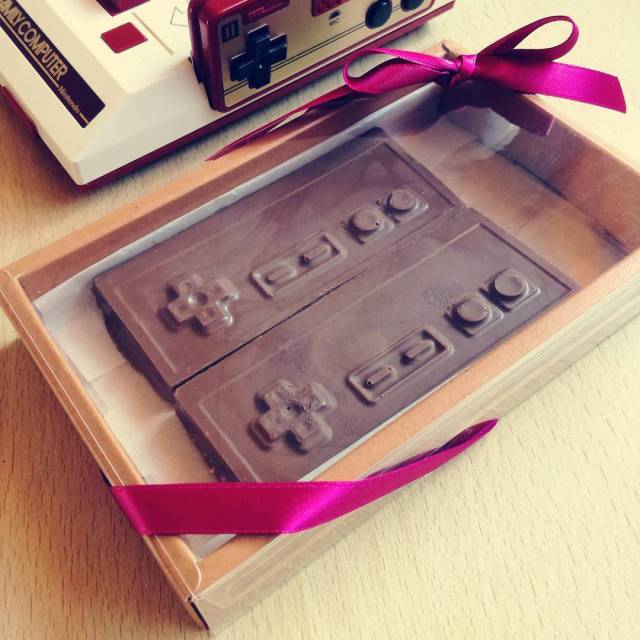
Kaj2nd‘s chocolate NES controllers do an impressive job of capturing the iconic layout’s size and scale with authenticity.

These Kirby-themed biscuits were shared by sokms2, who boasts some exceptional icing skills. Bonus points for the apposite Cupid Kirby appearance.

More hand-made Kirby goodness now, these laser-cut pins from EDITMODE and shared by the MHz Shop. The appealing sprite-work found in Kirby’s Adventure transfers remarkably well onto a wood finish. Continue reading

Posted in Culture Collection, Features, Games Culture, Posts | Tagged , | 2 Comments

Nagi, a Surreal Auditory Experience Rooted in Video Games and Reconstruction

nagi-01.png

The concept of ‘gamification’, the application of game-playing elements to other activities, is a curious one. Whilst not strictly emerging conceptually from video games – rather, based primarily on the concept of a ‘game’ itself – it becomes easy for those with a significant investment in video games to eventually draw parallels between virtual actions and those in everyday life.

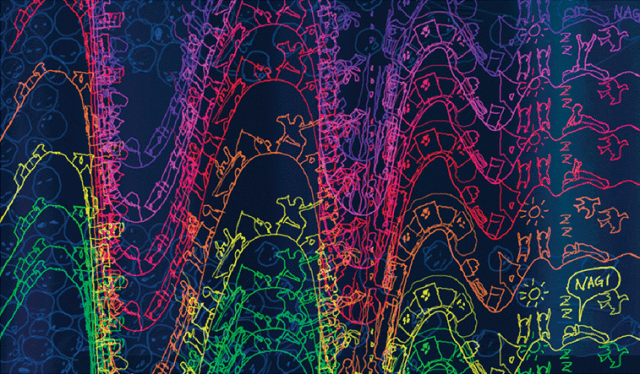
However, one core notion fundamental to both video games and entertainment as a whole that lacks accessibility through gamification is the presence of an auditory component to accompany visual perception – in other words, there’s no background music in real life. Nagi, an application created by Takayuki Nakamura, seeks to rectify this somewhat with an experimental, science-based premise of turning the sound around us, good or bad, into calming ambience perfect for relaxation.

Nakamura is a veteran when it comes to composing for video games, with the soundtracks of titles such as Virtua FighterLumines and most recently the upcoming Birthdays: The Beginning credited to his name. A lot of his past work is distinctly more lively than the soothing sounds created by Nagi, no doubt a direct result of a significant difference in purpose; created in the aftermath of the 2011 Tōhoku earthquake and tsunami, Nagi takes in all surrounding sound detected through a microphone and gradually phases it into peaceful waves (known as ‘nagi’ in Japanese, giving the software its title), with the intention being to serve as a unique auditory approach to helping victims of the disaster to recover a sense of tranquillity they may have lost.  Continue reading

Posted in Games Culture, Music, Musings, People, Posts | Tagged , , , , , | Leave a comment