More In-Depth Switch Chat with SourceGaming and NintenDaan

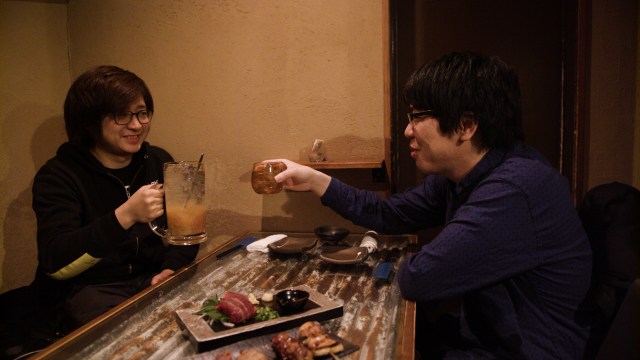
Following on from my discussion about the Nintendo Switch UK Premiere with SourceGaming‘s PushDustIn, I made an appearance for the 24th episode of the SourceCast alongside games journalist Daan Koopman (NintenDaan) to talk more Switch, including impressions, hopes for the system and our general thoughts on the console’s unveiling at the Tokyo Big Sight.

You can check out more content from Source Gaming over on their website and YouTube channel, and follow them on both Twitter and Facebook. Daan Koopman can also be found on Twitter and Youtube, as well as on a whole host of other Nintendo sites, which you can find links to on his website.

Posted in Podcasts, Posts, Video | Tagged , , , , , , | Leave a comment

A Look at Work and Play with a Real-Life Street Fighter

Japanese culture series toco toco‘s latest episode follows pro gamer and EVO 2011 Super Street Fighter IV champion Fuudo, touring some of the day-to-day places he frequents for work and play.

The video offers an interesting look into the offices of Dengeki, one of Japan’s biggest video game media publishers and the hosts of the regular live show where Fuudo plays Street Fighter V amongst other titles.

toco-fuudo-39

Following this is a tour of some of the pro’s regular haunts for eating and drinking with other players and catching a few evening rounds of Gunslinger Stratos. It gives us some curious insight into the cultural differences between the everyday lives of pro gamers in Japan and the west.

You can follow toco toco on Twitter, Facebook and Instagram.

Posted in People, Posts, Video | Tagged , , , , , | Leave a comment

Nintendo Switch UK Premiere Discussion with Source Gaming

I recently sat down with Source Gaming‘s PushDustIn to discuss my time at the Nintendo Switch UK Premiere, including my thoughts on the hardware itself and the currently announced first-party line-up. If you fancy hearing me expand on some of the bases touched in the impressions feature posted earlier this week, as well as some insight from Push on the details Nintendo have shared with us, then give it a listen!

You can check out more content from Source Gaming over on their website, and follow them on both Twitter and Facebook.

Posted in Posts, Video | Tagged , , , | 1 Comment

The Overlooked Star of the Switch Presentation was Ken Ishii’s Slick DJ Set

Let’s all take a moment to appreciate what could possibly be the most overlooked aspect of last week’s live Nintendo Switch presentation – the ridiculously cool build-up DJ set from Ken Ishii.

The Sapporo techno pioneer has something of a gaming history and may be familiar to you from having worked on games such as Rez – for which he provided ‘Creation The State of Art‘ – as well as producing a number of tracks for the CD release of LSD: Dream Emulator‘s surreal and experimental soundtrack.

kenishii.png

Ishii’s live set offers a gradual, silky smooth build-up that serves as a fitting parallel to the anticipation many would have felt in the final minutes prior to the presentation beginning. The vibe throughout carried a fresh yet refined tone, a flavour that perhaps could be seen to signify an attempted change in image on Nintendo’s part with the launch of their newest hardware. It all culminated in an energetic section that made use of the distinctive ‘click’ sound that has quickly become a trademark of the console and its promotional material.

Few will remember this part of the Nintendo Switch’s introduction – many likely forgot it had even happened the second the first game was shown. Regardless, why not take twenty minutes to sit down, listen and relax with a pleasant surprise that Nintendo have subtly treated us to.

Posted in Music, Posts | Tagged , , , , | Leave a comment

Radical Dudes, Not-Game Boys and The Late Hudson Soft – Culture Collection #17

cc17-01.jpg

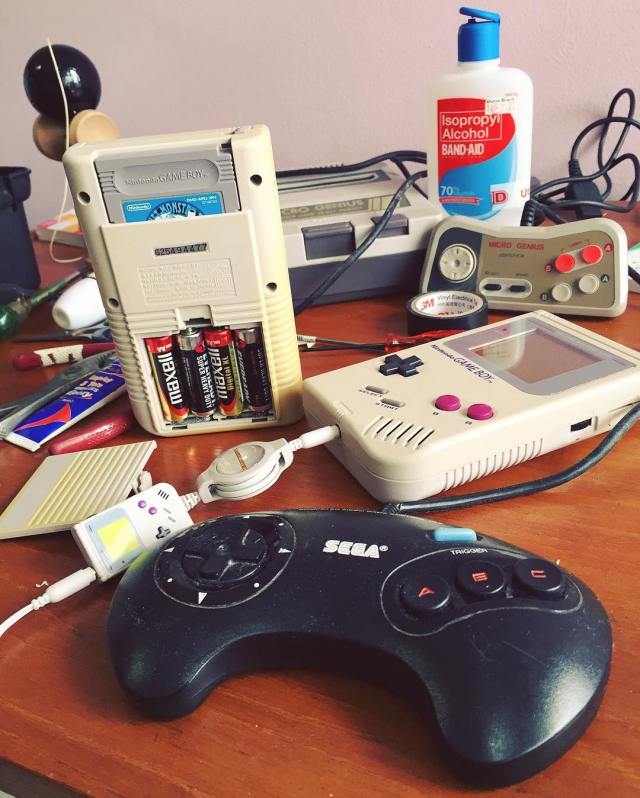
It’s the first Culture Collection of the year! To start things off, let’s go right back to the start of 2017 and check out how l00scr3w spent his New Year’s Day morning – tinkering with Game Boys and Famiclones.

cc17-02.jpg

Kaj2nd opted for a multiplayer-focused start to the year. He’s clearly well-equipped for those big Bomberman sessions Hudson’s Super Multitap was made for.

cc17-03.jpg

Continuing the Hudson Soft theme with a double-whammy of pics from THUNDERBOX‘s Nazo no Mise store, which we talked about last year. This cassette tape apparently features the theme song from  Adventure Island. Continue reading

Posted in Culture Collection, Games Culture, Posts | Tagged , | Leave a comment

Programmable Series – Turn the Page

VOL7.png

A great advantage that games have over other types of media is the inherent interactivity that comes with them being games. You can simply push a button and the outcome of events will change. The player gets to control the actions of the game in every aspect that is available to them. Like playing with a digital puppet, they control when the characters move, jump, run or attack. However, even with all of that control, the story still belongs to the game’s creators – no matter how the player gets to the end of the game they are going to see the story you’ve created for them. So, what if your story is more complicated than something that can be portrayed in a platform or action game? What if your story is the game? This is where narrative, adventure and visual novel games come in.

Many people believe that visual novels are designed for a niche audience and don’t appeal to everyone. At a glance this is an understandable assumption, as many modern visual novels are geared towards fans of romantic stories and make use of anime-like visuals. However, if you look back at the history of visual novels, you’ll find they were originally marketed more towards adult audiences when they first became popular. The themes of many games were very adult oriented and often included excessive violence and nudity. Although their popularity wasn’t as widespread in many countries, the Japanese market was bountiful with these types of games in the 80’s and early 90’s.

Home computer systems like the PC98 and the X68000 had a large assortment of visual novels due to the fact that they were easy to create and these types of computers could handle them well. The popularity of the visual novel started to shift in the 90’s as more affordable home consoles took over the gaming market. With SEGA, Sony and Nintendo systems having fast refresh rates and responsive controls, they were able to deliver more action oriented games which really took over as the preferred genre. People could bring the fast action that they would find on an arcade game into their home. Continue reading

Posted in Features, Posts, Programmable Series | Tagged , , , , , | Leave a comment

Nintendo Switch UK Premiere – Thoughts and Impressions

switch01.jpg

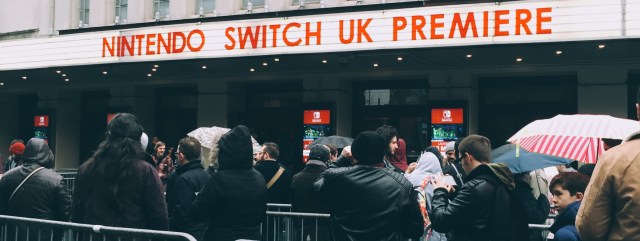
I was recently had the opportunity to attend the Nintendo Switch premiere event in London, which offered a number of fans the chance to get their hands on Nintendo’s latest console and a sampling of the first and third-party software it has to offer.

The day not only provided a great opportunity to learn more about what the Nintendo Switch can do, as well as the games that make use of its unique hardware features, but to see the first-hand response of fans from across the UK to the system in the run-up to its fast approaching release date of March 3rd.

I’ve compiled some fairly comprehensive impressions based on the console itself, as well as each of the games I had the chance to spend some time with. If you’d like to share your own opinions on the Switch and its announced games, feel free to get in touch via Twitter or leave a comment below. Otherwise, please enjoy!

HARDWARE.jpg

First thing’s first, the machine itself. The Nintendo Switch’s main draw is the ability to instantaneously switch between home and portable gaming with relative ease, and I’m pleased to say that this feature is executed almost as smoothly as the system’s trailers would suggest. Bar the requirement of a simple button press after removing the Switch from its dock, I found that The Legend of Zelda: Breath of the Wild transitioned between screens as quickly as I was hoping, and it was pretty sharp-looking to boot. The game ran well, with no stuttering or slowdown that I noticed throughout my twenty minute demo. With this new hardware, a console-quality experience can seemingly be had anytime or anywhere, and that’s just plain impressive.

My time with the Nintendo Switch hardware begun with the Pro Controller, a fairly pricey peripheral that offers a button layout and physical shape more traditional to what you’d expect from a game controller. If you’ve ever used the Wii U’s Pro Controller, you should know what to expect, although the addition of a gyroscope and NFC functionality contribute to making the Switch equivalent a beefier control option, both physically and in its technological capabilities. The whole package felt sturdy, with the face buttons firm and the control sticks offering a generous amount of resistance – the variation in their placement, however, will likely be something that causes discomfort on first use after a generation of symmetrical sticks from Nintendo.

Next came the Joy-Con, small handheld controllers that can be used individually, as well as attached to the Switch’s screen or in a separate grip for a traditional control style not unlike that offered by the Pro Controller. Generally speaking the control sticks and buttons felt the same as on the Pro Controller, with the stick placement a little jarring at first but soon becoming second nature after 10 minutes of Zelda.

However, it was when I got the separated Joy-Con controllers in my hands to play ARMS that the console’s unique controllers option began to shine – responsive and comfortable, especially with the additional wrist-strap that slightly increases their size, and not to mention sporting features such as HD rumble and a motion-tracking IR camera that can simply be described as amazing, it made me realise that perhaps we’d been sleeping on one of the Switch’s best features all along.

There’s no denying that portability will be the Switch’s most appealing ‘gimmick’ to many, but having spent some time with some truly original methods of control, I strongly advise you – don’t sleep on the Joy-Con. There’s the potential for some truly incredible things packed inside of those little things, something that’s perhaps better to understand when taking a look at some of the games that use them.

ARMS.jpg

I want to start with ARMS because ARMS is the bomb.

I’ve already talked a little about ARMS on Twitter, because out of all the games I played at the premiere, it was the one that I most wanted to go to people with and say “you need to play this”. It’s a brand new first-party IP described by Nintendo as a mixture of punching and shooting (although I’d probably lean more towards the former), and seems to be another foray for Nintendo into the alternative fighting game genre, which is always exciting to see.

One of the most satisfying things I found about ARMS was that as soon as I had the Joy-Con in my hands, I felt like I knew exactly what to do. This may sound obvious, considering it’s a motion-controlled game about punching, but the controls for both attacking and moving around each arena felt intuitive, responsive and wholly satisfying. It’s a game that almost anyone could pick up and enjoy, but I can feel there’s a level of depth to its mechanics that will be interesting to explore – I like to think that with a solid roster of characters and the right amount of balancing, this would make for a highly competitive game that would be as fun to watch as to play. Continue reading

Posted in Features, Opinion Piece, Posts | Tagged , , , , , , , , , | 3 Comments

Cookie Cutters, Fast Cars and Post-Christmas Cheer – Culture Collection #16

Let’s bring the year to a close with the final instalment of Culture Collection in 2016. Starting with a few post-Christmas curiosities, here’s a handmade, Dragon Quest-inspired diorama that Jeremy (of Ribbon Black) made for his brother, complete with custom Slime wrapping paper stamps. It’s too cool for words!

cc02.jpg

Another handmade item, this time from Birosama1217, who was featured in our 8-bit Shugei Culture Collection special – a cute Christmas wreath adorned with bead pixel art.

cc03.jpg

This cardboard Snorlax, shared by taro_2x4, was spreading some festive cheer amongst seasonal shoppers.

cc04.jpg

EDITMODE‘s Chicano takes a quiet moment to play some Famicom Pinball. Photographed at THE KING OF GAMES’s winter pop-up shop, which we talked about before the Christmas break.

cc05.jpg

Moving on from Christmas but keeping to the topic of cool shops, Kuramae was recently graced with the brief presence of an interesting looking store run by TOKYOPIXEL. A nice selection of low-fi style goods and apparel were available – the store has closed for the year, but you can still browse their wares on their online store before they re-open in January.

cc06.jpg

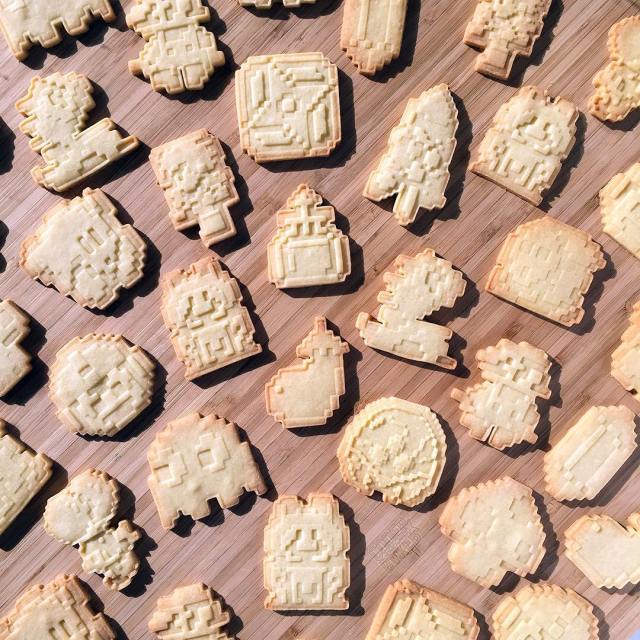
Coderxbaker never fails to impress me with his custom-made cookie cutters and other gaming-inspired edible treats. It was hard to pick just one set of his designs to showcase in this article, but I was eventually swayed towards this plethora of NES-era sprite biscuits.

Continue reading

Posted in Culture Collection, Games Culture, Posts | Tagged , | 4 Comments

In Fitting with the Season, Here’s a Nintendo-Sanctioned Version of Wham!’s ‘Last Christmas’ on the Super Famicom

Yes, you read that right. This unused 16-bit cover of Wham!’s ‘Last Christmas’ was featured as a part of Do-Re-Mi De~Fa!, a digital music magazine distributed via the Super Famicom’s Satellaview service, which we’ve been talking about an awful lot this week. I’m always eager to talk about the Satellaview whenever possible, and the opportunity for a Christmas-themed post that featured something so bizarre was one I simply couldn’t pass up.

On behalf of Minus World, I’d like to wish you all a very Merry Christmas and a Happy New Year! Your support throughout 2016 has been greatly appreciated and I hope you’ll enjoy following what we get up to in 2017.

Posted in Games Culture, Music, Posts | Tagged , , , , , | Leave a comment

Silver Trousers and Future Visions with the Satellaview

https://www.youtube.com/watch?v=sB5BkBerLGU

I stumbled across this introduction video for Nintendo’s Satellaview, which for those who don’t know is a Super Famicom peripheral that allowed users in Japan to download exclusive games and content from scheduled satellite radio broadcasts, provided by a company called St.GIGA.

There were a number of reasons I thought this video was worth sharing, even if it’s a little late to be introducing potential consumers to Nintendo and St.GIGA’s revolutionary service (Nintendo-related satellite broadcasts concluded in 2000). It shows off a nice selection of Satellaview-exclusive software, including BS: Marvelous: Time Athletics, a Satellaview version of Eiji Aonuma’s overlooked contemporary adventure game Marvelous, and BS The Legend of Zelda, a remake of the original Zelda with new 16-bit graphics and the use of SoundLink, a service that provided sound data streaming that enabled live voice-overs to guide players through the game. Also briefly featured is the Satellaview’s interactive menu software BS-X: Sore wa Namae o Nusumareta Machi no Monogatari (BS-X: The Story of The Town Whose Name Was Stolen), which creatively divided the hardware’s broadcast-receiving functionality into a top-down, RPG-style overworld visually reminiscent of EarthBound.

insta.gif

That’s all well and good, of course, but really the main reason you should watch this video is because it features a blend of 90s 3D animation and live-action segments featuring what I assume is supposed to be a space-age ‘woman of the future’ wearing metallic silver trousers. Are all satellites this spacious?

The Satellaview clearly isn’t your standard Nintendo affair, and that’s a big part of what makes it so wonderful.

Posted in Games Culture, Posts, Video | Tagged , , , , , | 1 Comment