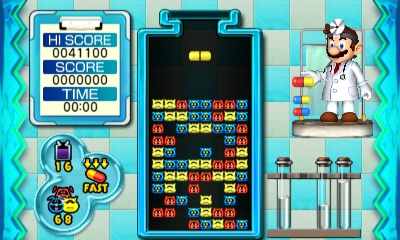
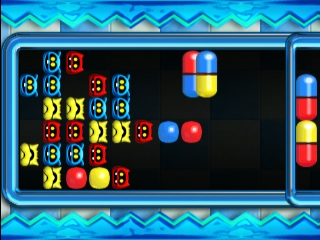
Check out some of the must-play indie games from GBJAM 4

Game Jolt Jams‘ fourth Game Boy-inspired game jam, GBJAM 4, is coming to a close, and over 180 entries have been submitted, ready to play for free on your computer or in your browser. There are many great titles amongst the selection; some have truly captured the much-loved essence of the accessibility and fun of Game Boy titles, offering experiences that wouldn’t be out of place on the 1989 handheld. There are some truly brilliant, original ideas that should not go overlooked amongst the selection, so prepare to get familiar with those trademark green hues once again; here are some of the games I think are definitely worth checking out.

Aliens Go Home Run! – by Ultdev

CMpoA9nWoAApize

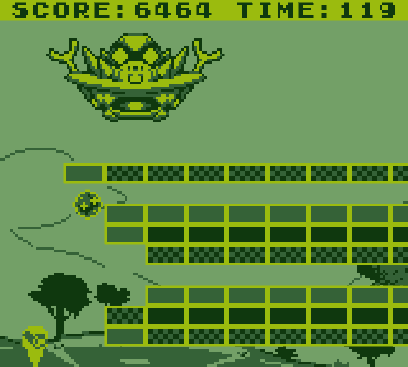
Imagine this scenario; the world is faced with the threat of impending doom. Alien invades have decided to take over, and the only thing standing between them and world domination is a little girl with a baseball bat. Now imagine this playing out like a fast-paced, Breakout-style arcade game, accompanied with a killer chiptune soundtrack and some simple yet gorgeous sprites and animation. This is Aliens Go Home Run! in a nutshell; it’s not a complicated game, but it’s a lot of fun. It utilises a simple gameplay premise that wouldn’t seem out of place on the Game Boy, and presents it in a fun and charming way that only ups the level of entertainment. I feel like this is the sort of game you could get a real kick from picking up and playing for a couple of minutes here and there, trying to beat your own score and progressing through all of the stages. This is a perfect example of capturing the Game Boy essence in a pocket-sized, replay-able experience.

Defender 88!by Midipixel

CMsm17PWIAERmfJ

Defender 88! is a cute yet surprisingly challenging shoot ’em up which puts you in the role of the ‘Defender 88’ submarine, tasking you with using your machine gun and torpedos to defend your home and fight off oncoming waves of the aquatic menace that is monster jellyfish. Despite it’s simple gameplay, Defender 88! offers a compelling and addictive shoot ’em up experience; the submarine handles beautifully, with the game’s physics really making you feel like you’re underwater, and there’s nothing more satisfying than sending a torpedo cascading into a pack of oncoming enemies. The game looks and sounds great, and the game’s nice use of Game Boy-inspired green hues to simulate the deep darkness of the ocean is a nice and immersive touch. The way the music changes as waves of enemies begin their attack creates a real sense of pressure, and matches perfectly with the challenge of balancing the protection of three generators, as well as monitoring your limited supplies of torpedos and turbo fuel. It’s an ideal score attack game for those who are after a well presented, retro-inspired challenge.

City Crushers – by Laurent Victorino/Thomas Noppers/Joonas Turner

168246

Let’s be honest here, the only thing more satisfying than piloting a giant mecha is using said mecha to destroy skyscrapers, right? Well at least it feels that way after playing City Crushers, a ridiculously addictive game with a ridiculously simple premise; you’ve got one minute to destroy as many buildings as possible, using a combination of massive robot punching, and an incredibly satisfying jumping attack which ruins buildings all around you. It’s another arcade-style score attack game, and the global leaderboards give a real incentive to get back to smashing buildings as soon as your minute is up. The game looks gorgeous, with chunky sprites serving perfectly at building up a soon-to-be-destroyed cityscape, and the design of the robot works well to convey a sense of power; you are a City Crusher, after all!

(Just a heads up for anyone who might be concerned, I don’t condone the real life misuse of giant mechas.)

In search of – by mattimeatball
168315

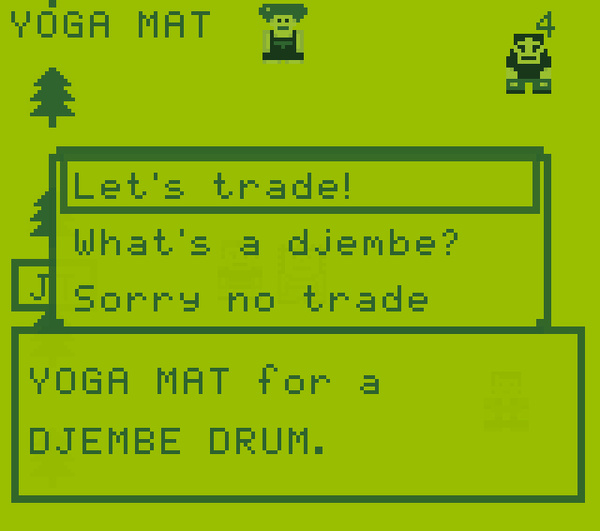
Compared to the other games that have been on this list so far, In search of is a little more laid back. It’s a difficult game to describe, and perhaps even to pin a genre onto (although the game plays out in an RPG-like fashion, offering a top-down perspective accompanied by dialogue boxes, which make up the majority of the gameplay. The premise of the game, which is apparently based on a popular Facebook group in Toronto, revolves around trading objects to ultimately get an object of your choosing that you desire. The game offers limited options in terms of how to interact with the ‘trading zone’s cast of characters, but a beauty comes from this simplicity that makes the game so unique. In a way that I found reminiscent of EarthBound, much of the game’s strengths come in the form of the dialogue, which is well written, humorous and charming; even though interactions are brief, you can’t help but feel invested in each of the trading partners the game offers and the little lives they lead. The blocky style of visuals mixed with a nicely upbeat and catchy background track help complete the experience. Definitely one worth checking out if you want to try something completely different!

Outbound – by Programancer

167524

The first thing that you will notice about Outbound is that it looks absolutely gorgeous. Programancer clearly has a solid grasp of pixel art, because everything from the backgrounds to the enemies look fantastic, and make brilliant use of the Game Boy-style colour palette. It’s even better that the game’s a lot of fun too; it’s another simple concept, defend generators from oncoming waves of enemies, but it’s the mixture of smooth controls, great looking and creative environments, and an upgrade system that encourages you to keep trying, even after death, that make the game so addictive. This is a title that would sit nicely at home on the 3DS eShop, an ideal title for the pick-up-and-play concept championed by the original Game Boy, and one brilliantly executed and presented at that.

Of course, I couldn’t talk about every single game submitted to this year’s GBJAM, but these are just a few of the ones that I really enjoyed! There are undoubtedly some more great titles amongst the huge selection of entries that you should try for yourself, so check out the full collection here!

Got a favourite title from the lineup that we haven’t mentioned? Leave a comment below!
Posted in Features | Tagged , , , , , , , | Leave a comment

Japan’s awesome Super Mario 30th Anniversary items are worth envying

plush  sticker

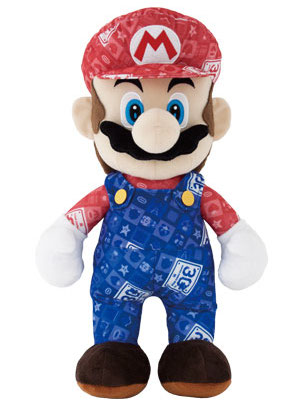
Nintendo have created a brand new line of goods to celebrate Mario’s 30th anniversary this year, and they’re far too cool to be confined to a crane machine! They’ll be available in Taito crane machines in arcades across Japan in the coming weeks, and their seemingly limited availability will no doubt make them highly sought after.
goldmario  towel1

Ranging from plush toys and towels to Super Mario Maker-themed wall stickers and a particularly grandiose looking golden Mario statue emblazoned with the 30th Anniversary emblem, it’s a shame that these items are unlikely to make it outside of Japan. If you find yourself anywhere near a Japanese arcade in the coming weeks, try your hand at winning some of these awesome prizes! Or, you know, if you feel like it, you could always send me that gold Mario statue?

If you want to get in the celebratory mood for Mario’s big 30th, check out Nintendo Japan’s special movie below, which walks you through some of Mario’s more notable 2D career highlights!

Source: Game.Watch

Posted in Merchandise | Tagged , , , , , , | Leave a comment

Got an hour to spare? Check out some Japanese indie games fresh from Comiket 88

Comiket (Comic Market) is the world’s largest self-published works fair, hosted every year in Tokyo. It’s notable for its crazy lines and rare goods that are often re-sold for over 10 times their original selling price, and as you’d imagine, it’s a prime opportunity for Japan’s indie game developers to bring their wares to the public.

For those of us who won’t be in attendance at this year’s fair (running from the 14th to the 16th of August), or perhaps if you’re simply interested in getting a feel for Japan’s indie game development scene, indie studio Edelweiss have compiled the trailers for every game set to appear at the fair into one video.

It’s a lengthy watch, but there are certainly a few bizarre and interesting-looking titles amongst the selection. Whilst it’s unlikely many of these games will make it westward, it’s difficult not to admire the Japanese indie scene, and makes it pretty clear that their in no way lagging behind the thriving indie scene that has emerged amongst western developers.

Posted in Games Culture, Video | Tagged , , , , , , , | Leave a comment

Take an in-depth look at the technology behind the Sega Saturn’s graphics

In celebration of the Sega Saturn, Chinese Sega fan Low Score Boy has recently put out an English-language version of his incredibly interesting and detailed investigation into the technology utilised by the Saturn. The 20 minute video provides some great insight into the complicated inner workings of the system, as well as an explanation on how many beloved Saturn classics achieve their impressive visual effects that set the console apart from other sprite-based systems of the time.

Whilst for many the Saturn is remembered for offering up many fondly-remembered 3D titles such as Virtua Fighter or Daytona USA, it’s no surprise that the reason the system has gained such a cult following amongst lovers of 2D and sprite-based games, especially those who are keen on import titles or who want to take advantage of that great library of exclusive or arcade-perfect shoot ’em ups, is partially due to some of the impressive technologies used by the universally underrated system. I don’t claim to be an expert, but check out Low Score Boy’s video above if you want to hear more!

Posted in Video | Tagged , , , , | Leave a comment

See the many faces of Diskun in this original Famicom Disk Writer catalogue

0117

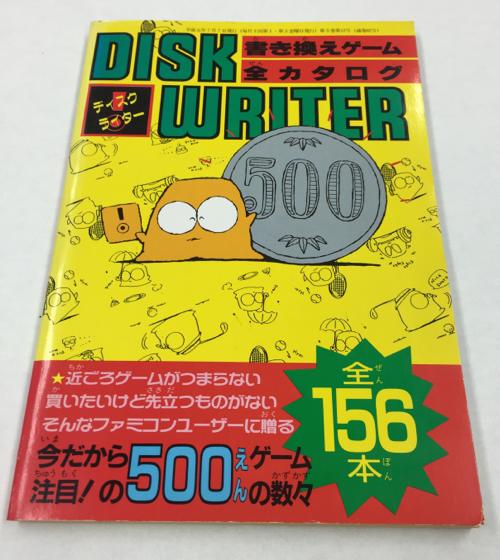
One of the first articles I posted up on the site was about the Famicom Disk Writer, a unique service available in Japan that allowed Famicom Disk System owners to re-write their game disks to change up their game library at a reduced cost. The kiosk is notable for its seriously catchy chiptune soundtrack and cute animation featuring the Mario Bros. explaining the ins and outs of writing FDS games (something which can be witnessed at the article linked above), but despite being an awesome device, there is still plenty of mystery surrounding the kiosks despite them supposedly being popular up to around 2003.

However, in what could potentially be a first, Japanese games site miki800 has given us a great look at the catalog that accompanied the disk writer kiosks in Japanese stores, namely some of the artwork featuring Famicom Disk System mascot Diskun, who many may remember from his appearance as a trophy in Super Smash Bros. Melee. Diskun was popular enough to garner a selection of merchandise, including a stationary set and even a Game & Watch unit in the shape of his body. In the Famicom Disk Writer catalog, Diskun takes a starring role, showing off some of his finest Famicom cosplay to display the wide range of titles available to be written to your FDS disks.

0310   081

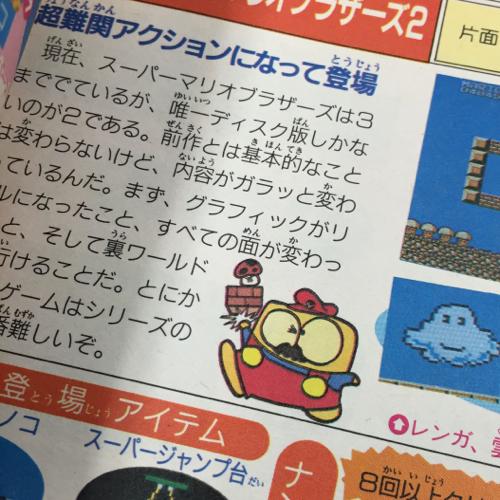
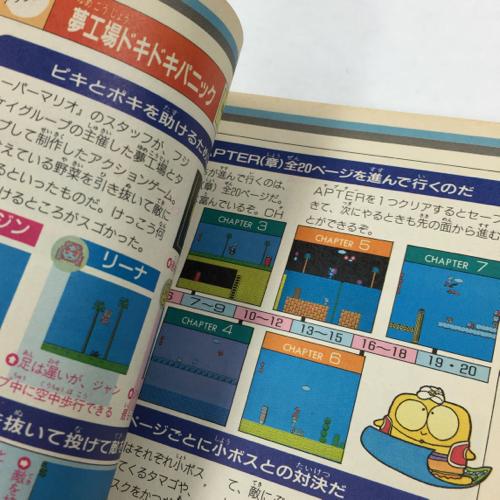
Mario seems like an obvious choice of costume for a fellow Nintendo mascot, but here Diskun is advertising the Super Mario Bros. 2 that would first be experienced by western gamers under the moniker Super Mario Bros. The Lost Levels, as a part of the Super Mario All-Stars compilation for SNES. Diskun looks cheery here on the right, but clearly he has yet to experience the fiendishly difficult platforming, featuring rage inducing elements such as Warp Zones that take you backwards and wind pushing against you throughout the stage, all elements deemed ‘too difficult’ for western Mario fans. On the right, we can see Diskun sporting a vastly different attire, albeit to advertise a vastly familiar affair; Doki Doki Panic, a platformer developed by a Miyamoto-led R&D4, (a department that would later go on to become part of the legendary EAD), would be famously re-worked into Super Mario Bros. 2 for the west, its magic carpets taking on theme that would not look out of place in Aladdin, although here we can see it pushed under its original title as a title for the Famicom Disk System (the Super Mario Bros. 2 that we know and love would later hit Japan under the title Super Mario USA).

063   049

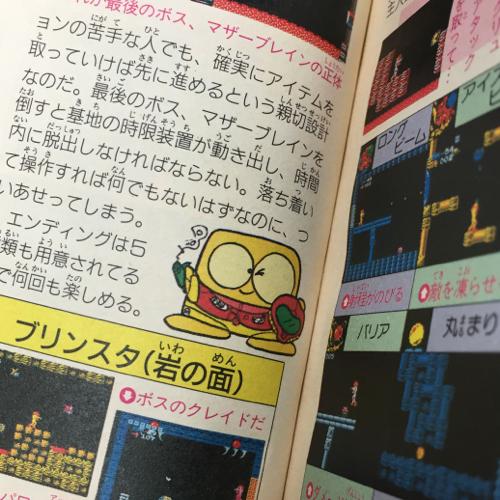
It is perhaps unknown to some that the original releases of Metroid, The Legend of Zelda and Kid Icarus were for the Famicom Disk System, allowing the games to utilise the save functionality we take for granted today thanks to the FDS’ re-writeable disks (US versions of the games would rely on an internal cartridge battery for saving). As a result, it’s hardly a surprise to see Diskun sporting the familiar heroic costumes of both Samus and Link, and cuteness aside this shows an early revolutionary development in gaming by Nintendo.

141   072

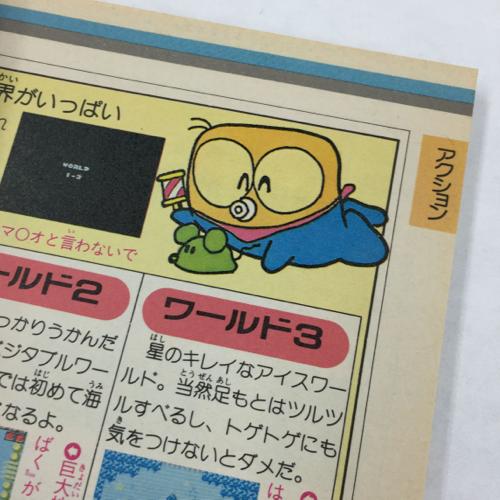
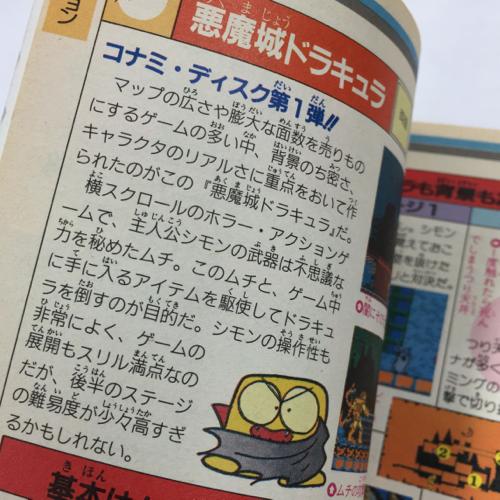
The FDS was no stranger to third-party titles, either. Here we can see Konami leading the charge; on the left, Diskun adorably imitates the protagonist of Bio Miracle Bokutte Upa probably one of the few Famicom titles revolving around a baby prince traversing a world of cake to rescue the world’s babies from a goat demon. On the right is another title which made use of the save functionality introduced by the FDS, Castlevania (or Akumajou Dracula as it would then be known) is demonstrated by a quite frankly more menacing looking Diskun, who seems quite fearless considering he has apparently stolen Dracula’s cape. The NES release of Castlevania would not feature the save function of the FDS version, something many western players would remain blissfully unaware of as they lost many a live to those fiendish bosses!

If you want to check out more great images of the catalog, check out the full gallery over at miki800, or if you’re interested in learning more about the Famicom Disk System, check out the gloriously ham Japanese PR video displaying their functions above!

Source: miki800

Posted in Art, Books | Tagged , , , , , , | 1 Comment

Wave Race: A Retrospective on Nintendo’s Often Forgotten Racer

Screen Shot 2015-07-03 at 00.00.35

Anyone who follows the business side of Nintendo’s operations will no doubt be familiar with the concept of the ‘Blue Ocean’ strategy adopted during the Wii’s lifetime; ‘Blue Ocean’ centring around utilising an untapped market when marketing a product, as opposed to directly facing competitors head-on. The Wii was obviously met with success, regardless of how it shaped up against its competitors, but when thinking about Nintendo’s strategies it’s important to remember that the Wii was certainly not the first time the Big N made use of a blue ocean.

Screen Shot 2015-07-03 at 00.00.38

In fact, it would be as early as 1992 that Nintendo would first greet players with deep blue waters ready to be conquered; not be through the introduction of a groundbreaking product, however, but through a series a hot-blooded personal watercraft races spanning a variety of aquatic courses. The blue ocean of Wave Race is hardly comparable to the business strategy, but perhaps in some ways it’s just as important to Nintendo.

The major discrepancy held between Wave Race and other well-known Nintendo racers is that it is arguably less unique a concept. Mario Kart offers multiplayer madness across brightly coloured, fantastical courses, the roster ranging from a tie-wearing ape to a sentient mushroom man. F-Zero, on the other hand, oozes with high-octane, stylised action in a far future where highly dangerous death races are essentially a household name. In comparison to the big-shots of Nintendo’s racing scene, Wave Race is seemingly more grounded. Real-life vehicles (even as far as featuring watercraft produced by real-world companies in later entries) driven in themed (yet still feasible) water courses, accompanied with racing physics which are notably modelled on those seen in real-life water ski racing. It’s a curio to see such a grounded game from the Nintendo a company who are known for taking us to brave new worlds, often relying on fantastical elements to let us escape from real life. But it’s the way Nintendo’s unique charm works with that  realistic base that makes Wave Race such an appealing franchise.

Screenshot 2015-07-02 11.54.59  Screenshot 2015-07-02 11.56.37

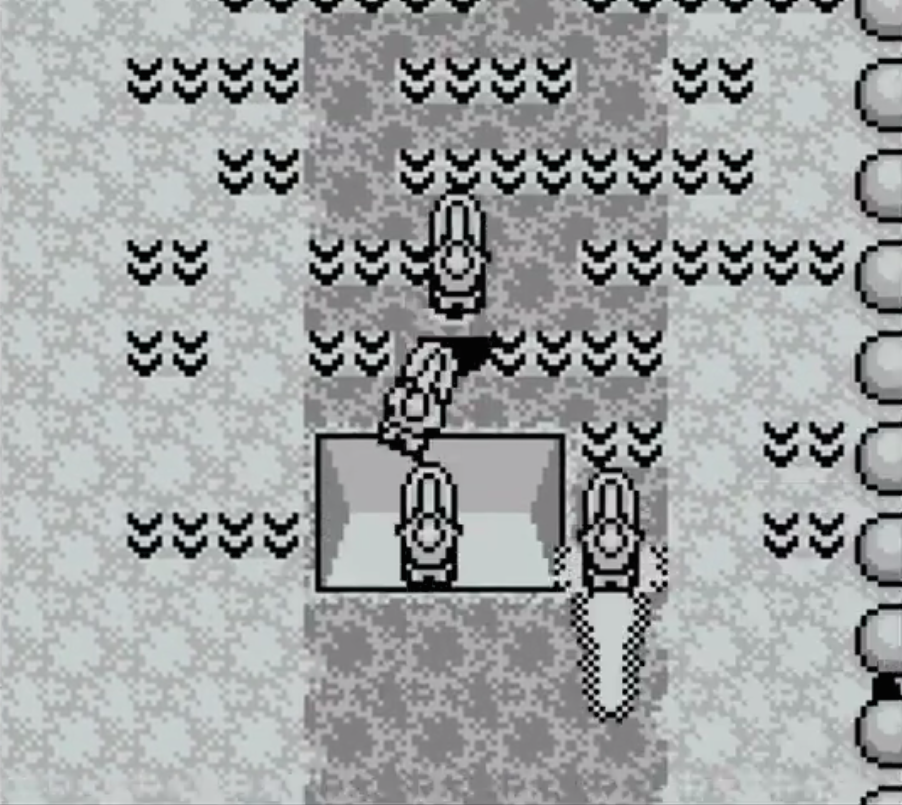
The first Wave Race title, aptly titled ‘Wave Race’, appeared on the Game Boy in 1992, and in some ways contrasts in itself with the fellow titles in its series. Offering a simple top-down style of gameplay and visuals vaguely reminiscent of the worlds of the earliest Pokémon titles, if said worlds were made up entirely of ocean tiles. It’s undeniable that this portable Wave Race is clearly not the pinnacle of the series (or of Game Boy games, for that matter), but the early take on four-player racing multiplayer filled with sharp turns and power-ups a plenty is commendable, considering the game predates Super Mario Kart by mere months. The game’s courses are tough, and whilst my personal experience with the title has largely involved a difficult uphill struggle to grasp victory, it appears to be a racer that certainly would require practice to execute masterfully. Going up against computer opponents in a selection of modes and difficulties makes this a fun little title that could perhaps benefit from a release on the 3DS Virtual Console, considering it’s an ideal retro portable time-killer. Surprisingly, despite definitely being the least-popular title in the series (presumably with some not even realising that the Wave Race series started life on the Game Boy), the game sold well enough to merit a re-release under Nintendo’s ‘Player’s Choice’ banner; for a game shrouded in relative obscurity today, selling over a million copies is hardly an achievement to be scoffed at.

Screenshot 2015-07-03 12.05.30

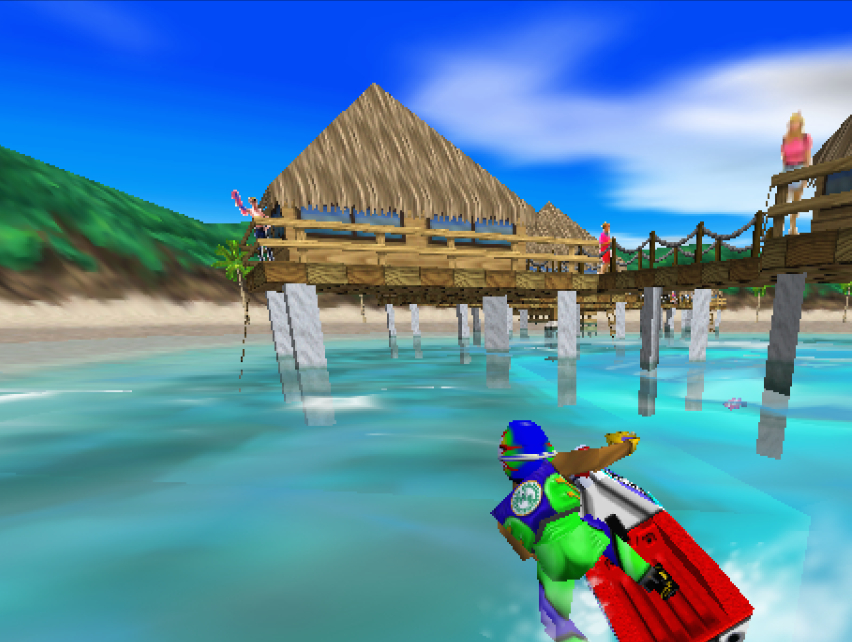
Such commendable sales figures would potentially be enough to warrant a sequel on their own, but the extreme sports craze of the 90s would provide Nintendo with an even greater incentive to give the series a revival on the Nintendo 64. Released in 1996, Wave Race 64 is potentially the most well-known of the Wave Race series, and certainly the best selling entry; Wave Race 64 managed to shift a total of 2.94m units worldwide, more than double than that of fellow EAD-developed racer F-Zero X. One considerably unique aspect of this title in comparison to fellow Nintendo titles is the utilisation of real-world branding and sponsorship to create a truly believable world around the gameplay itself; machines and signage (as well as the game’s box and title screen) are branded with sponsor Kawasaki Heavy Industries’ logos, and in today’s light, frequent appearances from soft drink brand Fanta in-game are almost comedic. Regardless, it’s a surprisingly unobtrusive use of product placement that has clearly been handled with Nintendo-levels of sensitivity.

Screenshot 2015-07-03 12.05.34

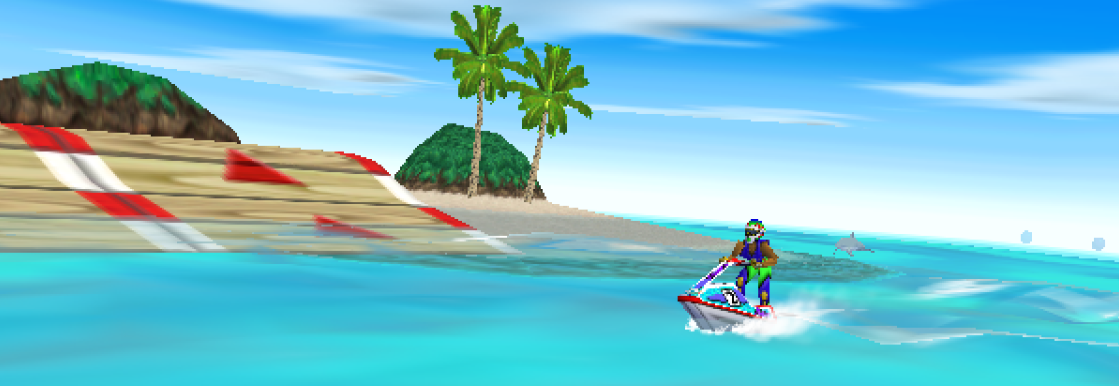
The jump from 2D to 3D would certainly benefit the Wave Race series’ attempt to provide realistic aquatic sports action, and in comparison to the now rough-looking visuals of the Game Boy original, the 3D visuals would provide players with gorgeous tropical waters and sandy beaches that would not look out of place in the glamourised extreme sports videos and commercials of the era. Varying weather and time conditions across the track only work to create an even more compelling experience (albeit hardly by today’s standards), but amongst the realism, the colourful machines and racing suits, along with a fantastic and incredibly catchy soundtrack by Kazumi Totaka give the title a real ’Nintendo’ feel, giving it its own charm without taking away from its competence as a sports title. Some would argue that the gameplay and controls aren’t perfect, and it’s certainly undeniable that they take some getting used to before you can take 1st place in every single race, but this only furthers the game’s more realistic approach that still allows it to hold up as one of the finest titles of the genre.

Screen Shot 2015-07-03 at 00.09.45

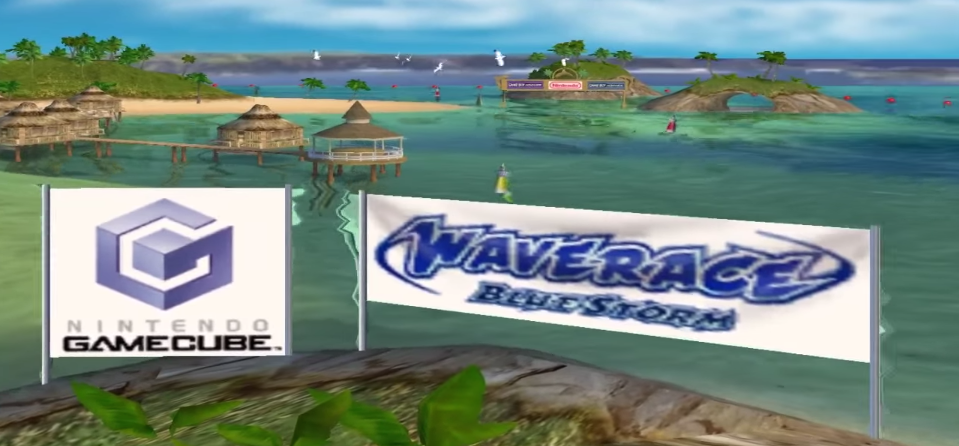
The third (and as of yet final) appearance of the Wave Race franchise would thrust the series into a more crucial role; as a launch title for the GameCube. Amidst a questionable selection of launch titles, notable for lacking a traditional Mario game (in contrast to every Nintendo console prior), a lot was resting on Wave Race: Blue Storm’s shoulders, even more so considering it was the first title in the series to be developed outside of Nintendo’s EAD. Instead handled by Nintendo Software Technology (NST), Nintendo’s US development division. Perhaps this decision was made closely in-line with the series’ theme, as compared to many of Nintendo’s other traditional offerings, Wave Race dealt with a concept that was largely popular in the West, and thus would capture the majority of its market in this region. A western-developed arguably benefitted Blue Storm by bringing in a number of elements that felt quite in-line with the audience and themes of the Wave Race series, introducing a more rock-orientated soundtrack that fits more closely with the stereotype of extreme sports, character artwork in a comic book-like style, and the adoption of a number of characters from Nintendo’s other N64 extreme sports offering 1080° Snowboarding, a franchise that NST would also be tasked with producing a GameCube sequel for later in the system’s life.

Screen Shot 2015-07-03 at 00.10.17

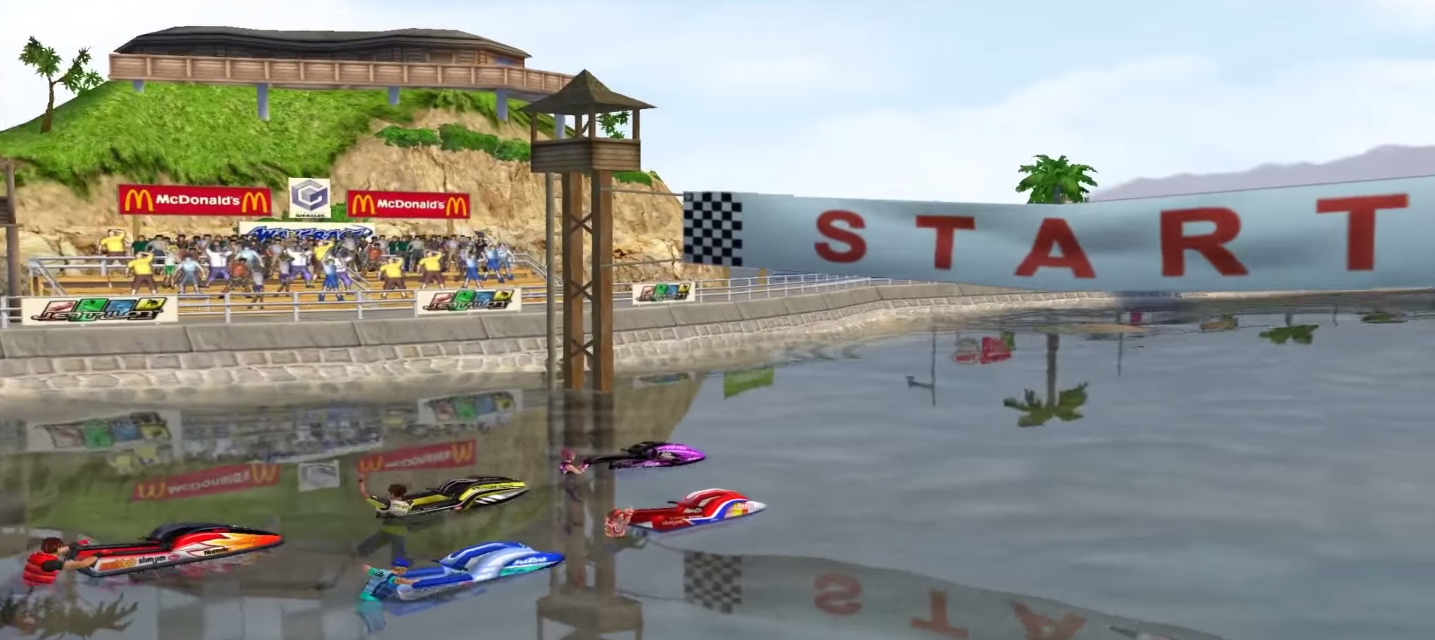
The title would, however, inherit the impressive visual effects of its Japanese-developed predecessor, utilising the GameCube’s power to provide even more praise-worthy water and weather effects, along with an even more realistic take on water ski physics that were unmatched by any other title at the time. The new title’s weather effects were especially hailed by critics, as a feature that was now taken beyond mere visual enhancement, instead having an intuitive effect on the game’s physics and course layout, often adding an element of unpredictability to races that certainly provides a more compelling and challenging multiplayer experience. However, at launch it was claimed that perhaps Blue Storm had taken a few too many leaves out of Wave Race 64’s book; for some, copies and re-designs of courses from the N64 entry made Blue Storm feel uninspired and perhaps too familiar to those who had played and enjoyed the series across both consoles. Understandable criticism about the game’s controls, which in comparison to the smoother and easier-to-operate controls of Wave Race 64, required intense precision in using the GameCube’s control stick and triggers, creating a level of what could be potentially be considered artificial difficulty. The game’s sales were certainly nothing noteworthy, but the quality and care taken by NST in handling a beloved and respected franchise cannot be judged on these figures alone; notable touches ranging from the unique and exciting designs and re-designs of characters old and new, to the minor inclusion of a top secret announcer who berates you throughout the race in a hilarious fashion (an easter-egg not discovered until 9 years after the game’s release) show that this is clearly a title imbued with NST’s passion to give a new lease of life to a classic Nintendo sports IP.

Screen Shot 2015-07-03 at 00.15.50

I suppose it could be argued that the closest we’ve gotten to a new Wave Race title in more recent times was the ‘Power Cruising’ game included in the Wii MotionPlus debut title Wii Sports Resort, memorably demonstrated by Reggie Fils-Aimé onstage at the quite frankly abysmal E3 2008. Whilst clearly lacking in the character, charm and atmosphere of the Wave Race series, perhaps this shows that Nintendo still have the potential to produce a solid take on the personal water craft sports genre.

I wouldn’t hold your breath for a new title any time soon, but perhaps one day we could find ourselves taking to the crystal clear waters of Dolphin Park once again.

Posted in Features, Retrospective | Tagged , , , , , , , , , , | Leave a comment

Now you can pretend you’re Luigi by dealing up with these Mario playing cards

613f+7rdSkL 51Lz4LpzZXL

When you think of Mario’s bright and cheery adventures, gambling is unlikely to come into your mind. Well, perhaps you’ve visited Princess Peach’s Rec room in Super Mario 64 DS and placed a few sneaky bets on a game of ‘Luigi’s Thrilling Cards’, and whilst I doubt it’ll be the first thing you think of when Mario is on your mind, the sight of Luigi in a tuxedo dealing at the table is a difficult one to forget.

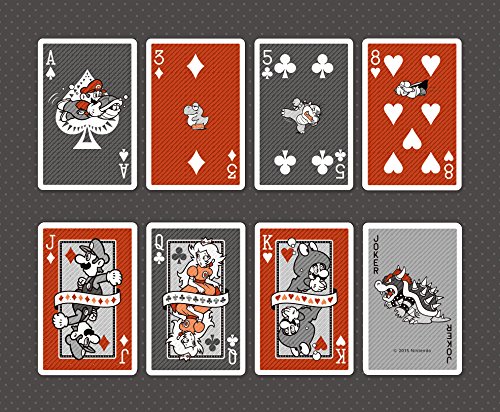
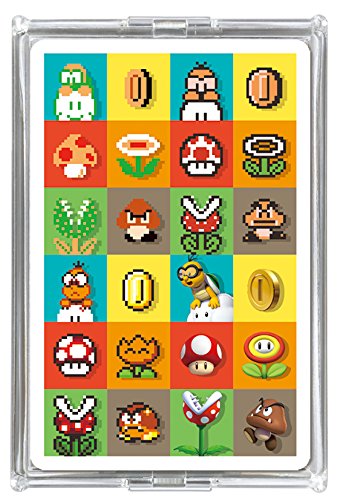
Regardless, Mario playing cards are hardly a rarity (it’s not difficult to slap the plumber’s mug on a King and call it a day), but it’s easy to see that this series of playing cards up for pre-order in Japan take a more refined and high quality approach to the idea. They’re not quite cards of Hanafuda quality, but the three sets available each take a different visual approach that will likely offer something to your tastes. Set ‘NAP-06‘ (pictured above) offers a more ‘mature’ style, using clean cut, classic character artwork in a combination of subtle red and grey tones that surprisingly suits the normally brightly coloured Mario characters very well. The case artwork’s smart design that utilises an attractive mixture of colours in combination with subdued underlying stripes that are vaguely reminiscent of the in-game character artwork for Super Mario 3D World; certainly a treat for the eyes.

71LS9jirFsL._SL1033_ 51kpsbtX-ML

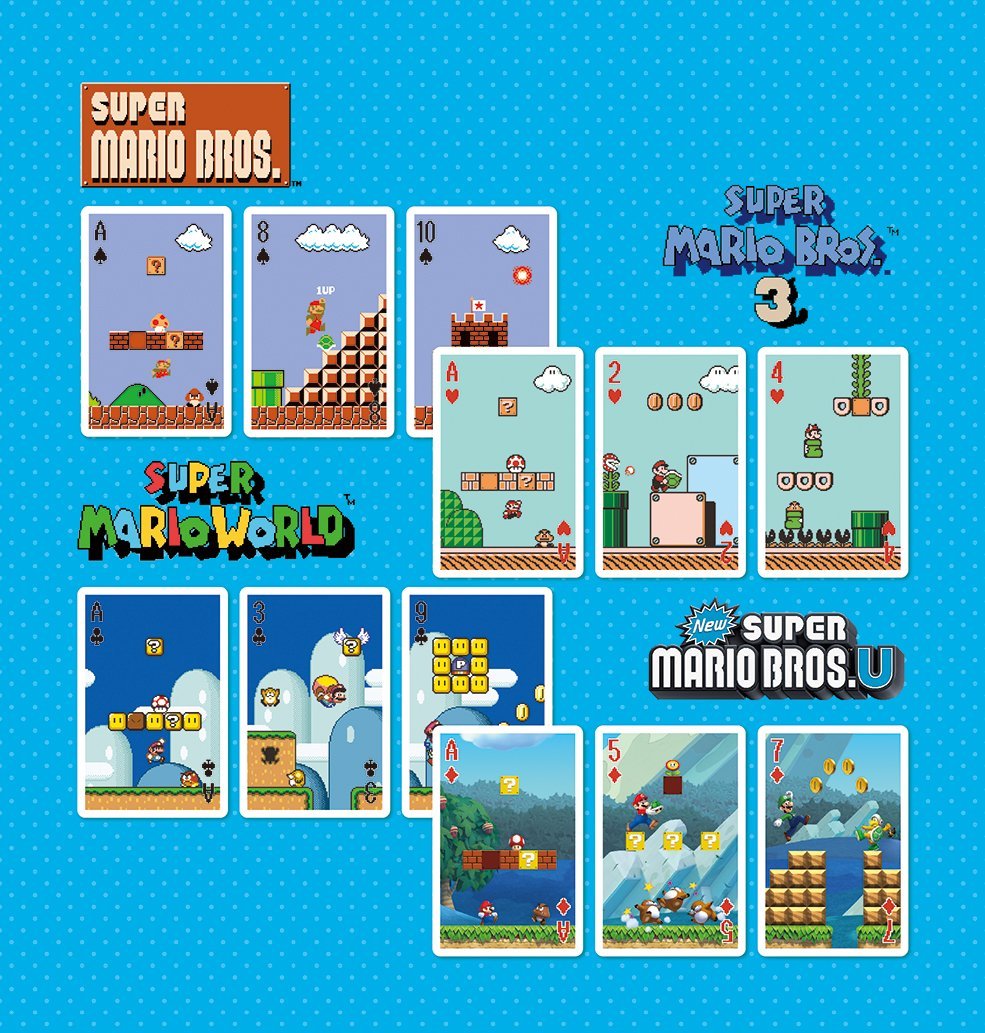
Perhaps you’re on a Super Mario Maker kick following the recent Nintendo World Championships? (If you haven’t seen it, check out the final round, if it doesn’t sell you on Super Mario Maker, I don’t know what will!) If so, maybe set ‘NAP-04‘, which offers a fun variety of styles ranging from the original Super Mario Bros., Super Mario Bros. 3, Super Mario World and New Super Mario Bros. U (as seen above), cleverly using a different game for each suit. These are my personal favourite, in part thanks to the collage-like case art that takes a chaotic, brightly coloured leaf out of Mario Maker’s book.

61C6WZnqqDL51etaMQyzFL

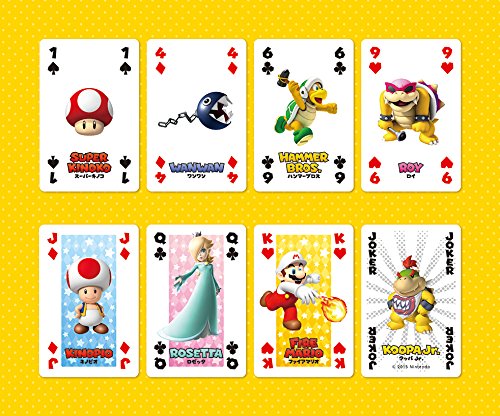
The final set, ‘NAP-05‘, takes a more commonplace approach, using well-known character artwork of your favourite Mushroom Kingdom residents (albeit with the Japanese versions of their names dramatically sprawled across each card). This is likely more suited to the kids, although take my advice, ‘Luigi’s Thrilling Cards’ is not a game for the faint-hearted.

If these cards take your fancy, you can find a link to their Amazon.jp pre-order pages by clicking on the name of each set!

Source: miki800

Posted in Art, Merchandise | Tagged , , , , , , | Leave a comment

Nindies@Home Promotion – Previews and Impressions

nindies2

Today Nintendo introduced yet another surprise for E3 week, the introduction of the Nindies@Home promotion, allowing you to download 9 different demos for indie titles that will soon be hitting the Wii U eShop.

As well as getting to try a handful of these games out without being on the show floor in LA, Nintendo will be offering a 15% discount on all of the games in the lineup upon their eventual release, providing you download and play the previews. This is a great incentive not only to try out some great indie titles that may otherwise have slipped through the radar amidst the news of triple-A titles, but make a saving on them in the future.

As a small, independent games site trying to get a bit bigger, promotions like this are a great for those of us who can’t make it to E3, so thanks to Nintendo and all the developers involved for making this a reality; go out there and download some previews to show your support! So, in case you can’t get your hands on the previews, or if you simply want to find out a little bit about each of the games available, here are some impressions I’ve written for your perusal. Enjoy!

Freedom Planet (GalaxyTrail Games)

freedomplanet

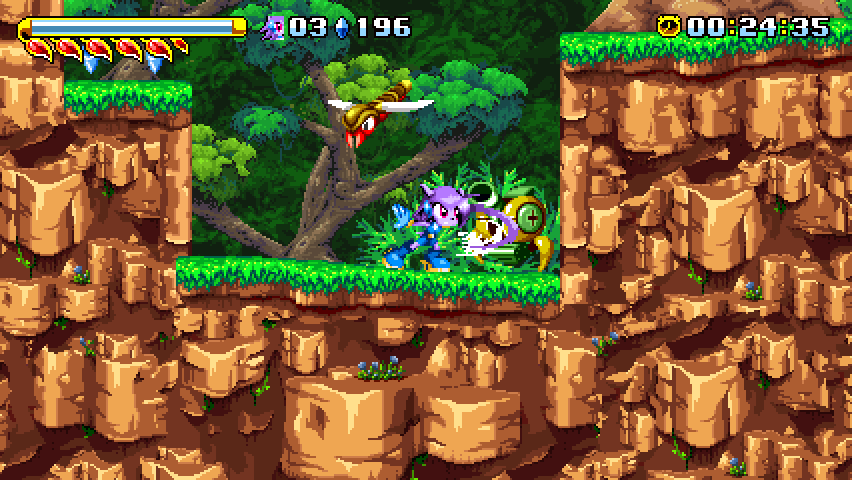
After playing Freedom Planet, it’s no surprise that the game started off life as a Sonic the Hedgehog fan-game. This is apparent in both in visuals and gameplay, but whilst many will find it easy to criticise the game’s origins, even from a short preview it’s apparent that GalaxyTrail Games have a passion like no others. First things first; the game is absolutely gorgeous. The 16-bit style that harkens back to the Sonic games of old is a real treat for the eyes; the action takes place before vivid and exciting backgrounds, and the cute characters’ animations are smooth and give you a great sense of control over their diverse move-sets. Environment-based puzzling offers a delightful balance of speed and exploration, successfully providing the traditional Sonic-style gameplay the game aims to make you reminisce of, but still bringing something original to the table that stands firm in its own right.

Whilst fan opinion has historically been divided over voice-acting in Sonic games, the voice acting here is cute and gives personality to each of the characters (although only one, Lilac, is available in the preview); in the full game each character’s unique abilities will likely mix up the gameplay and offer different approaches to each level. All in all, it’s apparent that Freedom Planet is shaping up nicely for its Wii U release, and will be right at home on the Wii U amidst its diverse library of quality platforming titles.

Mutant Mudds: Super Challenge (Renegade Kid)

mutantmudds

Renegade Kid’s Mutant Mudds: Super Challenge does little to change the Mutant Mudds formula seen in earlier offerings for Wii U and 3DS, providing the now well-established fiendishly difficult puzzle-platforming action, chunky retro-inspired graphics and a killer chiptune soundtrack. This is in no way a bad thing, however; this title is clearly for players who enjoyed the first game, erasing the concept of progressive difficulty and thrusting you into stages at the hardest difficulty available, and along with this the introduction of boss battles even further increases the challenge; only Mutant Mudds experts need apply, by the looks of it. The dimension-hopping mechanics that were clearly right at home on the 3DS are in no way out of place on the big screen, not only stirring-up the gameplay, but providing a unique visual aspect to the game that the Wii U certainly excels in displaying.

Lovely Planet (QUICKTEQUILA)

lovelyplanet

QUICKTEQUILA’s Lovely Planet is a difficult title to describe; it’s certainly quirky and charming, from the cute and upbeat soundtrack vaguely reminiscent of Katamari Damacy to the bright, abstract visuals that are easy on the eye and heavily contribute to the game’s ‘weird’ feel. The gameplay is fast and surprisingly difficult, operating without overbearing guidance for the player, but instead offering a bare minimum of information that puts a heavy emphasis on letting the player learn and discover the game through repeatedly traversing each level, something executed very quickly (with the mere press of the ‘X’ button you can instantly find yourself back at the start of the level). There are certainly no first-person shooters like it out there, and possibly no games on the eShop that can compare in terms of sheer originality and weirdness! Definitely one worth keeping an eye on.

Typoman (Headup Games)

typoman

It’s immediate from the moment you start playing Typoman that the game is oozing with atmosphere. The dark, eerie visuals combined with an ambient soundtrack subtly immerse you in the gameplay, which at first appears to simply be easy to grasp platforming action. However, the twist that makes this game unique is the use of typography that gives this game its name; by manipulating letters found all across each stage, albeit to simply use them as platforms or to make words up using them, you can control elements of the world to help progress through the game. For example, spelling out the word ‘DOWN’ lowers a gate blocking your path. This seems basic enough, but as the game progresses, you’ll find both your platforming and puzzle solving skills put to the test in an incredibly creative manner. This, combined with the game’s unique and captivating visual overtone make this a title that could certainly be worth your attention.

Extreme Exorcism (Golden Ruby Games)

extremeexorcism

For a game with such a daunting title, Extreme Exorcism is a surprisingly cute game. The pixellated ghouls that populate the game’s diverse environments certainly don’t come across as particularly scary, but the action they help to create certainly is; the interesting and well-executed ‘ghost’ mechanic, in which in each rounds the ghost enemies literally ghost the movements you made in the rounds prior, can lead to hectic, exciting levels that really force you to think more carefully about your movements than you would normally in a platformer. The game offers 4-player co-op, something which undoubtedly could be a lot of fun, but at the same time really puts the ‘extreme’ into the game’s title. Its no secret that Nintendo have always been pioneers of local multiplayer, so a title that encourages closely-knit teamwork (and potentially multiplayer-induced bouts of rage!) is very well-suited to the Wii U.

RIVE (Two Tribes)

rive

RIVE’s fast-paced, chaotic shoot-em’-up gameplay is a grand departure when compared to Two Tribes’ previous Wii U ventures, laid-back puzzle-platformer series Toki Tori and cool, fast-paced cube puzzler Edge. Taking classic explosive shmup action, constantly bombarding you with barrages of gunfire and missiles (which you can easily return in a full 360 degrees) and combining it with creative platforming elements which see your ship take on different forms, such as a spider-like tank form that allows you to traverse the complex interiors of space stations, or sections presenting you with environmental challenges that disable your gunfire or limit your movement, encouraging you to take a more unique approach to staying alive. The game provides you with incredibly satisfying feedback from each enemy you destroy, making you feel even more powerful than you probably are. Even the fiery explosions that engulf your own vehicle once destroyed are a real visual treat; it’s no surprise that Two Tribes themselves have commented that players who have demoed the game “really, really like it when they fail in RIVE”! If you like the sound of watching incredibly satisfying, lead-pumping chaos, all set to a thumping electro soundtrack unfold on your screen, then this is the perfect game for you.

Soul Axiom (Wales Interactive)

soulaxiom

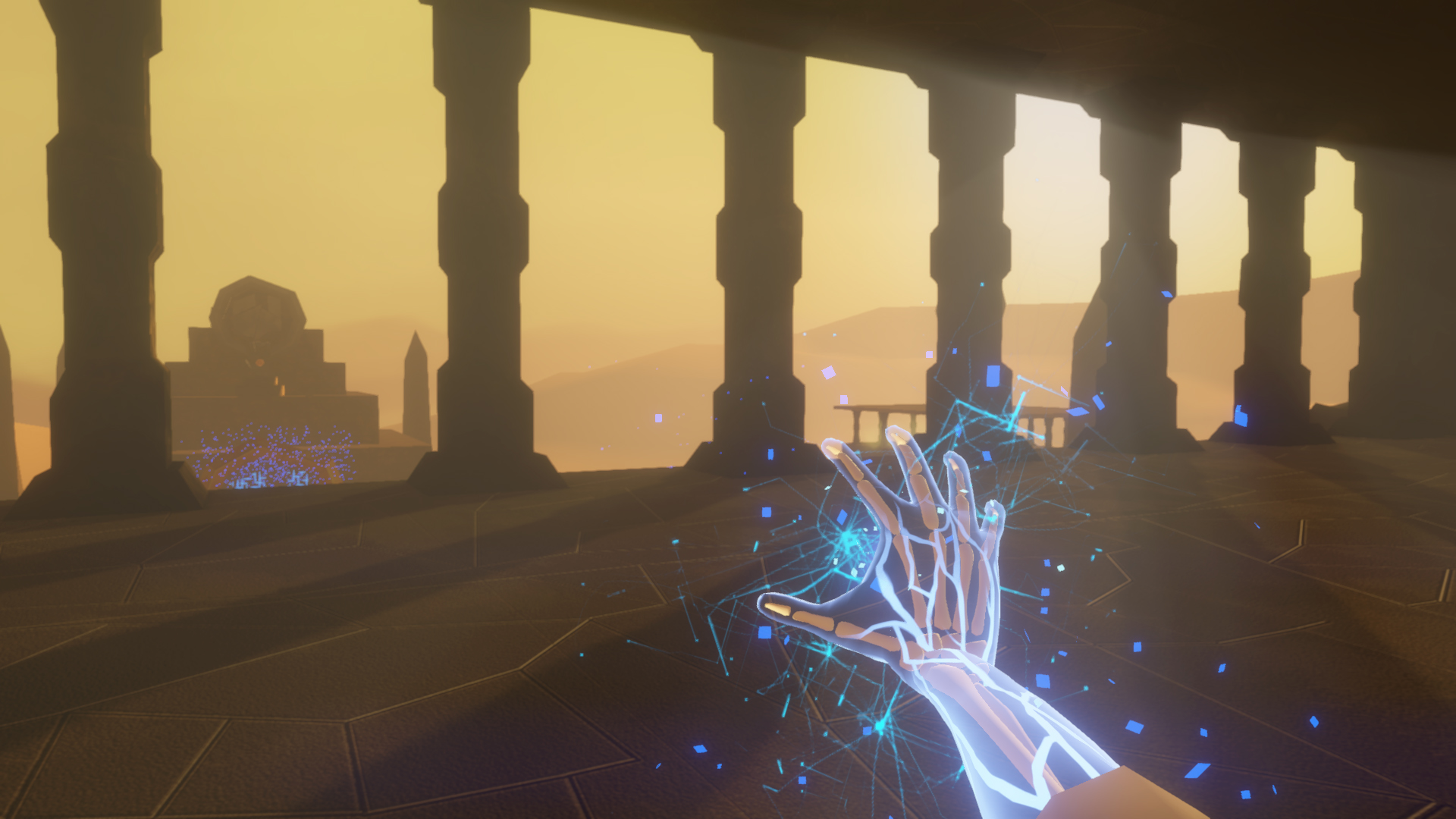
Soul Axiom is another title that provides a lot of atmosphere. Whilst it’s difficult to grasp the objective of the game from just the preview, the interesting mechanic of ‘phasing’ elements of the world in and out provides an incredibly unique way of traversing the game’s beautiful environments. The game is absolutely oozing with style; stepping out to overlook the preview’s Egyptian-style architecture was a sight to behold, and the first-person perspective really succeeds in showing off this strong point of the game. The mysterious abilities and setting your character is faced with in the game only a more compelling experience, and although the gameplay is creative and holds much potential, this title could be worth looking into for its storyline alone.

Forma.8 (MixedBag SRL)

forma8

Forma.8 is a perfect display of how simple visuals can be used to effectively convey a brilliant idea. Basic puzzling mechanics revolving around the navigation of your spaceship throughout a beautiful minimalist world, offering a relaxing experience that can still test your brain at times, utilising a simplistic toolset in culmination with some innovative physics-based puzzles. The physics are slow and floaty, and truly give a satisfying experience of flying, and the way you find yourself thrust into a seemingly hostile environment with few hints or directions encourages the exploration and ingenuity that would really be required to operate such a craft; MixedBag have done a great job in offering an immersive and innovative experience that offers a soothing and mysterious take on space-based gameplay, but one that could potentially evolve into a challenging and engaging one.

Runbow (13AM Games)

runbow

The easiest way to describe Runbow is chaotic fun. Not many games can boast 9-player local multiplayer, and this is certainly a title that can benefit from being a truly engaging multiplayer title. The concept is simple, run through each stage, complete basic platforming trials, and navigate an environment in which the key elements are dictated by the colours of the rainbow; running and rainbows, now you know where the title comes from! The graphics are certainly easy on the eyes, which will certainly come as a relief when 9 different runners are sprinting madly around the stage! The overall concept of the game seemed simple, but it seems that insanity comes with numbers and the concept of 9 players running wildly through each stage sounds like it’ll certainly be a spectacle to behold.

If you like the sound of these titles, get to the eShop and download them now, they won’t be available for long!


Posted in Features, Previews | Tagged , , , , , | Leave a comment

REVIEW – Dr. Mario: Miracle Cure (3DS)

630x

For the first time since his appearance in Super Smash Bros. for Wii U/for Nintendo 3DS, Mario is putting his white coat and stethoscope back on and renewing his dubious medical license to provide us with some more medical puzzling action. Last year Mario left the surgery work to his younger brother in Wii U title Dr. Luigi, but this time pair are now running the clinic together in what could potentially be the most comprehensive Dr. Mario game to date.

zlCfzTbjYWU7qaR473

From the moment you start up Nintendo’s newest eShop puzzle offering, Dr. Mario: Miracle Cure, you’ll discover that this game is truly to the point. Rather than find yourself greeted with a traditional title screen, the game immediately presents you with its selection of modes and options; ideal if you’re looking for the pick up and play experience that Dr. Mario‘s gameplay lends itself to perfectly.

zlCfzTcwooc79-5Y5a

To some extent, portability is Miracle Cure‘s greatest asset; such an easy to play yet difficult to master puzzler is as good for filling those spare 10 minutes on the bus as it is for sinking in hours of high-score smashing. Whilst Dr. Luigi’s lack of portability as a result of its Wii U release made it suffer in this aspect, the series feels much more at home on 3DS, and is an awaited new entry in the series on the system that feels long overdue.

zlCfzTb3rmo3n0tela

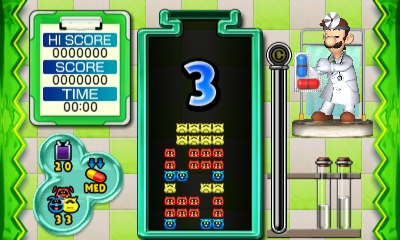
And just because the series has made its way onto a portable system, doesn’t mean it slacks off when it comes to offering gameplay; as well as the traditional Dr. Mario formula found as early as the NES original, Miracle Cure offers a perfect recreation of Dr. Luigi’s ‘Operation L’ mode, which replaces the iconic two-toned capsules with L-shaped ones as a tribute to the titular sidekick, a subtle change that provides a unique spin on the classic gameplay. Also included is the Virus Buster mode originally conceived for More Brain Training/Brain Age 2a more gentle, slow-paced take on Dr. Mario which utilises the 3DS touch screen to control the falling pills, using the 3DS on its side in a book-like manner. Whilst all three of these modes were available in Dr. Luigi, having them in your pocket to play on the go is a much better-suited option for getting the most out of the seemingly endless puzzling they provide.

zlCfzTblWBIagabWzY

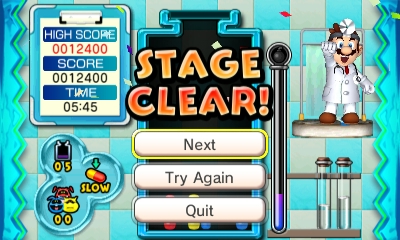
However, choosing not to rest entirely on its laurels, Miracle Cure introduces a new mechanic that proves that it’s title is not entirely an attempt to promote the plumber’s medical skills; the ‘Miracle Cure’ items that are available in both the Dr. Mario & Dr. Luigi gameplay modes provides a subtle twist in the form of creating new options to create even higher scores. After building up a meter through clearing away viruses, access to one of four types of randomly selected item can perform ‘miracles’ such as clearing away all viruses or capsules of a specific colour, destroying entire lines in a specific direction, or even just blasting away anything within a set radius, can offer that last-ditch way of clearing the bottle that could prove crucial in achieving a good score, or even simply avoiding a game over. This subtle change can have a great impact on the gameplay, and whilst purists may not be so enthusiastic about the mixup to such a traditional formula, the inclusion of such an element in the gameplay can be easily toggled on or off.

zlCfzTbvXV8EBhjN89

As well as three distinct gameplay modes, even greater customisation over gameplay is provided through the ‘Custom Clinic’ option, allowing you to play both an ‘Endless’ option which provides a challenging continuous stream of viruses, allowing you to try and reach the highest score you are met with a game over; online leaderboards allow you to judge your skill against the rest of the world, but considering a week has passed since the title’s release in Japan, you’ll have to bring your a-game if you want to topple the existing high scores! As well as this option, the stable ‘Vs. CPU’ battle puts you up against a computer opponent, testing your speed at clearing all of the viruses as quickly as possible.

Similar options exist if you prefer to go up against human opponents, through local and online battles which not only let you go up against each other in Dr. Mario and Dr. Luigi modes, but work together in a special co-op version of Virus Buster. The inclusion of Download Play is a nice touch that has unfortunately been absent from many Nintendo games as of late, but is a nice option for playing quick local games against your friends (or enemies, if you are the type to make enemies over Dr. Mario. I’m not judging you). Special ‘Miracle Cures’ have also been added to mess about with your opponent’s gameplay, and even more competitive Vs. game is ideal for veterans who wish to break their rival’s perfect combos; just don’t expect any mercy when you’re on the receiving end!

zlCfzTb1mHIQYvSX_5

If you’re looking for something less free-flowing in comparison to the staple gameplay modes, the introduction of the ‘Miracle Cure Laboratory’, a selection of specifically designed stages of varying difficulty levels that seek to put your use of ‘Miracle Cures’ to the test across some truly taxing pre-set stages. Some of the Advanced stages are not for the feint-hearted, so you might want to try and brush up your skills in the training mode first, an introduction ideal for newcomers to the series who want to learn the formula. These additions are nothing game-changing, but they offer a pleasant change of pace for anyone interested in something more methodical to break-up the high score frenzy of ‘Endless’ mode.

zlCfzTbHQQ4GkIOqMB

The game’s soundtrack is made up of a nice mixture of nicely-done remixes of classic Dr. Mario music that will likely be familiar to anyone who has played Super Smash Bros., as well as a handful of charming tracks lifted straight out of Dr. Luigi. Virus Buster mode is accompanied by an incredibly chill, laid-back take on Dr. Mario‘s soundtrack that suits the slow-paced gameplay perfectly, almost making it relaxing. One improvement that could certainly be made to the soundtrack, however, is the ability to select a song before starting a game, as well as turn the music off altogether. I was very surprised to see this option absent from the game, considering its appearance in almost every other game in the series, and it’s one of a few details that, along with the missing title screen, give the game a very ‘cut-back’ feel.

zlCfzTcf_EA3Mew9Hy

The game’s visuals are simple, as you’d expect from a puzzle game, with many assets seemingly taken straight from Dr. Luigi. Whilst this is not major fault as such, as the primary focus of the Dr. Mario series has always been in the gameplay, it is difficult not to notice that certain animations such as those of Mario & Luigi themselves have a tendency to feel a little lifeless at times, again suggesting that this title may have been conceived as a more minimal, perhaps even rushed way of offering a Dr. Mario title on the 3DS.

zlCfzTbIzuQlh7kWDc

Regardless of such visual implications, Dr. Mario: Miracle Cure succeeds as a Dr. Mario title, offering something new in the form of the ‘Miracle Cure’ mechanic and the modes surrounding it, as well as the traditional puzzling formula of the original that will likely keep die-hard fans and puzzle game enthusiasts satisfied. Whilst this new content isn’t the most groundbreaking addition to the series, it’s a nice, optional change of pace alongside the untouched traditional style of gameplay. The addition of new multiplayer modes, as well as a training mode to help new players get to grips with the series both make Miracle Cure a perfect entry into the series, and its new, portable home on 3DS create the ideal pick up and play puzzle experience.


A downloadable copy of the game was purchased for this review.

Posted in Reviews | Tagged , , , , , , , | Leave a comment

Get a first hand look at the ‘My Famicase Exhibition’ with this neat tour of the Meteor design store

If you read our post from last month about the ‘My Famicase Exhibition‘ held by Japanese design store Meteor every year, you might be interested to know that you can check out all of the cartridges on display in the store in the video above!

It’s only a brief video, but it shows off the cartridge display quite nicely, as well as some of the other cool merchandise available in the store. I’m immensely envious of anyone who gets to visit the store first hand, but for now, I suppose this will have to do…

Posted in Art, Fashion | Tagged , , , , , , , , | 1 Comment