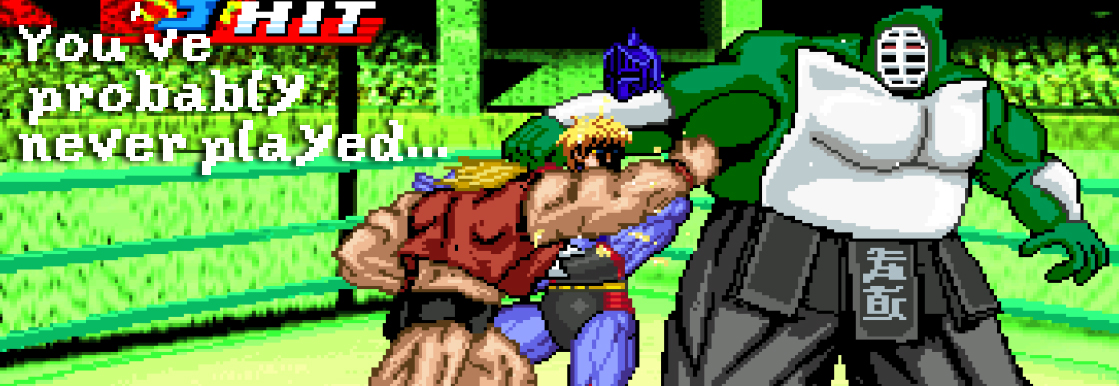
You’ve Probably Never Played… Wrecking Crew ’98

WRECKING CREW 98

Wrecking Crew ’98
Developer: Nintendo R&D1, Pax Softnica
Publisher: Nintendo

Platform(s): Super Famicom (via Nintendo Power service)
Release Date: 1st January 1998 (Japan exclusive)


As I mentioned in my Mario spin-off characters feature last month, Nintendo’s main man can be considered a jack of all-trades; be it sports, medicine or even knitting, if it exists and isn’t illegal, Mario’s probably given it a go at some point in his career. However, the moustachioed plumber’s short-lived career as a demolition worker has a tendency to slip people’s minds when recalling the more iconic of his ventures.

The 1985 puzzle/action game Wrecking Crew has historically had a tough time competing for the spotlight with the likes of its fellow NES Mario spin-offs, despite being referenced countless times in a variety of more recent titles such as through a stage appearance in the latest Super Smash Bros. and even as a song in the peculiar Dance Dance Revolution Mario MixEven thought it was an NES launch title in the US, Wrecking Crew’s fame likely suffered at the hands of both its peculiar concept and the absence of Mario’s name from the game’s titles; after all, if you think about a kid who has to choose between a game featuring Mario’s heroic adventures in a magical kingdom or a game featuring someone who, at a glance, may or may not be Mario, doing blue-collar demolition work, the choice doesn’t seem so hard, does it?

wreck98-5

It’s likely for this reason that Wrecking Crew‘s more colourful sequel, Wrecking Crew ’98, also slipped off people’s radars. That and the fact that it was yet another Super Famicom release hindered by limited distribution through the ‘Nintendo Power’ service, which allowed players to ‘download’ games from retail kiosks onto special re-writeable cartridges (I detailed it a little further in the first instalment of ‘You’ve probably never played’, which you can read here). Eventually this particular title would see a cartridge release, but regrettably it never made it westward, meaning many players would miss out on a thoroughly more polished and well-presented demolition experience.

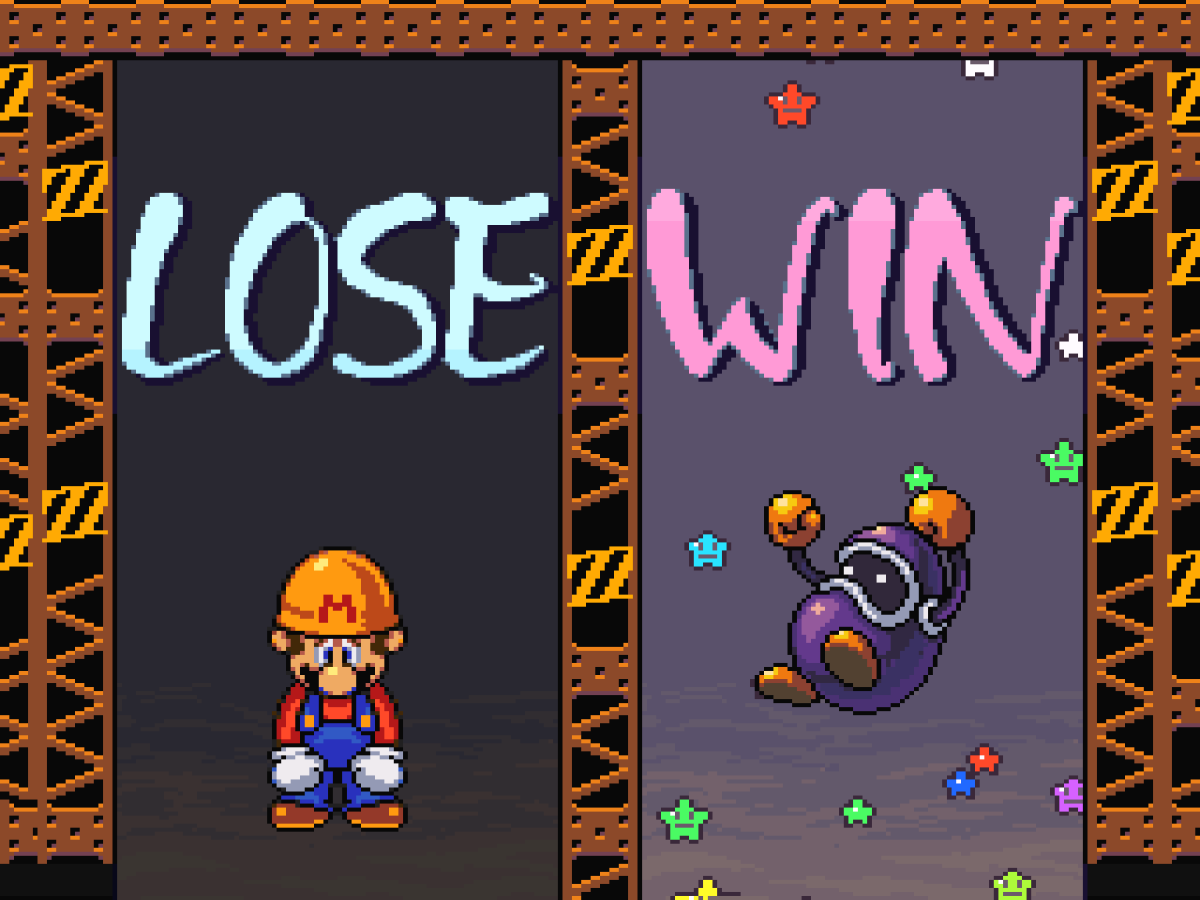
The first major difference between this iteration of Wrecking Crew and its predecessor is a large improvement in the visual department; no surprise, considering the jump from Famicom to Super Famicom, but a pleasant and welcome improvement that makes the concept of the original more attractive, literally. The game’s story (its inclusion making the second major difference between the two games) is told through bright and nicely animated cutscenes that break up the stages and provide a cool ‘reunion’ with some of the original game’s cast of enemies, albeit now drawn in a more cartoony and appealing graphical style. Not to bash the Famicom, of course, but the pixel art in ’98 truly is impressive.

wreck98-3

The plot is a nice addition, even if it does come across as a little… cheesy? The idea is that Mario comes back from some kind of holiday to find that Bowser has filled the Mushroom Kingdom with his own brand of high-rise buildings (evil ones, of course) which are depriving the land’s foliage of sunlight, causing them to wither and die (the flowers all have faces so its not exactly like you can just leave them!). Seething with rage and with little regard for the tenants of these buildings, Mario goes to his house and pulls out a massive hammer, determined to destroy Bowser’s structures and save the environment. Mario is truly the Al Gore of the Mushroom Kingdom.

The gameplay itself has actually changed somewhat between games. Whilst the general theme of demolition and the way you go about doing it is the same, rather than having to destroy all pieces of the building like in the NES original, ’98 takes on a form closer to that of a falling block puzzle, pitting you in a 1v1 battle against a computer or human-controlled opponent on one side of the screen and tasking you with lining up coloured panels into chains of 3 or more to clear them away. Chains of 4 or more will create an obstacle to trip up your opponent, ruining their combos and forcing them to re-think their approach to clearing lines by limiting the ways in which they can break certain panels. I can imagine this is quite similar to real demolition work, especially the sentient construction vehicles that can be summoned to get in your way.
wreck98-4

The cast of Wrecking Crew ’98 is a strange one; beyond the usual suspects of Mario, Luigi, Peach and Bowser, as well as a handful of foes from the original Wrecking Crew such as Foreman Spike and the Eggplant man, the game’s playable roster consists of some of the most bizarre characters ever seen in a Mario game, and certainly not the types you’d expect to see in Mario Kart. We’re talking about beloved Mario characters ‘Dogu‘ the clay figure, ‘Onnanoko‘ the little girl, ‘Oyazi‘, a depressed old man, and most importantly ‘Onigiri‘, a sentient ball of rice. These are weird but fun additions that spice things up a little, and considering this is a pretty out-there take on demolition anyway, I don’t think having bizarre characters takes away from the game at all. Who needs Rosalina anyway?

wreck98-1

As if this take on Wrecking Crew couldn’t get any better, it comes with the original NES game on the cartridge too! It’s a real shame that this title never saw the light of day in the west (and not because the light was being blocked out by one of Bowser’s high-rise buildings either) and whilst the game has yet to see a Virtual Console release in any region, it’s titles like this that make me wish Nintendo would run a Hanabi Festival like in the Wii days.
wreck

Posted in Features, You've Probably Never Played... | Tagged , , , , , , , , | Leave a comment

Gunman Clive now available… on Game Boy?

gunman1

It normally comes as a big surprise to hear about brand new releases on systems considered to be discontinued, and few realise that games have continued to release on systems such as the Wii and PSP long after their successors have emerged. Even without a continuing (albeit reduced) influx of licensed releases for what some would describe as ‘legacy systems’, many consoles still maintain thriving homebrew scenes, with the likes of the Dreamcast receiving brand new, fan-made retail games even today.

gunman3

However, whilst homebrew games have seemingly existed for as long as the consoles themselves (let’s not forget the thriving bedroom developer scene that made early home computers such as the ZX Spectrum and BBC Micro a smash hit here in the UK during the 80s), it’s slightly more uncommon to hear about established developers turning to the systems of the past as their platform of choice. This is exactly where Swedish indie studio Hörberg Productions have decided to change things up, releasing a version of their hit action-platformer Gunman Clive on the original Game Boy.

gunman2  gunman4

Following on from the recent Wii U release of Gunman Clive HD Collection, which features both games in the series, developer Bertil Hörberg has set to work on bringing a one-level, fully functional Game Boy demo, providing a ROM file so it can be played on either an emulator or on actual Game Boy hardware using a flash cart. It’s fun to play (just like the real Gunman Clive, which you should go and check out, it’s pretty cheap so there’s no excuse!) and it’s nice to see that the Game Boy is as capable as ever, especially in the right hands. You can download the ROM for yourself here.

Posted in Posts | Tagged , , , , | Leave a comment

You’ve Probably Never Played… Innsmouth no Yakata

INSMOUSE NO YAKATA

Innsmouth no Yakata (The Mansion of Innsmouth)
Developer: Be Top
Publisher: I’Max

Platform(s): Virtual Boy
Release Date: 13th October 1995 (Japan exclusive)


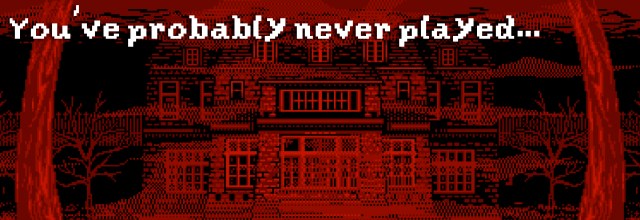
If you ask me, there are some things you shouldn’t do that come down to common sense. Going into a mist-covered, decrepit mansion filled with disturbing human-amphibian hybrids is exactly the kind of thing I’m talking about and of course, that’s exactly what you’ll find yourself doing in Innsmouth no Yakata.

Before talking about this particularly haunting title, it’s important to cover a few background details on its origins and inspirations. Horror novella The Shadow over Innsmouth will likely be a familiar name to any fans of H. P. Lovecraft, the American author who is considered today to be one of the most significant and influential horror writers of the 20th century. It’s no surprise that a plentitude of games have been inspired by Lovecraft’s eldritch tales, however this specific adaptation is not based on the original Innsmouth story, but on the low-budget Japanese movie Insmus wo Oou Kage, directed by Konaka Chiaki.

yakata1

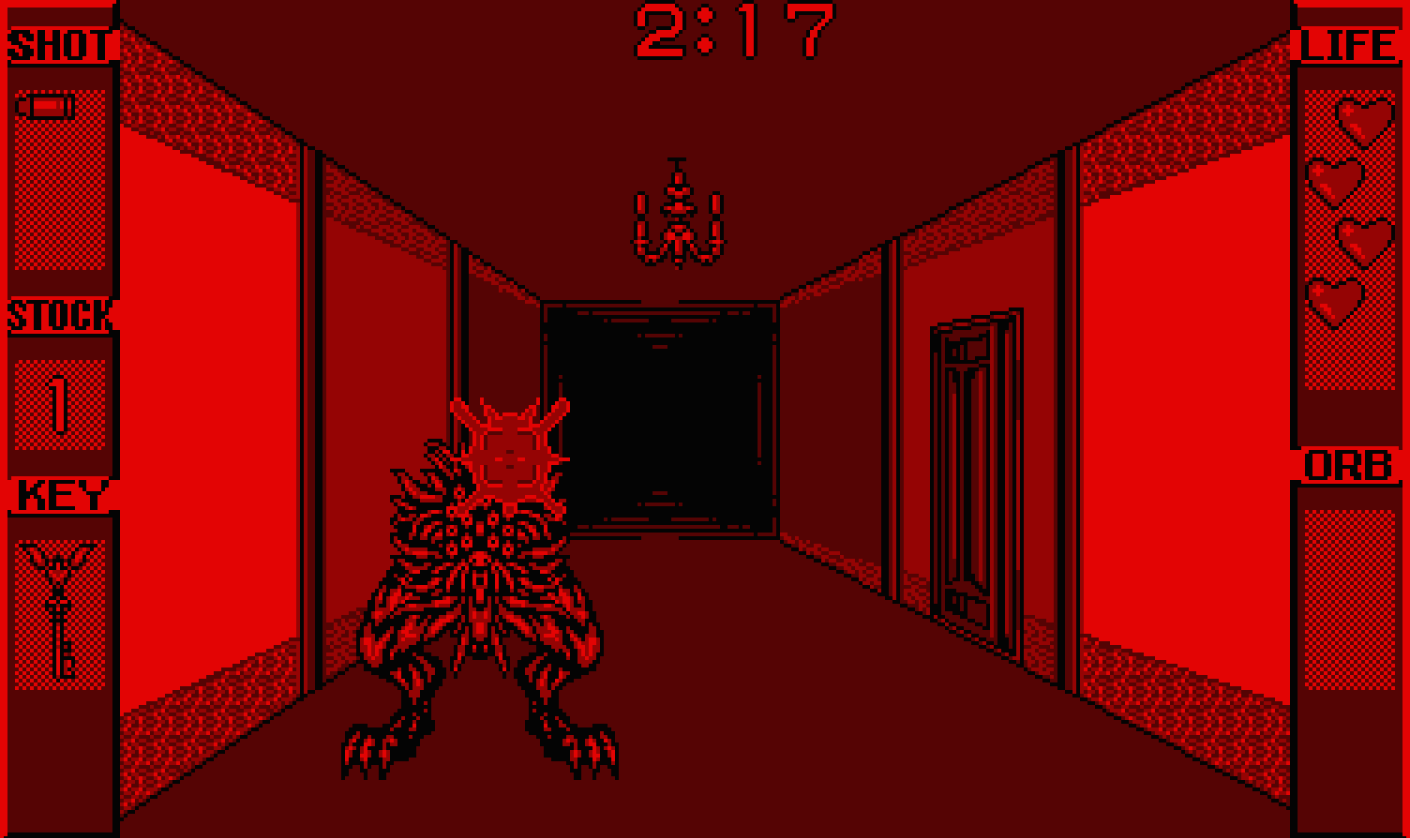
In fact, this peculiar Virtual Boy title is fairly distanced from the original story, in more than just its inspirations; whilst The Shadow over Innsmouth presents a gripping yet complicated tale of deception, fish-men, aliens and plenty more that I couldn’t even begin to describe, all set in the sleepy yet twisted town of Innsmouth. Innsmouth no Yakata‘s take on this concept presents a much more… hands-on approach; as opposed to offering a more psychological kind of horror, the Virtual Boy take on this classic horror story sees our protagonist valiantly stroll into an eery-looking mansion armed with a handgun and nothing more, fighting off eldritch horrors in the manor house’s cramped corridors with incredibly limited ammunition.

Unfortunately, it seems that the protagonist lacks a particularly good aim, as actually getting a hit on said horrors is a nightmare in itself… OK, perhaps that’s mostly down to the controls; the game uses the Virtual Boy’s unique two D-pads for both movement and aiming, something which seems like it would be more effective than it actually is, but all this does is make for an incredibly clunky aiming experience that I certainly wouldn’t trust my life with in a mansion filled with Lovecraft’s worst.

yakata3

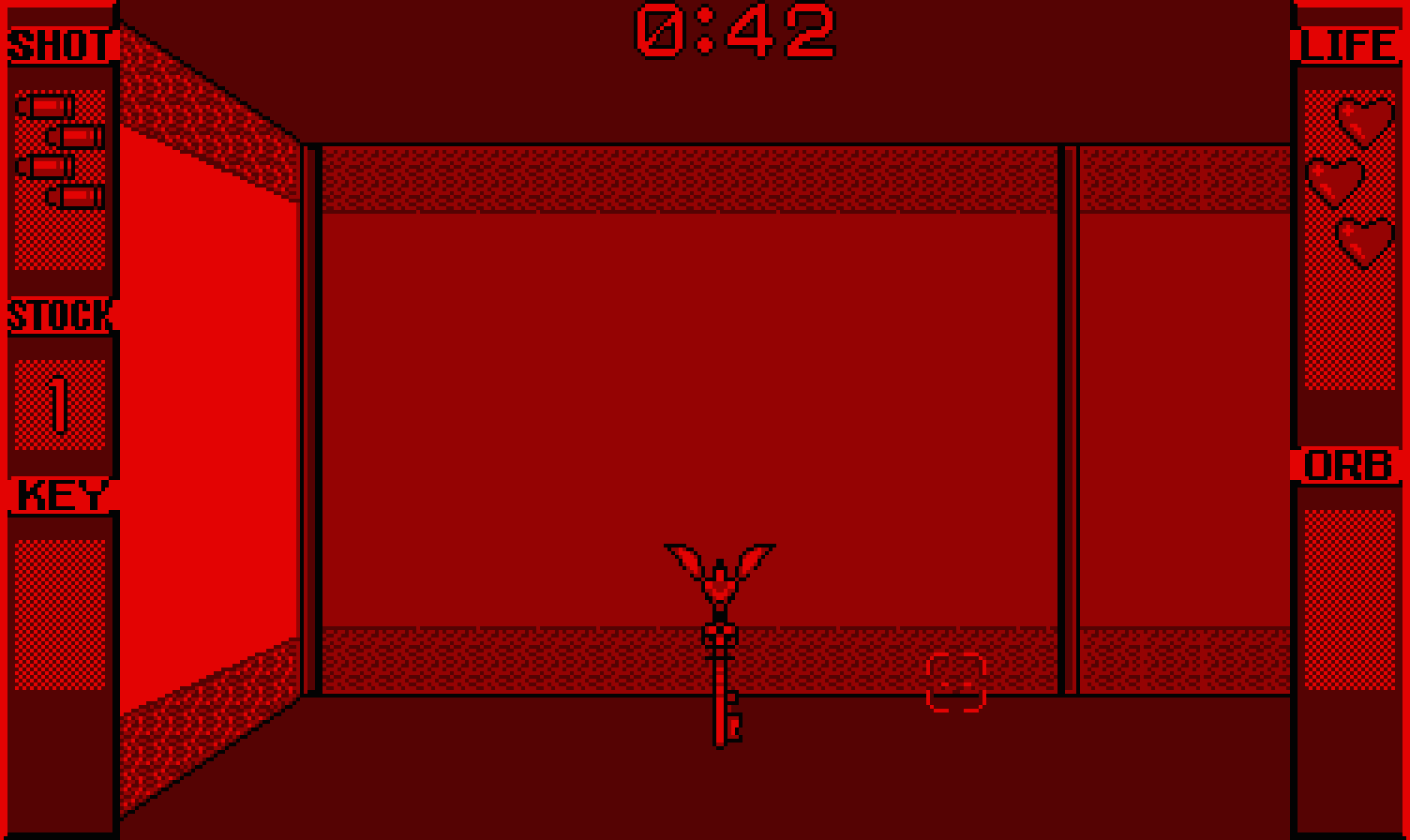
There are a variety of pickups throughout the mansion, ranging from spare ammo clips that likely will come between life and death when you’re cornered by a monster (that is, providing you can line up your shot properly) to various ‘orbs’ that extend your map and help prevent you from constantly backtracking through the mansion’s many familiar looking corridors, and most importantly, keys, which allow you to exit each stage and move on to the next. Depending on how quickly you clear each stage determines which you’ll be faced with next in a branching path-like formula, allowing you to eventually reach one of four different endings; with a total of 45 different levels, you certainly won’t be pushed when it comes to re-playability.

yakata2

The game’s visuals are a mixed bag; the intro is fantastically illustrated and does a great job at setting the scene, relying on a few jump scares here and there to give you an idea about what you’ll be up against inside the mansion; it also does a fairly good job at making use of the Virtual Boy’s 3D effect, bringing to light the surprising lack of first-person titles on the failed system. The enemy design is suitably Lovecraftian and is faithful to the themes of Innsmouth‘s disturbing monsters, and it’s a nice touch that their attacks, such as clawing at the player, also use the Virtual Boy’s 3D effect. However, beyond invoking a severe case of claustrophobia, the game’s environments do little to carry on these spooky themes, appearing more like a budget hotel than a mansion plagued with evil; the game’s faux-3D environments that make use of numerous repeating wall and door tiles that age the game quite badly, as well as being something you’ll likely grow tired off very quickly after 45 levels.

yakata4

Innsmouth no Yakata is a game that has a lot of interesting elements, such as making good use of the Virtual Boy’s flawed 3D, as well as a generally good atmosphere that can become tense and exciting at times (especially when you’re low on time and ammo!). However, it ultimately falls short overall, mostly as a result of a lack of variation across the game’s plentitude of levels, especially visually, something partially brought about by hardware limitations. However, it you’re looking for some quick Halloween scares in primitive 3D, or perhaps you’re missing that one Lovecraft-inspired Virtual Boy title in your life, then you can’t go wrong.

yakata5

Posted in Features, You've Probably Never Played... | Tagged , , , , | Leave a comment

Listen to chiptune the way it was intended with RIKI’s “8BIT MUSIC POWER”!

Many fans of chiptune music will tell you that the best and most authentic sounding beats around are those produced by the machines that inspired the genre themselves! Be it the NES or the Game Boy, both of which sport a wide range of music creation tools such as LSDJ and Chip Maestro which give budding composers the ability to manipulate the bleeps and bloops of classic hardware into musical masterpieces, there’s nothing quite like the raw, unmistakable 8-bit sound they produce.

8bit_mu07  8bit_mu04

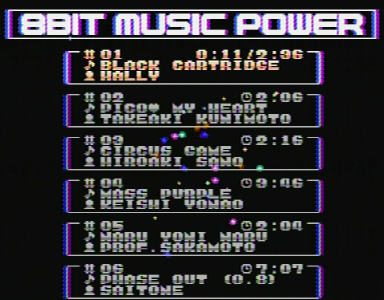
With this in mind, Japanese artist and programmer RIKI has announced the release of their latest dōjin Famicom release, following on from their action platformer game KIRA KIRA STAR NIGHT, released in 2013. However, this time it’s not a game, but an album of music compiling various chiptune tracks by different artists, released in Famicom cartridge form! The album is called “8BIT MUSIC POWER” and features tracks of a wide variety of styles and genres, accompanied by a selection of gorgeous and often psychedelic on-screen, 8-bit graphics that make use of the Famicom’s hardware (two of which are displayed below).

8bit_mu03  8bit_mu06

As well as featuring 12 different tracks, the cartridge also contains a mini-game yet to be revealed. It’s a really impressive technical feat and it’s great to see that a Famicom homebrew scene still exists over 30 years after the console’s release! The album is set for release in December this year, so if you’re interested in finding out more or even buying a copy for yourself, check out the “8BIT MUSIC POWER” page on RIKI’s website!

Posted in Art, Music | Tagged , , , , , , , , , , | 2 Comments

Mario characters and the problem with playing it safe.

Mario characters and the problem with playing it safe

It’s no secret that aside from tending to the sewers of Brooklyn and adventuring in the Mushroom Kingdom, Mario has a lot of hobbies. The portly plumber and his friends (and often foes) have seen themselves involved in all sorts of athletic escapades, ranging from competing in the olympic games to hitting the court alongside LeBron James. The man himself was even umpiring tennis matches as early as 1984, long before he first picked up a racquet for himself in Mario’s Tennis for the Virtual Boy.

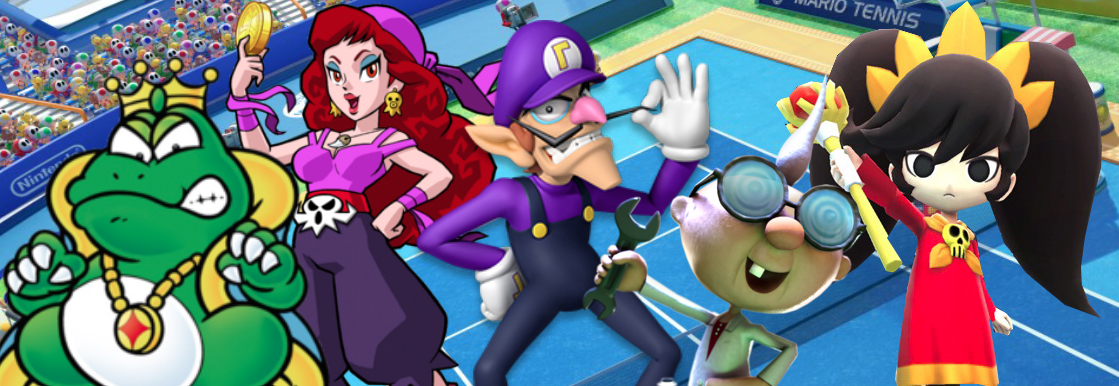
Mario’s sporting spin-offs are undoubtedly some of his most popular outings, with the likes of Mario Tennis, Golf and Kart being responsible for many a fond multiplayer experience. One unique aspect of these titles has always been the roster, often putting more minor characters in the spotlight and giving them their shot at a playable appearance, even in some instances leading to the creation of characters who have since become Mario series staples, such as Waluigi (this isn’t up for debate!).

Peach'sCastle

Whilst it’s obvious that some of these characters clearly aren’t important or popular enough to receive their own titles, their inclusion in the various Mario spin-off games is a good thing, because it’s often the only chance they have at development. Part of what makes the Mario series so endearing is its charm and personality, something which shines through especially well in the role-playing titles such as Mario & Luigi and Paper Mario, and more often than not the side characters that populate the colourful world of Mario have more personality than the man himself!

The Mario series has the benefit of having a highly recognisable cast, especially with a younger audience. Certain consistencies between spin-off titles, especially those with large rosters of selectable characters like the sports and party titles, are evident and make a lot of sense; after many appearances, there are characters whose absence from said titles would be considered strange, regardless of their overall importance within the world of Nintendo.

When analysing roster decisions between the various Mario spin-off titles, it’s important to look at recent trends that would suggest who you’re most likely to find with a golf club or tennis racquet in their hands. I believe that it’s possible to group characters together based on their current importance in the franchise, taking into account a variety of factors.

‘The Usual Suspects’

usualsuspects

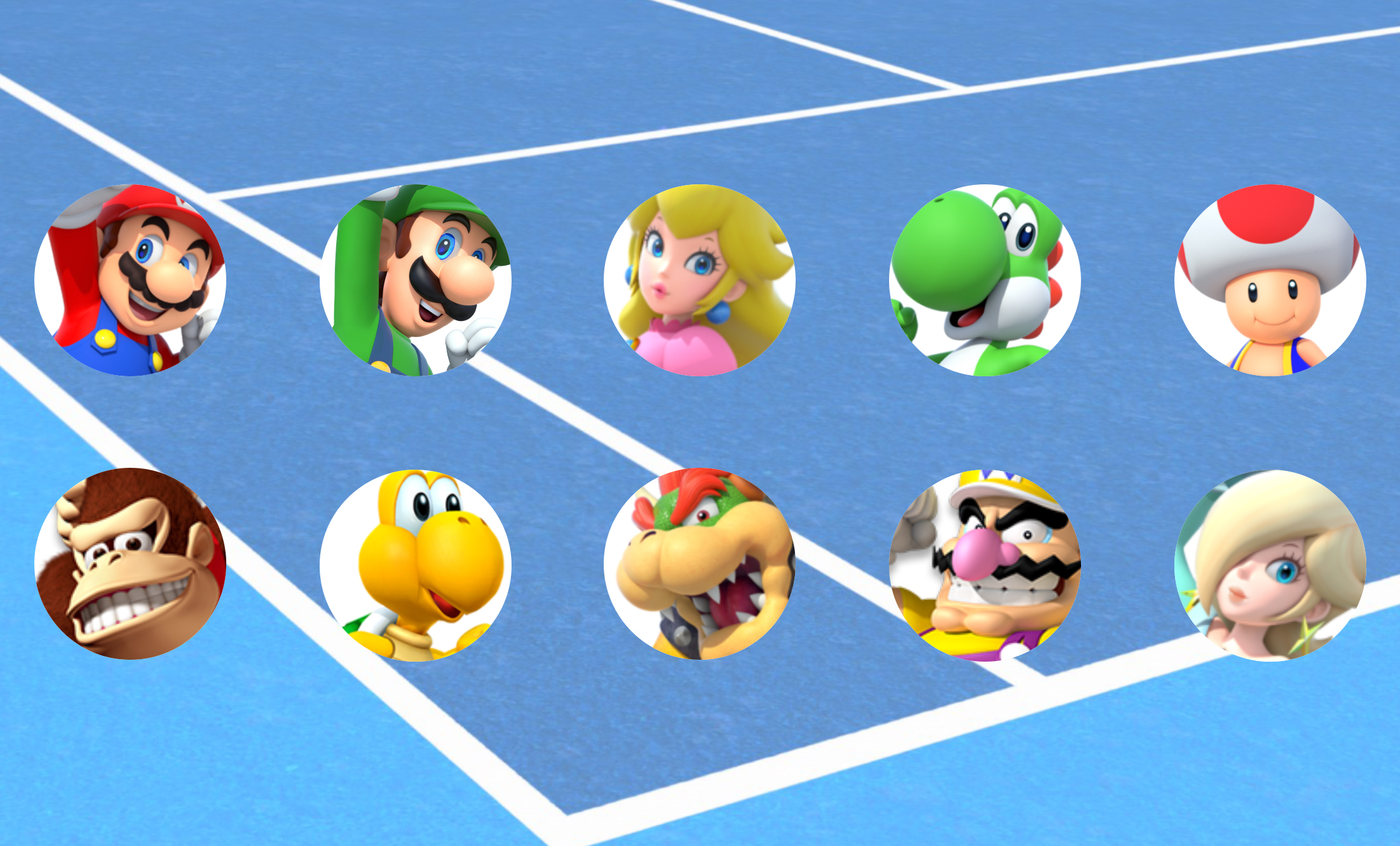
If these guys aren’t there, then something has most likely gone seriously wrong. This is your standard Mario spin-off crowd, the most recognisable and popular characters, especially amongst a casual audience. Most of these picks are self explanatory, but some may question the inclusion of Rosalina, who first appeared in 2007’s Super Mario Galaxy. Whist still being a relatively new addition to the Mario family, Rosalina has seen an incredible rise in popularity since her debut, even to the extent of seeing an appearance in Super Smash Bros, even before the likes of Toad who has been a mainstay from what seems like the beginning! Following appearances in a wide variety of spin-off titles and even Super Mario 3D World, Rosalina has become popular both with casual and hardcore Mario fans and I imagine her inclusion in games in the future, both mainline and spin-off, is a given.

If Nintendo decided to leave any of these characters out of future Mario spin-off instalments, regardless of the sport or activity, they’d likely be shooting themselves in the foot; for the millions of households that made the likes of Mario Kart Wii and Mario Party 8 some of the best-selling games on the Wii, these are some of the most familiar Mario characters, likely the ones you’ll see on merchandise and apparel. This is part of the big appeal of Mario spin-off titles; it allows a wider audience to become better acquainted with the series’ colourful cast, and popularity garnered from these appearances is likely to affect chances of future appearances.

In each Mario spin-off title, you can most likely expect all of these characters to appear.

Continue reading

Posted in Features, Opinion Piece | Tagged , , , , , , , , , | 1 Comment

You’ve Probably Never Played… Girl’s Garden

GIRL'S GARDEN

Girl’s Garden
Developer: Sega Development Division #3
Publisher: Sega

Platform(s): SG-1000
Release Date: 1984 (Japan exclusive)


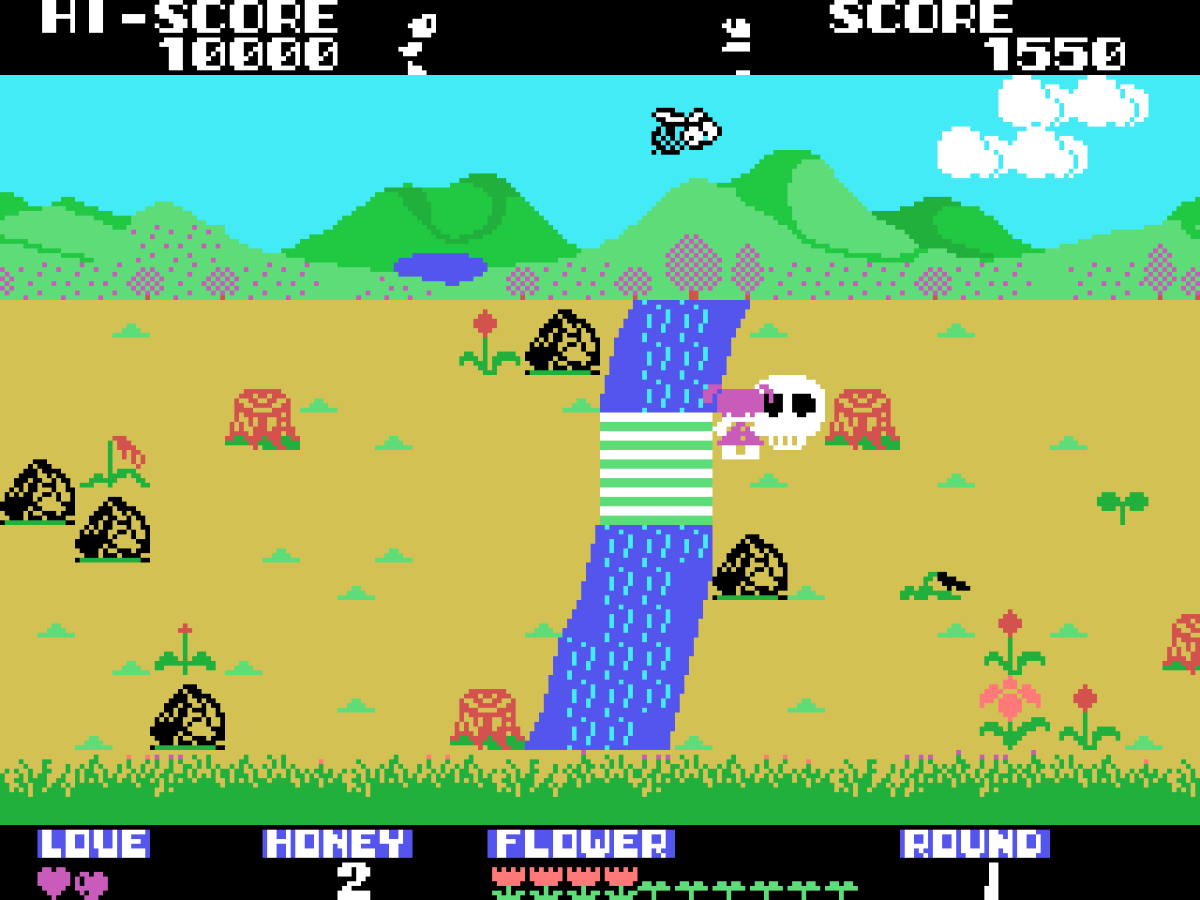
Romance sure is tough, isn’t it? Well, the version of presented in Girl’s Garden certainly is. The game’s protagonist Papri just wants to put together a beautiful bouquet of flowers from her garden for her boyfriend Minto, but unfortunately her garden happens to be populated by ravenous bears, giant skull-dropping bees and uneven terrain that in some places wouldn’t look out of place in Contra. However, with the risk of Minto ditching poor Papri in favour of another girl if he doesn’t get his flowers, this battlefield-like garden is one you’re simply going to have to brave!

Despite its simple premise, this game has a lot of history behind it, which in some ways makes it odd that it’s often forgotten. Something that will likely come as a surprise to many is that Girl’s Garden is in fact the debut work of the legendary Yuji Naka, creator of Sonic the Hedgehog and former head of Sonic Team at Sega. Whilst Girl’s Garden certainly lacks the high-octane gameplay and ‘cool factor’ that Sonic introduced to gaming, it’s easy to see where Naka’s philosophies and attitudes towards game design come through in both titles.

Screen Shot 2015-10-21 at 14.04.32

It’s through it’s simplicity that Girl’s Garden excels; the game takes place in the titular garden and tasks you with picking ten flowers to make your bouquet. This seems easy enough, but only flowers that are in full bloom are worthy to represent your affections; picking up flowers too early will waste what could potentially become a fully bloomed flower and picking up wilted flowers will spoil the bouquet, cutting the number of flowers in your possession by half. To add to your troubles, wild bears are roaming the garden and will go to great lengths to ensure your relationship is ruined, unless you can distract them by dropping pots of honey that will render them harmless for a brief time.

Screenshot 2015-10-21 11.36.36

Unfortunately, honey supplies are limited, but that’s where your single allies, giant bees, come into play, occasionally dropping fresh honey, ‘love’ (which is essentially an extra life) and various pieces of fruit that increase your score. However, in a horrible turn of betrayal and deceit, every so often the bees will drop a huge skull down into the garden, killing you on contact. It seems in the animal kingdom, you can’t trust anyone.

Screen Shot 2015-10-21 at 11.56.00

For an SG-1000 game, Girl’s Garden looks pretty good! The backgrounds are colourful and characters and objects are drawn with a nice level of detail. Papri controls smoothly, although narrow areas of the map such as on bridges, where the risk of falling into the water and drowning becomes a cause for concern, can be somewhat harder to navigate. However, the technical limitations of Sega’s first console do show through in the game’s jarring, blocky scrolling as you make your way to the edge of the screen; the game’s stage loops back on itself, with terrain randomly generated from level to level, and whilst this works well to add some variation as you progress through the game, at times it takes its toll performance-wise.

Screenshot 2015-10-21 01.53.28

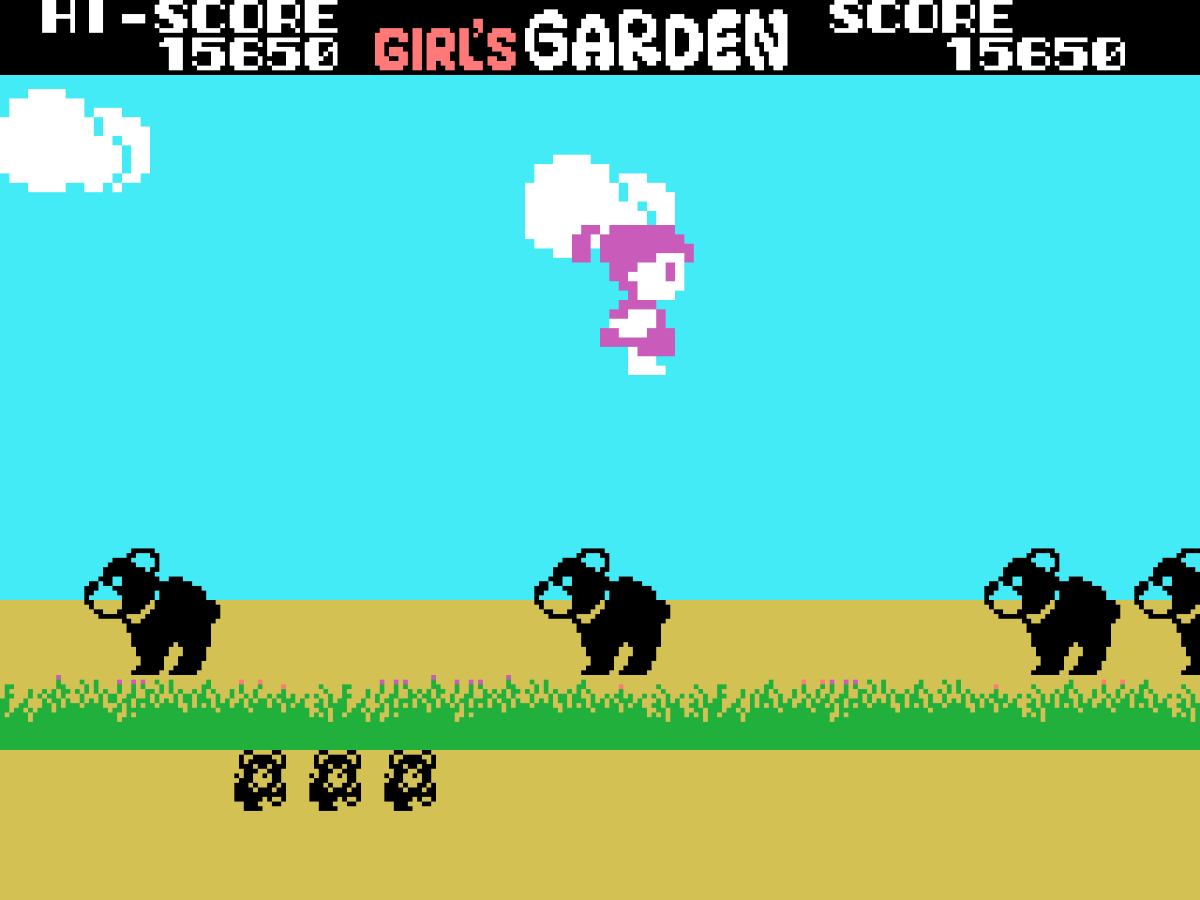
After every other level you’ll be greeted with a bonus stage (or a ‘Challenging Stage’, in the game’s own words) which sees Papri abandon the flower collecting, instead running at a line of bears at full speed and trying to jump over as many as possible. If her boyfriend is looking for a partner who can perform superhuman athletic feats, maybe he’d find a better match in Mario. I’m not sure this guy’s worth the trouble, with so much danger on her doorstep, Papri’s better off staying at home.

It’s strange to think that the game considered one of the earliest examples of a dating sim comes in the form of a Yuji Naka-developed action game, but if you’re looking for some classic arcade-style action on the SG-1000, then Girl’s Garden is a match made in heaven.

Screen Shot 2015-10-21 at 11.57.28

Posted in Features, You've Probably Never Played... | Tagged , , , , , | Leave a comment

‘Encyclopedia Super Mario Bros.’ is the perfect guidebook to the Mushroom Kingdom

Nintendo are continuing their celebrations of Mario’s 30th birthday with the release of an officially licensed guidebook detailing all things Mario, fittingly named ‘Encyclopedia Super Mario Bros.’. Pictures are beginning to emerge from Japan of the book’s contents, and it looks like a real treat for any Mario fan with a desire to indulge in the plumber’s past and present!

Released on October 19th, the encyclopaedia is chock-full of pictures, artwork, character profiles and descriptions and the book looks to have left no stone unturned in charting Mario’s adventures from 1985 to 2015.

It’s nice to see that even often forgotten titles such as Wario’s Woods and Super Mario Land 2: 6 Golden Coins have been covered in considerable detail, even with art and descriptions of enemies and power-ups which have yet to make an appearance in a Mario game since their debuts!

There’s currently no word on a western release for this book, but if you want to grab a copy now, they’re available for order from Amazon Japan. It’s full of pictures and art, so if you’re a big Mario fan, you can likely get some enjoyment out of this book even if you don’t read Japanese.

Posted in Art, Books, Merchandise | Tagged , , , , , , | Leave a comment

You’ve Probably Never Played… Mario Bros. Variations

MARIO BROS VARIATIONS

Mario Bros.
is the very definition of a Nintendo arcade classic. It features fun, easy to play single-screen action that earned itself many a quarter in arcades back when it first released in 1983. Sending Mario back to his plumbing roots, it features many design elements that are still Mario staples to this day, such as pipes, turtles and most importantly, the introduction of Luigi, who would go on to define a generation (right?!).

The fact that such a game has been featured on almost every platform under the sun, from the Atari 2600 to Nintendo’s failed e-Reader peripheral, is hardly shocking. Whether or not you’re playing the game in cartridge or swipe-card form, you can expect a classic, well-executed arcade experience. However, there are a handful of lesser-known variations on the original Mario Bros. formula that have been undoubtedly missed or forgotten by many.

Whilst it’s no surprise that some of these variations have been left in the past, unlikely to receive any acknowledgement from Nintendo, let alone re-release, it’s interesting to see how the timeless arcade experience of Mario Bros. has evolved over the years, in the hands of different developers and across a plethora of different platforms.


Punchball2  Punchball1

Punch Ball Mario Bros.
Developer: Hudson Soft
Publisher: Nintendo

Platform(s): NEC PC-8801
Release Date: August 26th 1984 (Japan exclusive)

Punch Ball Mario Bros. is perhaps the simplest variation of Mario Bros. on this list, but this is part of the reason it’s so absurd. Imagine the original Mario Bros. concept; you control Mario & Luigi, madly dashing from left to right on a single-screen level, striking enemies from below to trip them up before booting them off the stage to their demise. Now imagine that suddenly, the titular Brothers are no longer able to trip enemies by hitting the ground below them, but instead require the use of something called a ‘Punch Ball’, a rubber-looking ball that can be picked up and thrown a short distance, to stun them into submission. Why? I have no idea! Punch Ball Mario Bros. is supposedly one of the earliest licensed Mario games ever developed and there’s little clue as to why the late Hudson Soft, creators of Bomberman and Adventure Island (who are sadly no longer with us, thanks to Konami; if you can’t tell, I’m a little sore about this!) where chosen to work on this peculiar re-invention of a formula that doesn’t appear to require any re-invention.

It’s possible that the existence of this game is a result of the technical limitations of the PC-8801, something hard to ignore when playing the game; controls are jaunty, the screen’s frequent coloured flashing is potentially seizure-inducing and the music is incredibly grating, but when you consider the weakness of the system, Hudson Soft haven’t done too bad a job at bringing the arcade experience to home computers. Whether or not we’ll ever see the ‘Punch Ball’ in a Mario game again is yet to be seen…


Continue reading

Posted in Features, You've Probably Never Played... | Tagged , , , , , , , , , | 1 Comment

Nintendo’s Niche Game Problem

Nintendo's niche game problem

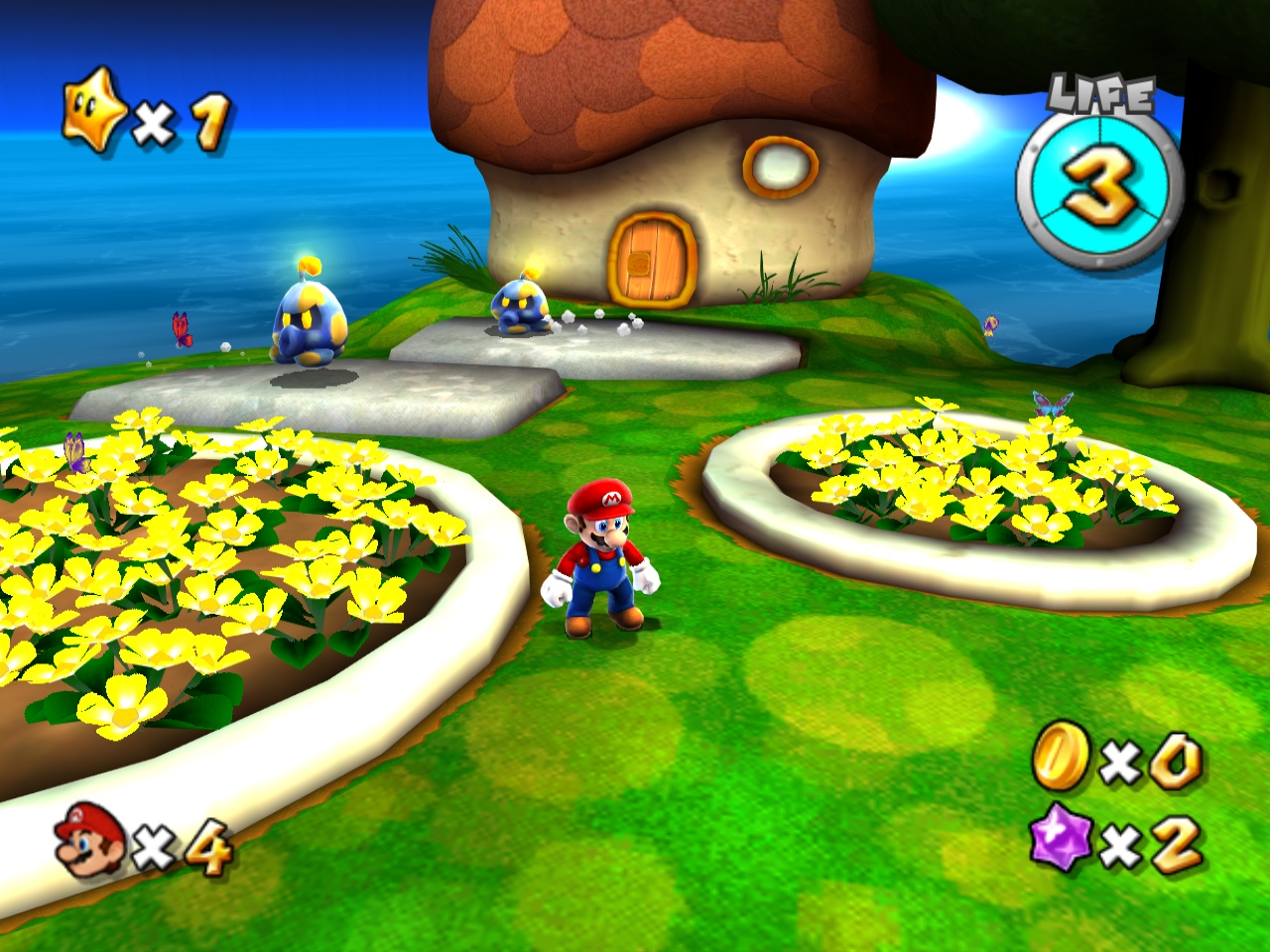
Nintendo have never been known for following trends. Their attitude to mobile gaming is a perfect example; whilst many other companies quickly set about bringing their biggest IP into people’s pockets, Nintendo have stood by their ideals and held out until this year, with an their first mobile game announcement in collaboration with DeNA fast approaching. Perhaps a more obvious example of their differing attitude to change is their decision to forgo HD graphics on the Wii, opting to approach the console and its software with their own design philosophy rather than directly competing with their rivals, a decision questioned by many, but perhaps one that ultimately worked to their benefit.

Super-Mario-Galaxy-for-wii

In some ways, sticking by this philosophy is the thing that has made Nintendo so successful over the years; even with ever-changing market trends, Nintendo are still responsible for the creation of some of the most powerful gaming IP on the planet; it could easily be argued that Mario is as popular now as he was 30 years ago and with the ability to wield the power of massive multimedia brands such as Pokémon, the Big N have more than a little breathing room for some experimentation now and again.

153280_screenshot_02_l

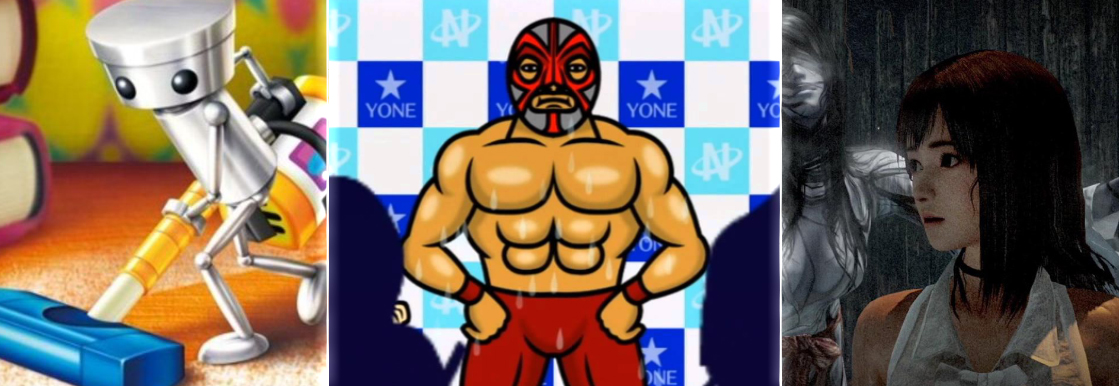
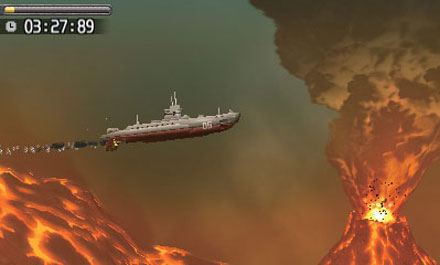
With this in mind, it’s no surprise that in the last 10 years we’ve seen the birth of the likes of PikminChibi-Robo! and even eShop exclusive names such as Genius Sonority’s Denpamen, more quirky IP based on unique and in some cases, weird ideas that aren’t afraid to take a few more risks in their designs and concepts, yet still ooze with Nintendo charm. Some such as Pikmin have become successful, claiming their status amongst Nintendo’s greats. Others have been less successful; whilst the likes of Steel DiverZangeki no Reginleiv and Chosoju Mecha MG were never intended to be the next Zelda or Donkey Kong, they stand as a shining example of Nintendo’s willingness to try new things and step outside of their quite clearly defined comfort zone, something they are often accused of not doing enough.

Continue reading

Posted in Features, Opinion Piece | Tagged , , , , , , , , , , , | 3 Comments

You’ve Probably Never Played… Kinnikuman Muscle Fight

KINNIKUMAN MUSCLE FIGHT

Kinnikuman Muscle Fight
Developer: ‘MATAYAN’
Platform(s): PC (Freeware)
Release Date: Unknown
Find out more info and download for yourself here.


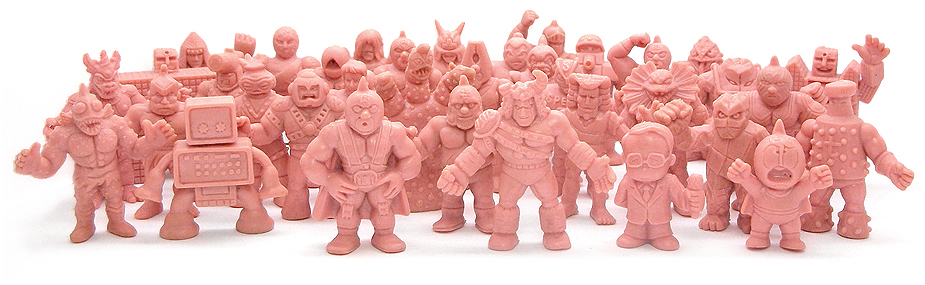
If you grew up in the 80s you likely remember M.U.S.C.L.E. (Millions of Unusual Small Creatures Lurking Everywhere), the peculiar set of small, flesh-toned alien wrestlers that came in trash can-shaped packaging. Perhaps you even played the tie-in NES game of the same name, which in the past has been described as one of the worst games released for the system in North America.

LjfOKUc

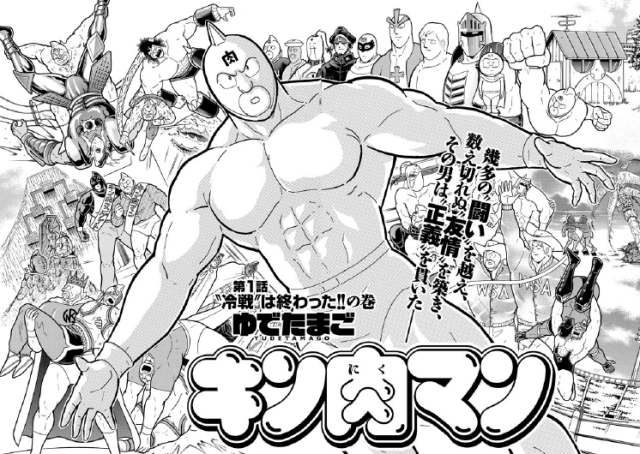
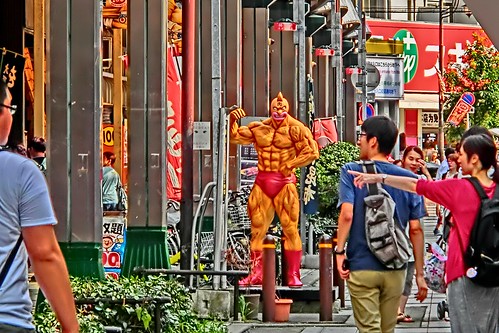
It would likely come as a surprise to many to find out that the M.U.S.C.L.E. series protagonist ‘Muscleman’ is in fact Kinnikuman, a Japanese Chojin (superman) who battles superhuman opponents in the wrestling ring to defend his country and the planet from evil. In Japan, Kinnikuman has become something of a phenomenon, with two lengthy anime series and a manga that is still on-going to this day. Its memorable characters such as Robin Mask, Ramenman and Buffaloman have become cult character icons that have appeared on every bit of merchandise you could possibly imagine, from apparel to life-sized statues that line the streets of some of Japan’s cities.

Kinnikuman Double Page.png

Kinnikuman is such a phenomenon, in fact, that every Friday 29th has been christened ‘Kinnikuman Day’ (due to its pronunciation ‘Kin Niku’ in Japanese). Perhaps the most peculiar part of this ‘Kinniku Fever’, however, is that the series never properly made it to the west, in part due to it featuring many gags that played off of exclusively Japanese tropes and comedy, as well as due to the appearance of some controversial characters including several celebrity lookalikes and even a Nazi character who would later go on to become a hero. The original anime series was dubbed into Catalan, but beyond this, Kinnikuman would not make a proper appearance outside of Japan until its sequel, Kinnikuman Nisei, was released by 4Kids under the guise of Ultimate Muscle in 2002. Notable for its hilarious yet unfaithful name and script changes, as well as some questionable choices of voice actor, the series aired in America until 2004, despite being relatively unpopular in its country of origin. Perhaps this is all starting to sound a little more familiar now?

Kinnikuman Muscle Fight is a little different to some of the other games I’ll be covering in this feature, in that its entirely fan made. Several licensed Kinnikuman fighting games have been produced, primarily by AKI Corporation (now known as Syn Sophia, creators of the Style Boutique/Girls Mode/Style Savvy series), but Muscle Fight is undoubtedly one of the more sophisticated titles themed after the series available, serving not only as a true love letter to any Kinnikuman fan, but standing out as what is possibly one of the craziest fighting games ever made, especially to the uninformed onlooker.

Screenshot 2015-10-06 09.00.01

The first thing anyone will notice about Muscle Fight is the roster; there’s a huge cast of bonkers characters to choose from, with no two alike in fighting style. Characters are portrayed with detailed sprites that burst with energy, and each fighter’s attacks come as spectacles to behold; whilst not displaying the most fluid or groundbreaking animation, it’s a great feeling pulling off some of the more complicated attacks and being rewarded with fantastical and overdramatic set pieces. Character voices are taken straight from the anime to preserve the accuracy of some of the series’ memorable moments, whilst certain character match-ups offer character-specific dialogues and in some cases even unique attacks or outcomes to certain moves.

Continue reading

Posted in Features, You've Probably Never Played... | Tagged , , , , , , , , , | Leave a comment