You’ve Probably Never Played… Sonic Cafe mobile games

SONICCAFE.png

Sonic Cafe series
Developer(s): Sonic Team
Publisher: Sega

Platform(s): Mobile
Release Date: 2001-2007


It would be no stretch to say that Sonic has been around. Featured in games of all genres and on almost every platform under the sun since Sega’s exit from the console business, Sonic can claim to not only to be the fastest hedgehog in the world, but one who has tried out a ridiculous amount of sports and activities, including some that even his red-capped rival has yet to attempt – and he’s been in more than his fair share of spin-off titles.

Now at this point, you may possibly be questioning how one of the most famous video game characters in history has managed to appear in so many weird and wonderful spin-off titles with very few people having ever heard of them. Well that’s because some of Sonic’s wackiest ventures have been exclusively released exclusively on mobile, and not the kind most people would immediately think of. Whilst the idea of internet access and video streaming on phones in the pre-smartphone days may be an alien concept to many, souped up flip phones referred to as “garakei” had made this a reality for many in Japan since as early as 1999. Notably, telecommunications company NTT Docomo’s ‘i-mode’ and ‘i-appli’ platforms greatly expanded the number of features available to garakei users, including the support for and ability to play specially developed games – this is where Sonic comes into the picture.

cafe_website.png

In 2001, Sega introduced a new service for i-appli devices called ‘Sonic Cafe‘, a subscription-based program that allowed users to access a library of Sonic Team-developed games, as well as ports of classic Mega Drive and arcade titles, for ¥315 a month. The games made use of many beloved Sega IP old and new, with Sonic leading the charge in 37 of his own titles that spanned a whole host of genres, including some that feature subject matters seldom covered in games as a whole. Few games in the lineup were available outside of Japan, with several of the exclusive titles noteworthy for simply being bizarre in both concept and execution.

So without further ado, let’s take a look at a handful of the games on offer to Sonic Cafe subscribers.
Continue reading

Posted in Features, Posts, You've Probably Never Played... | Tagged , , , , | 2 Comments

Gorgeous minimalist prints celebrate 20 years of iconic Pokémon design

print02print03

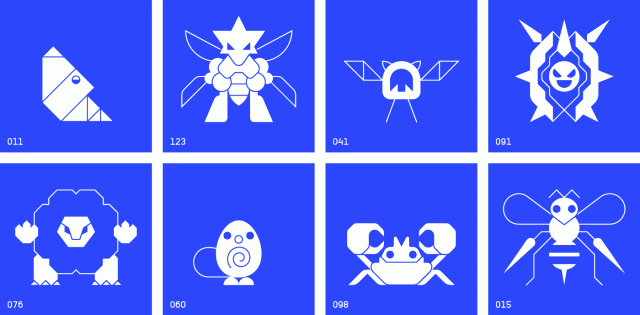
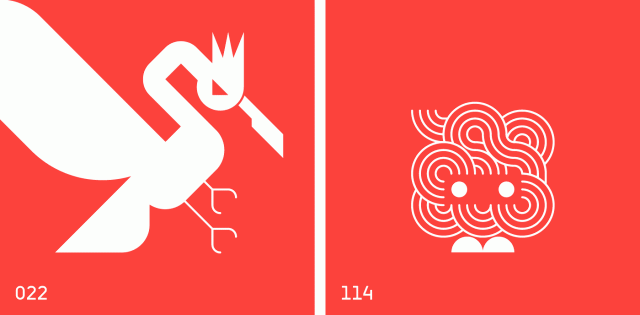
Designer Dan Clarke has produced some stunning work for Arkotype, a passion project of his creation that stylishly combines gaming and graphic design, which we have featured on numerous occasions.

His latest project is a minimalist design for a print featuring all 151 of the original first generation Pokémon featured in Pokémon Red & Blue, just in time to celebrate the 20th anniversary of the series. The tasteful lithographic print, which aims to “express each character in the simplest way possible”, will be available in two colours, representing both western versions of the game. Only 151 of each colour will be produced, with Green and Yellow variations under consideration for the future.

You can find out more details about the prints over on the Arkotype website, or if you’d like to purchase one for yourself, you can do so over at the Arkotype store. where you can also find some of Clarke’s previous work on sale. Stock is very limited, so don’t miss out on the chance to own and display this phenomenal design in the place of your choosing.

Posted in Art, Merchandise, Posts | Tagged , , , , | Leave a comment

More cart-based chiptune goodness with “8BIT MUSIC POWER NEXT”

CZ7sUQpUcAAUefI.jpg

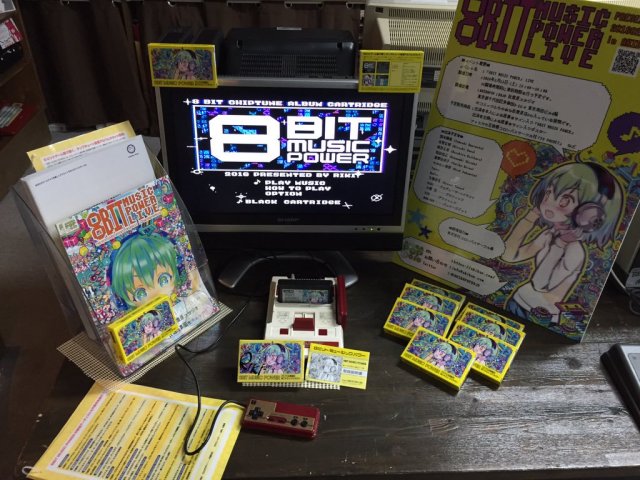
Following on from the success of 8BIT MUSIC POWER, the unique chiptune album which released earlier this year in authentic Famicom cartridge format, homebrew developer and artist Riki Iwasaki has announced at the 2016 BitSummit indie developers conference that a sequel is in the works, tentatively titled ‘8BIT MUSIC POWER NEXT‘.

Whilst we have yet to receive a look at the physical cartridge (which will once again be produced by Columbus Circle, who are currently preparing to distribute RIKI’s upcoming Famicom title Kira Kira Star Night DX) or full track-list for the project, RIKI has announced on his website that it will be released in 2017, and will feature the musical talents of Motoaki Furukawa, Junya NakanoManami Matsumae and many others, with more potentially yet to be revealed.

Keep an eye on RIKI’s website and Twitter for future details.

Posted in Music, Posts | Tagged , , , , , , , , | Leave a comment

Japanese indie game scene documentary Branching Paths releasing later this month

Japan’s indie game scene has a tendency to receive a lot less attention than its western counterpart, despite a keen community of hobbyist and professional developers alike spread across the country. Events such as BitSummit have begun to gain traction as ideal opportunities for budding devs and studios to showcase their work to an international audience, with big players such as Nintendo and Sony even stepping up their efforts to accommodate independent game makers accordingly.

However, a brand new documentary called Branching Paths (directed by Anne Ferrero, who also works on the brilliant Japanese culture series Toco Toco) is seeking to take this coverage to the next level, giving us an inside look at the people and culture that make up the Japanese indie game scene, as well as the growing importance of independent creators in Japan. The documentary has been dated for July 29th and will be available to purchase on iTunes, Steam and Playism. Fans of Japanese and indie games alike should not miss out.

You can find out more info about the documentary over at the Branching Paths website, or on Twitter where you can find links to more teasers and coverage.

Posted in Film, Games Culture, Posts | Tagged , , , , | Leave a comment

Watch the President of Sony uppercut PaRappa the Rapper in this SNES-CD homebrew game

sbg.jpg

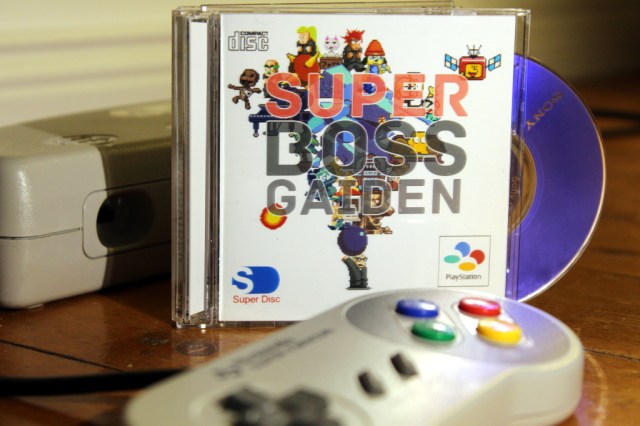
When the prototype of the ill-fated SNES-CD add-on (also known as the Super Disc, or even the Nintendo PlayStation) leaks out into the hands of the public, what are you, the president of Sony, going to do? Get revenge by causing carnage and destruction in your own company with your bare fists, that’s what!

Or at least, that’s how the story goes in Super Boss Gaiden, a homebrew SNES beat-’em-up that mixes classic genre conventions with some unique and quite frankly bizarre themes that may have you in stitches. Developed over a number of months by a duo of die-hard fans known by the names Dieter von Lazer and ChronoMoogle, this particular homebrew title was designed to run not only on authentic SNES or Super Famicom hardware, but has been optimised for use with the SNES-CD, making its self-referential plotline all the more relevant. Whilst you’ll likely have a tough time tracking down Sony and Nintendo’s prototype disc-based system, there are a number of different ways you can play the game, and it’s nice to know that software has been created for the console despite it never being fully realised.

Super Boss Gaiden makes use of an easy to understand controls scheme and a simple but effective arsenal of moves that make fighting your way through your own company a breeze. Hand-to-hand combat mixed with the ability to throw both items and enemies will serve as the primary method of besting your foes, which include everything from Sony employees, to popular mascot characters such as PaRappa the Rapper and Sackboy – there are even some little references to various obscure Nintendo peripherals such as the Satellaview and Famicom Disk System that are sure to make fans of niche hardware add-ons smile. Different types of enemies, including several bosses, have unique patterns and weaknesses that must be learned, so there’s plenty of variety in every battle.

Continue reading

Posted in Features, Posts | Tagged , , , , , , , , , | Leave a comment

Experience an overlooked adventure with English-dubbed Satellaview Zelda

The Satellaview has become something of a curio amongst Nintendo fans, both due to a diverse library of interesting titles and content, as well as a somewhat peculiar distribution method that has resulted in a fair amount of said content being simply lost to time. The Satellaview used broadcasts provided by satellite radio company St.GIGA, meaning that a lot of games were distributed for only a limited time, or were available in scheduled time-slots, similar to radio programs.

The Satellaview and its library were never available to gamers outside of Japan, but thanks to the work of small bands of dedicated fans, many of the titles western players missed out on are slowly becoming available to play via emulation. However, despite the intrigue surrounding the Satellaview, the latest title to join this line-up is one that will undoubtedly be familiar with gamers no matter where they are in the world – BS Zelda no Densetsu is a re-telling of the original The Legend of Zelda for NES, complete with a graphical overhaul, new protagonist and even an audio voice over dubbed in its entirety into English.

bszelda

Originally broadcast in 1995 in four weekly episodes (then each with a download time of seven minutes!) that were intended to be played through live, the game sees you play not as Link, but as either the male or female avatar character selected through the Satellaview interface, making this one of the few Zelda titles that allows you to use a female protagonist. Various events exclusive to the Satellaview version of the game are bound to a real-time in-game clock, with various voiceovers offering hints and directions to aid you on your quest. The fact that this voice-over is available in English is something of a breakthrough in Satellaview emulation and allows more players than ever to experience this unique Zelda adventure 21 years after its limited release.

You can find out more about the translation project, as well as how to try it yourself, over at the BS Zelda forum.

Posted in Games Culture, Posts | Tagged , , , , , , | Leave a comment

Minus World Reading List – June 2016

readinglist1.jpg

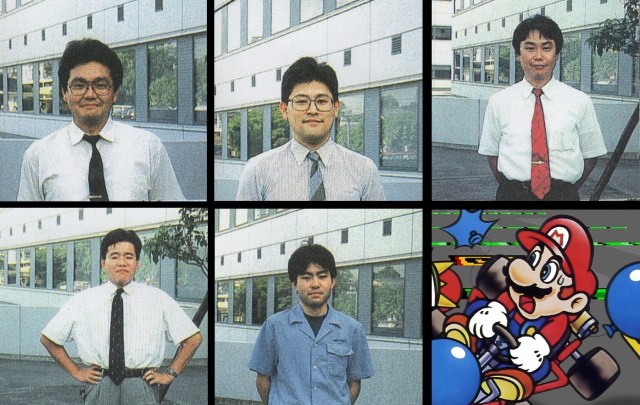
Whilst the Mario Kart series has witnessed a spectacular evolution in both presentation and content since its debut on the SNES in 1992, the core design ethos and direction has remained relatively unchanged since the early days of its conception. Thanks to a translation of an interview featured in Super Mario Kart‘s original Japanese strategy guide by website Shmupulations – who have done brilliant work in translating and compiling over 200 Japanese language gaming interviews and other media, both old and new – we can now understand and learn about the thoughts and decisions that went into the design of one of Nintendo’s most iconic multiplayer titles, straight from the men who helped to create it, including the likes of Shigeru Miyamoto, Hideki Konno and Tadashi Sugiyama.

Other notable Shmupulations translations that might take your fancy include an insightful interview with Capcom artist and designer Kinu Nishimura, who has been responsible for many memorable character designs and pieces of artwork in some of Capcom’s most standout titles. Alternatively, for any fellow appreciators of the obscure, check out this fascinating look at the development of Super Famicom cult classic Umihara Kawase, co-translated by Shmupulations, over on Gosokkyu. I highly recommend having a gander at the entire library of translations and seeing if anything takes your fancy.

From the release of the Ultra Machine in 1967 to Mario Superstar Baseball on the GameCube, Nintendo’s history with baseball has been a particularly bizarre yet very interesting one. Some may be surprised to know that Nintendo have held a majority stake in Major League Baseball team the Seattle Mariners since 1992 (although this stake was reduced earlier this year). Norman Caruso, better known by his moniker The Gaming Historian, has produced a highly informative and eloquently presented video that details Nintendo’s history with the Mariners, the controversy surrounding their investment in the team, as well as the remarkable personal motivations behind former Nintendo president Hiroshi Yamauchi‘s interest in buying a MLB team, despite having no personal interest in the sport. This video covers an area of Nintendo history you’ve likely heard little about, so for a comprehensive look at one of the more unique aspects of the company’s past, be sure to give it a watch.

Continue reading

Posted in Features, Posts, Reading List | Tagged , | Leave a comment

Programmable Series – Skip It!

minusworld3skipit

As the concept for a game comes together, it’s exciting to think about all of the things that are going to be included. There are so many elements to a game, it can become easy to concentrate on the more fun or interesting parts, such as character design or hidden items. Sometimes it becomes hard to look beyond the more interesting things and pick out what may not be so exciting. Some of these components are essential to the game, while a portion of them could be (and sometimes should be) optional. This may not seem important from a development perspective, but it can be very important to your players and the level of enjoyment they’ll receive from your game.

tutorial

As a player, you generally want to get into the action as quickly and as often as possible. You want to be discovering things for yourself much more than you are watching them be revealed to you. You probably don’t care too much about logos and introductions being thrown at you each time you start a game – this is especially true with a game you play often. However, from a development standpoint, it may be important to have an introduction for players who are new to the game. This is where it becomes essential for developers to give players as many options as possible. If an introduction or a tutorial would be incredibly important for the story or gameplay for someone new to the game, then the option should certainly be included, with the option to skip said parts of the game available for returning players. Having the option to skip an intro or tutorial sequence allows the new players to experience it while still allowing your returning players to move forward to the main game. Alternatively, these could also be selectable items from the main menu, if your game has one. Doom 3 is an example of a big offender in regards to the aforementioned issues, with many logos appearing at the start as well as an incredibly lengthy intro video which is then followed by many unavoidable dialog sections, even after you take control of your character.

Continue reading

Posted in Features, Posts, Programmable Series | Tagged , , , , , | 1 Comment

Get fighting fit with Street Fighter V Strength Training Gear

topic-04260-5.jpg

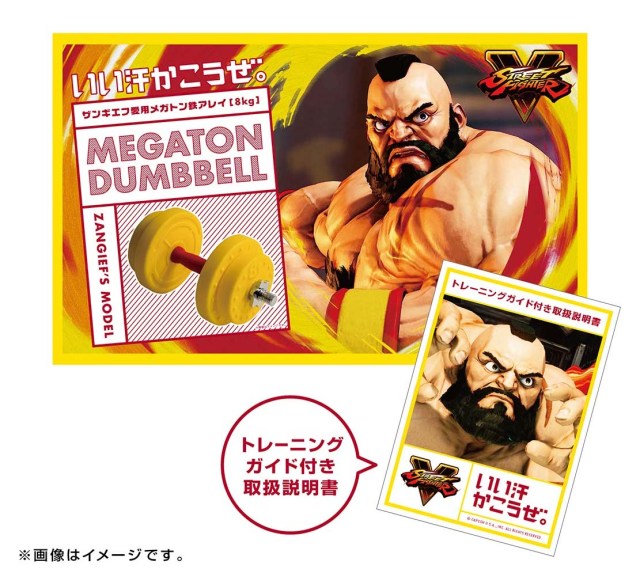
It goes without saying that characters of the Street Fighter V are pretty buff – on occasions, arguably too buff. To undertake such superhuman feats as conjuring balls of energy from thin air, performing hundreds of kicks per second and pulling off physics-defying haircuts clearly requires some fairly vigorous working-out, and now you can follow the World Warrior training regime at home with this set of Capcom online store exclusive Street Fighter V strength training gear.

Weighted gloves, training tubes, inflatable punching bags and the beautifully named “MEGATON DUMBBELL” make up this range of unique Street Fighter-themed exercise equipment that can help you get in shape and feel like you can take on the world. I don’t want to put the idea in your head that training with this kit will make you strong enough to perform a Sonic Boom or beat Zangief, but perhaps training with Ryu’s gloves on will help you BELIEVE that you’re the strongest fighter alive.

You can kit out your gym with this new gear when it goes on sale on the e-Capcom store in early July.

Print

Posted in Games Culture, Merchandise, Posts | Tagged , , , , , , | Leave a comment

A Little Look At… Super Famicom: The Box Art Collection

SUPER FAMICOM BOOK.png

Box art is one of the most important – and perhaps most under-appreciated – aspects of video game presentation. Traditionally, box art has always served a number of irreplaceable functions to both consumers and publishers; it creates the crucial first impression of a game (despite what they say about judging a book by its cover – this rule has a tendency to not apply with certain games…), historically acting as potentially the only image to convey the game’s themes without actually playing it first. It serves to give a game shelf presence, at times being the all-important factor in whether or not a game will sink or swim amongst hundreds of competitors. Then comes the display aspect – whether you’re complete-in-box collector or simply want to enjoy the games themselves, it’s undeniable that few things come close to the pleasure of a well-designed cover.
Nintendo’s Super Famicom is notable for its vast array of beautifully designed cover art, both for the hardware and the games themselves – something which noticeably was lost in translation western SNES packaging. With this in mind, Stu Brett (AKA Super Famicom Guy – clearly his affinity for the 16-bit system runs deep) worked to compile a physical book showcasing some of the greatest artwork the console’s library has to offer. Brett is the proprietor of a huge personal collection of Super Famicom games, which served as the basis for this book when its original Kickstarter campaign was launched in September 2014, but snags with copyright and timing cut the original project short.

Continue reading

Posted in A Little Look At..., Books, Features, Posts | Tagged , , , , , , , | 1 Comment